If you’re planning a trip to Naples, one of the biggest questions is how easy it is to get around.
And I’ll be honest, it’s not as smooth as places like Switzerland or Northern Italy. Out of all the places we've visited in Italy, this was the most confusing at first, mainly as there's just so many options.
But once you understand how it works, it’s actually really simple and incredibly cheap.
This is exactly how we got around Naples as a family of six, including what worked, what didn’t, and what we’d do again.
If you’re still in the planning stage, I’d also recommend reading our full itinerary alongside this, as it shows exactly how all of this fits together in real life.
👉 3 Days in Naples: Our Itinerary (with Pompeii and Sorrento + Real Costs)
Quick note before we begin. This blog may contain affiliate links. This means we may earn a small commission if you make a purchase through them. It helps keep Build a Break running and allows us to keep sharing budget travel guides like this one.
Naples has a mix of:
Metro lines
Local trains
Funiculars
Buses
Regional trains
The airport bus (Alibus)
Ferries
It sounds complicated, but most of the time you will only use a couple of these.
We stayed in Chiaia, and for us, everything centred around:
Local train to Napoli Garibaldi (M2)
Circumvesuviana trains
Metro Line 1
Funicular
Alibus (airport)
If you’re new to Naples, it’s also worth understanding what the city feels like day-to-day, including safety, areas to stay and what to expect. I’ve covered that here:
👉 Is Naples Safe for Tourists? Where to Stay, Areas to Avoid & Honest Advice
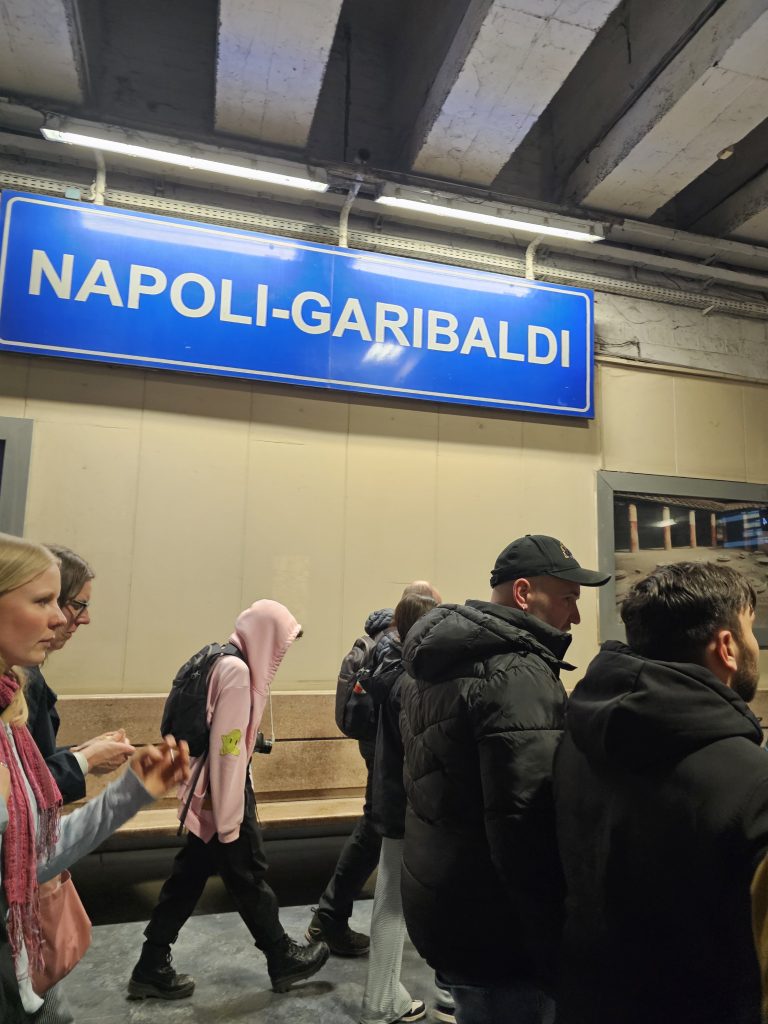
The easiest station to understand is Napoli Garibaldi / Centrale
This is the main transport hub in Naples and you’ll probably pass through it at some point.
It can feel confusing at first because it’s split across levels:
Napoli Centrale → main train station (street level). This has trains travelling all over Italy.
Napoli Garibaldi → lower level (metro line 1, Line 2 and Circumvesuviana). These are more local routes.
So, they're basically all located in the same building, but on different levels, and called different names.
You'll also find the Alibus outside Napoli Centrale.
Once you know this, it makes everything much easier.
Follow signs for:
Linee Vesuviane / EAV → Circumvesuviana trains
Metro Line 1 or M2
Trenitalia → regional trains
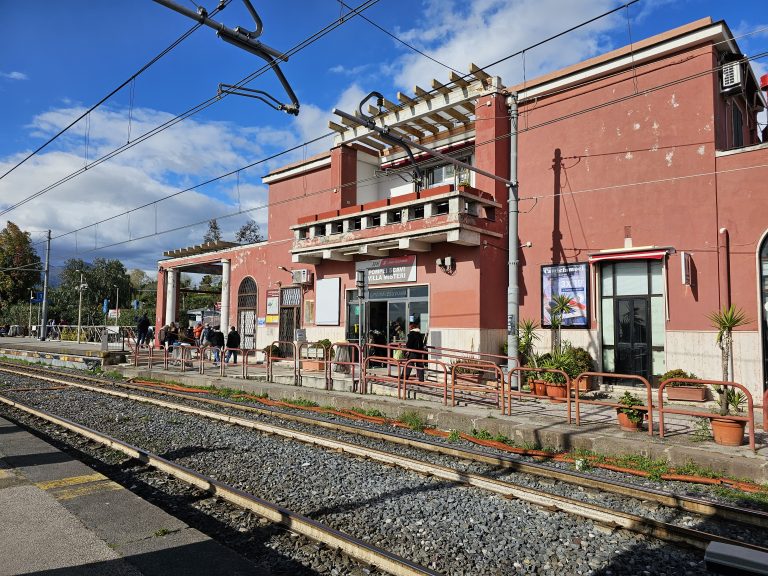
From where we stayed on Via del Parco Margherita, the closest station was:
Napoli Piazza Amedeo
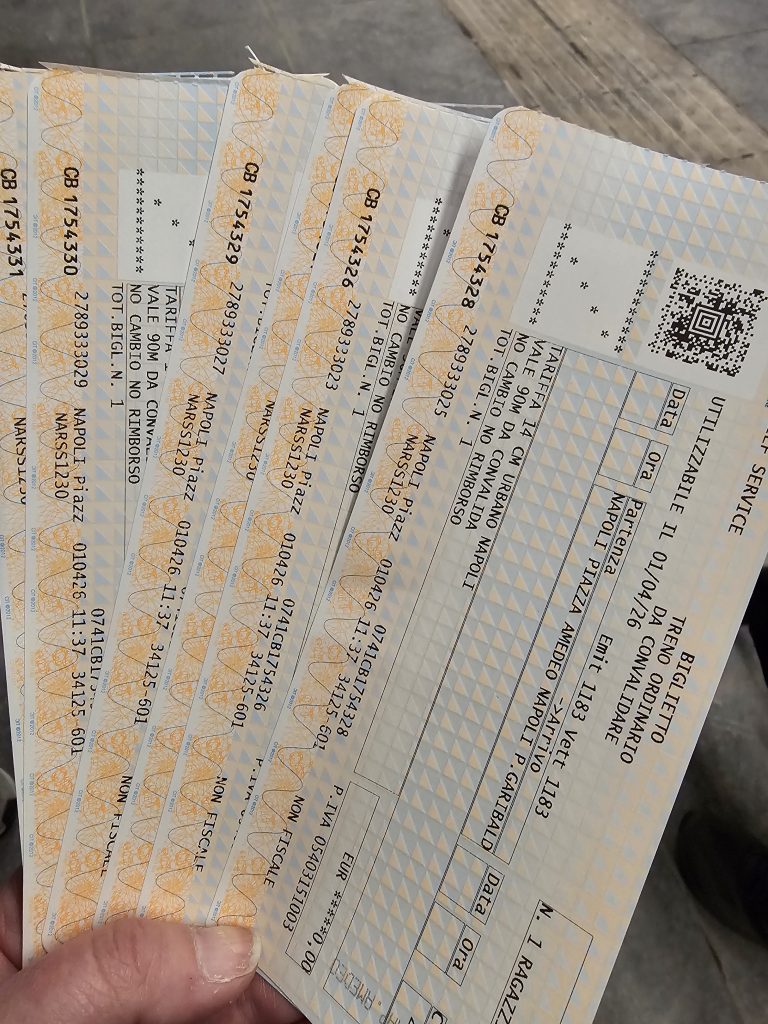
This was a huge win for us because it was a 2 minute walk and went directly to Napoli Garibaldi in around 10-15 minutes. Plus, a single journey only cost €1.50 per person.
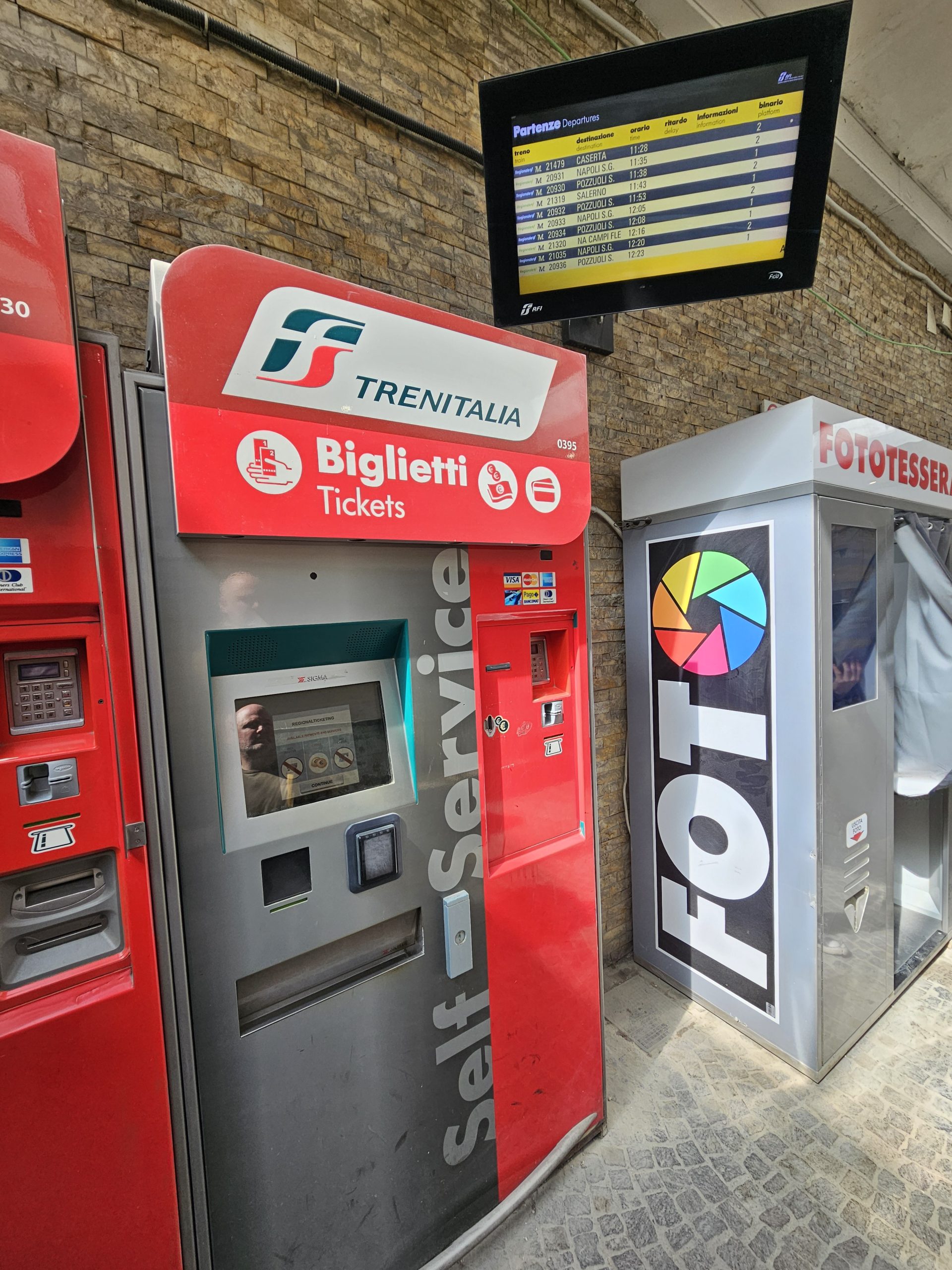
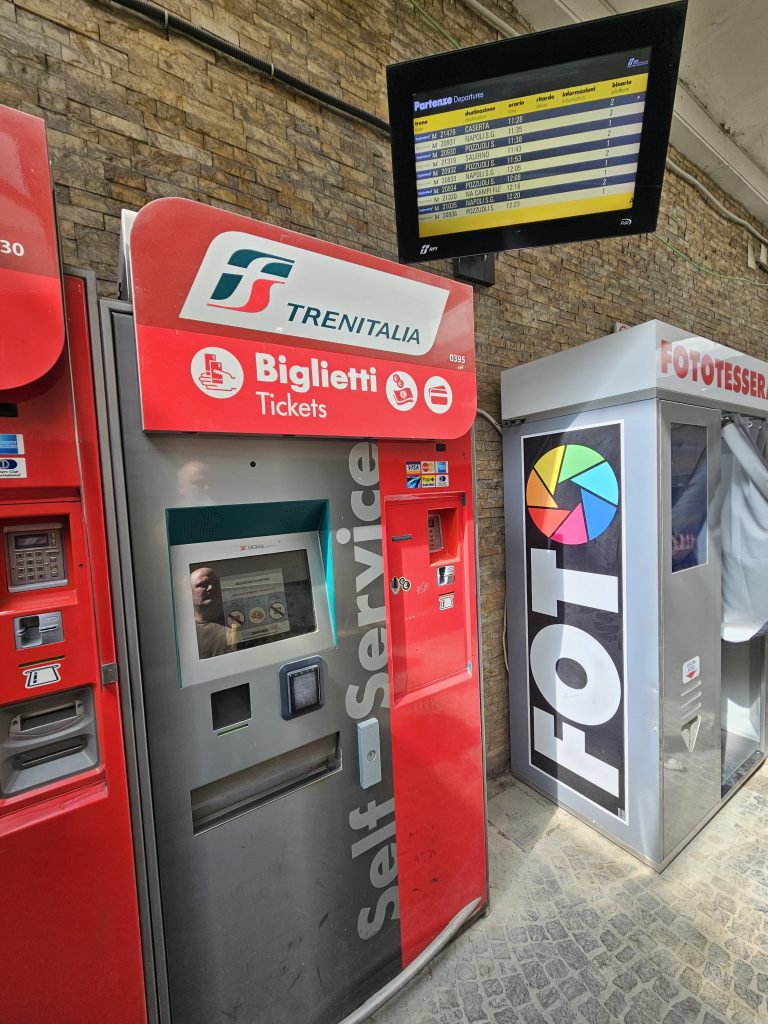
Tickets are easy to buy at machines and you must validate them before boarding.
This is the train you’ll use for:
Pompeii
Herculaneum
Sorrento
It runs from Napoli Garibaldi (lower level).
Cost: €3.30 one way to Pompeii
Around €4.40 to Sorrento
Time: Pompeii: around 35 minutes and Sorrento: around 1 hour 10 minutes.
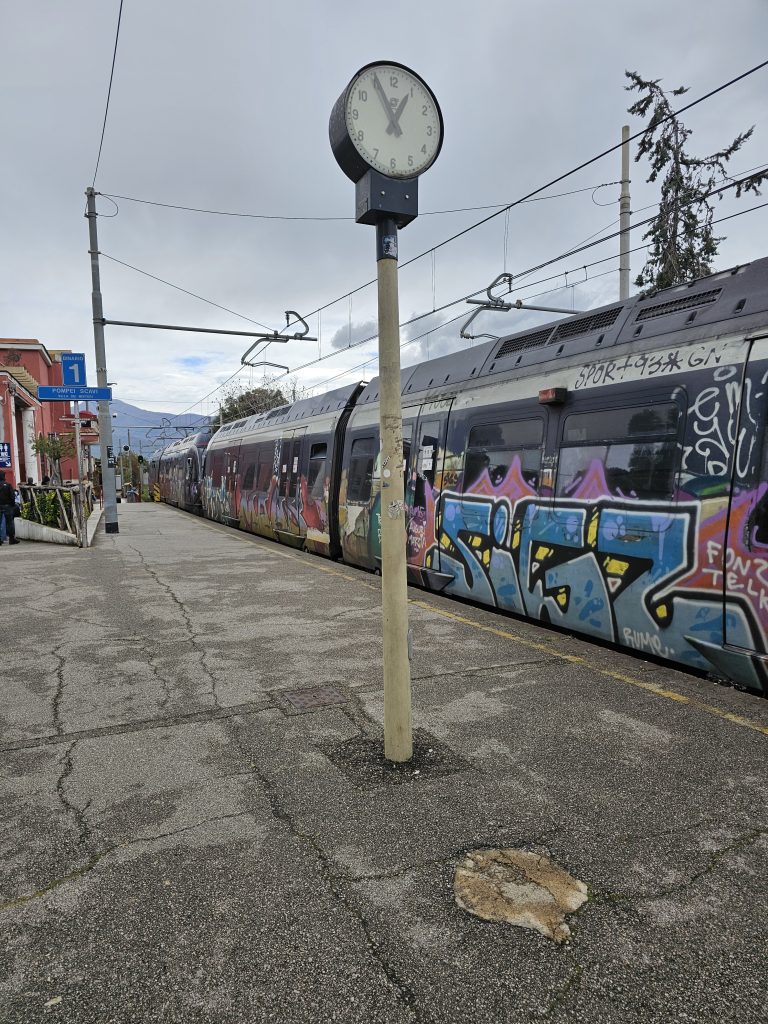
Now, honest thoughts. It’s cheap, it’s frequent and it gets the job done. But, it's very busy, there's no seat reservations and it's not the most comfortable. It can feel chaotic, with people racing to get onboard. We visited in April, so not even the height of summer, yet it felt so cramped onboard and hot. We stood both ways to Pompeii and Sorrento.
Top tip: Buy your return ticket in advance. The queues on the way back were huge and machines were broken. The little shop in the station sells tickets but they would only accept cash.
If you’re planning a Pompeii day, I’ve broken that down step by step here:
👉 Pompeii from Naples: Exactly How to Do It (Train, Tickets and Tips)
If you’re heading to Sorrento, you can read our full guide comparing the train and ferry options here:
👉 Naples to Sorrento: Train vs Ferry (Costs, Times and Tips)
We used it to go from: Vomero → Toledo
Cost: €1.50 per journey
Stations are modern and much calmer than other parts of the network.
Toledo Station is worth visiting alone, it’s often called one of the most beautiful metro stations in Europe (see photo)
If you’re staying near Chiaia like we were, this is a must.
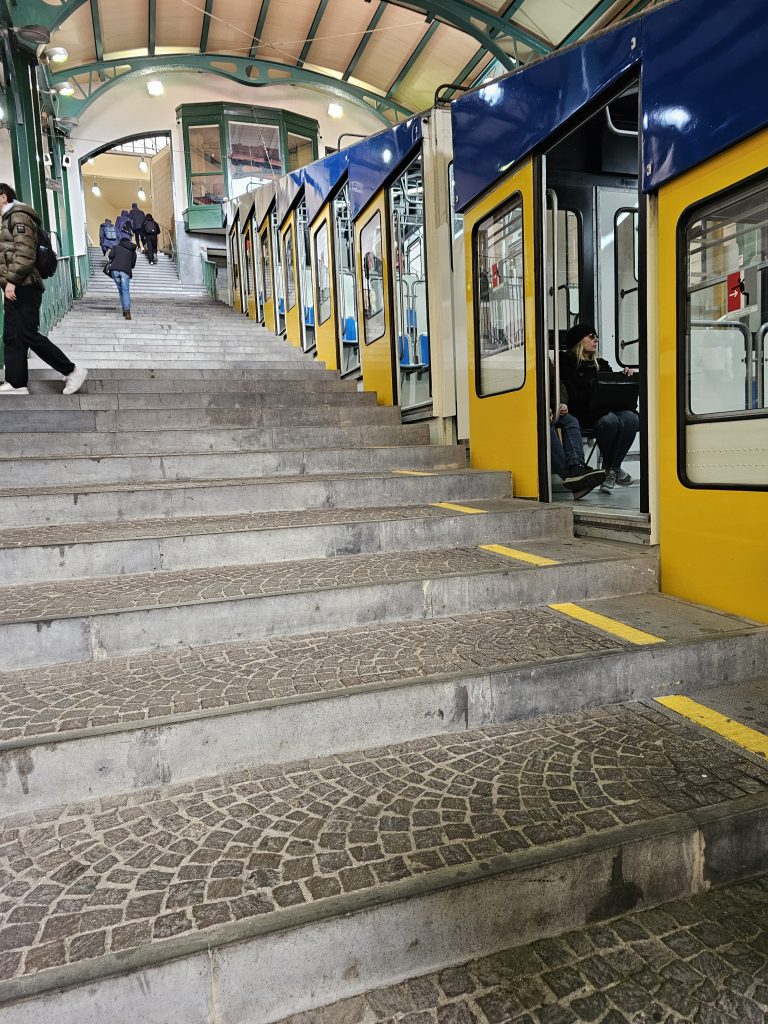
Parco Margherita Funicular was just a 1 minute walk from our apartment. The journey up to Cimarosa took just 5 mins.
Cost: €1.30
At the top:
Piazza Vanvitelli
Walk to Castel Sant’Elmo
Incredible views over Naples
You can walk back down (around 30 to 40 minutes) or just take it back down.
Alternatively, we took metro line 1 from Vomero to Toledo to explore the Spainish Quarter (€1.50) - this is located next to Cimarosa Funicular.
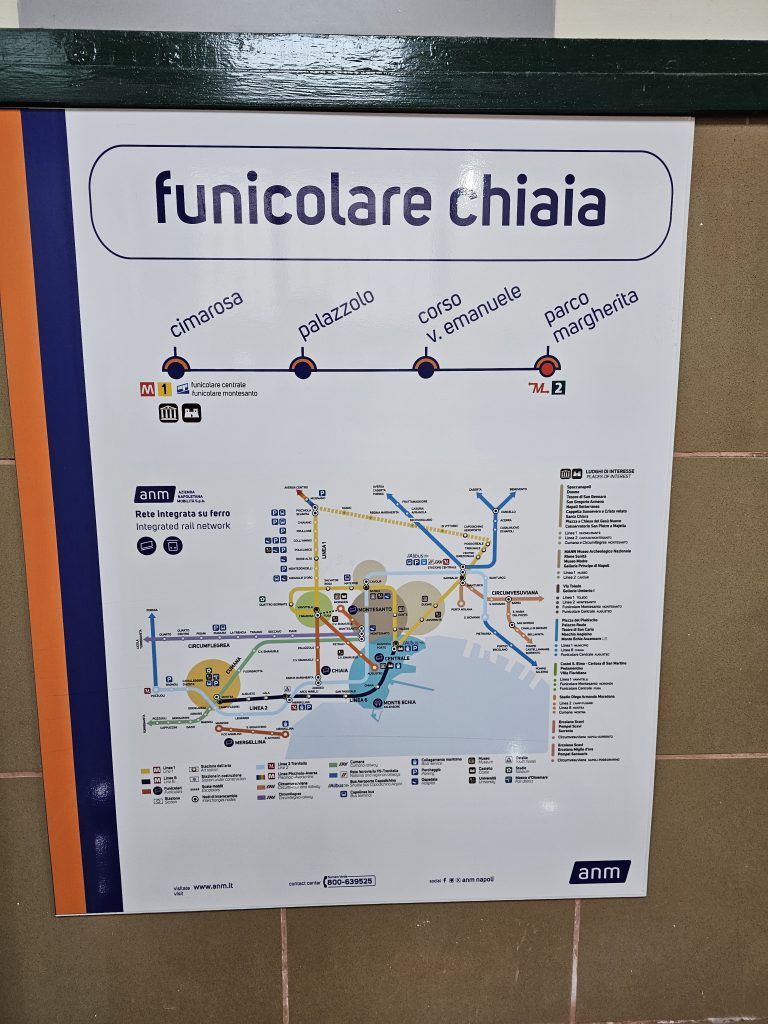
The map below shows the funicular line and connecting metro lines 1 & 2.
Naples does have buses, but honestly they’re slower, harder to navigate and traffic can be bad. We did have a bus stop directly outside our accommodation, but we had no call to use it.
For us, trains and metro were far easier.
We landed at 10:15pm and chose a private transfer.
Cost: £48 for 6 people
This was an easy decision because public transport would have been around €30 anyway. Plus extra to reach our apartment using the metro
It was late, we were tired and we had kids and navigating a new city in the dark isn't my idea of fun.
We booked via Holiday Extras where our readers get a discount on transfers, airport parking & airport lounges here (discount automatically applied)
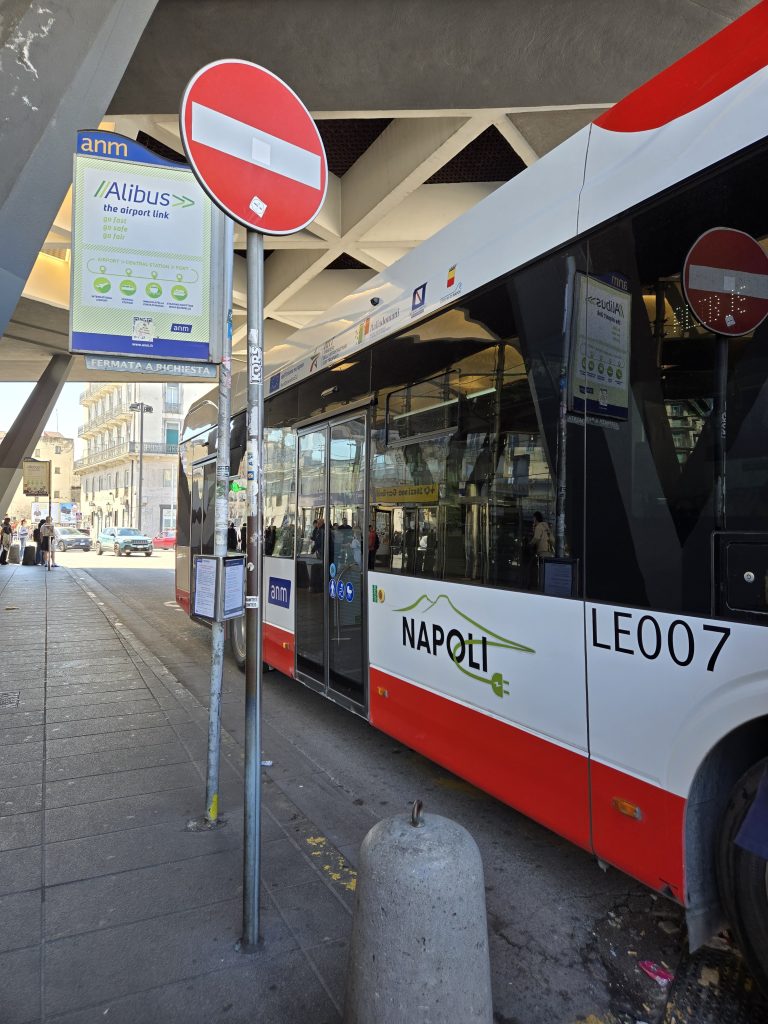
Alibus from Napoli Centrale → Airport
Cost: €5 per person
We actually paid €20 total for 6 (driver only charged for 4)
Time: around 20 minutes
You don’t need to pre-book
You can pay onboard
Bus stop is right outside the station
One of the best things about Naples is how many places you can reach by ferry, especially if you want to avoid busy trains or just see the coastline from the water.
The main departure ports are Molo Beverello (for fast ferries) and Calata Porta di Massa (for slower, cheaper ferries). Both are easy to reach from the city centre.
You can also reach Sorrento by ferry, although most people opt for the train as it’s cheaper and runs more frequently.
Here are some of the most popular options:
Capri is probably the most famous island you can visit from Naples. Expect dramatic cliffs, clear blue water and places like the Blue Grotto.
Fast ferries take around 45–60 minutes, but it’s one of the more expensive options.
Procida is smaller, quieter and often considered the most authentic of the three islands. It’s known for its colourful houses and laid-back atmosphere.
This was originally in our itinerary but we decided to save it for a future trip due to the weather.
Ferries take around 40–60 minutes.
You can also reach the Amalfi Coast directly by ferry from Naples, including Amalfi and Positano.
This is a great option if you want to avoid winding coastal roads, but services are more limited and more expensive than travelling via Salerno.
Journey time is usually around 1.5 to 2 hours.
Ischia is larger and less touristy than Capri, known for its thermal spas, beaches and a more relaxed feel.
Journey time is around 60–90 minutes depending on the ferry.
Sorrento is another popular option from Naples and can be reached by both ferry and train.
Ferries take around 40–60 minutes and give you really nice views of the coastline as you arrive, which is a big part of the experience.
However, trains to Sorrento (via the Circumvesuviana) are usually much cheaper and run more frequently, which is why we chose that option instead.
If you prefer a more scenic and comfortable journey, the ferry is a great choice. If you’re travelling on a budget or want flexibility, the train is usually the better option.
Salerno is often overlooked, but it’s actually a really useful base for exploring the Amalfi Coast.
From here, ferries to Amalfi and Positano are more frequent and often cheaper than from Naples.
You can reach Salerno by train (around 40 minutes) or ferry (around 1 hour).
One thing we found a bit confusing in Naples was how child tickets work, as it isn’t consistent across all types of transport.
In general, the rough guide is:
Under 4s travel free on trains
Ages 4–11 may qualify for child fares on some regional trains
Age 12+ is usually classed as an adult
However, for city transport like the metro, buses and funiculars, it’s much simpler:
Under 6s travel free
Everyone else pays the same standard fare
Where it gets confusing is at ticket machines, especially for short local journeys. On one of our trips, selecting child tickets actually produced free tickets, which seems to be a quirk of the system rather than a clear rule.
Because of this, and to keep things simple, we found it easiest to just buy standard tickets for everyone on shorter journeys. It avoids confusion and means you don’t need to worry about whether you’ve selected the correct option.
If you’re travelling with older children or teens, it’s also worth having ID on you, especially for places like Pompeii where under 18s are free but proof of age may be required.

Naples transport isn’t polished.
It’s busy, a bit chaotic, and very different to other parts of Italy.
But it works. And once you get used to it, it’s actually really easy and very affordable.
And honestly, it all adds to the experience.
If you’re planning a wider Italy trip, you can browse all of our guides here:
And if you want trips like this sent straight to you each week (including routes like Naples, last minute deals and Extreme Day Trips), you can join our members club here:


Copyright © Build a Break | Website by Furness Media