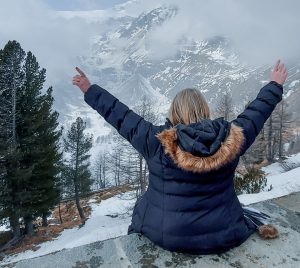
Chamonix is one of those destinations where choosing when to visit isn't just about deciding whether you want sunshine or snow. The time of year you choose can completely change what you're able to do once you get there.
We visited Chamonix in February as part of a trip from Geneva and had fantastic weather overall. The skies were blue, visibility across the valley was really good and although there was cloud right at the top of Aiguille du Midi, it was clear below that. For a winter visit, we couldn't really have asked for much better.
But there's something I think is really important to know before booking a trip to Chamonix, particularly if Aiguille du Midi is high on your list.
The cable car doesn't operate continuously throughout the year.
In 2026, Aiguille du Midi is scheduled to close completely from 2 November until 18 December.
That means you could book what feels like a perfect winter trip to Chamonix in November or early December and find one of its biggest attractions isn't running at all.
It's not the only attraction with seasonal closures either. Montenvers and the Mer de Glace have their own operating dates, while several of the other mountain lifts close between their summer and winter seasons. Even when they're scheduled to operate, mountain weather can affect whether lifts actually run on the day.
So, rather than simply looking at average temperatures when deciding when to visit Chamonix, I'd start by deciding what you actually want to do there and checking that those attractions are due to be open.
In this guide, I'll go through what Chamonix is like throughout the year, the best months for different types of trips, when the main mountain attractions usually operate and what our February visit was actually like.
Just a quick note before we begin: Some posts on this blog contain affiliate links. This means we may earn a small commission if you make a purchase through these links, at no extra cost to you. We only recommend products we genuinely love or believe will be helpful in your trip planning journey. Thanks for supporting our work and happy planning!
There isn't one month that's best for everyone. If you're visiting for skiing and snow, you'll obviously be looking at very different dates from someone planning a summer hiking trip.
For a sightseeing trip like ours, I'd be particularly careful about the periods between the main summer and winter seasons. Chamonix itself doesn't close, but some of the mountain lifts and attractions do.
February worked really well for us. We weren't visiting Chamonix to ski, but we still got the full winter scenery and were able to visit the mountain attractions we'd travelled there to see. We had blue skies and good visibility across most of the mountains, although there was cloud at the very top of Aiguille du Midi.
Planning Chamonix for November or early December?
Check the Aiguille du Midi operating dates before booking flights or accommodation. In 2026, the cable car is scheduled to close from 2 November to 18 December for its annual autumn closure. Dates can change from year to year, so always check the current schedule rather than assuming it'll be open because you're visiting during winter.
Winter is one of the most popular times to visit Chamonix, particularly for skiing and snowboarding, but you definitely don't need to be coming for the slopes to enjoy it.
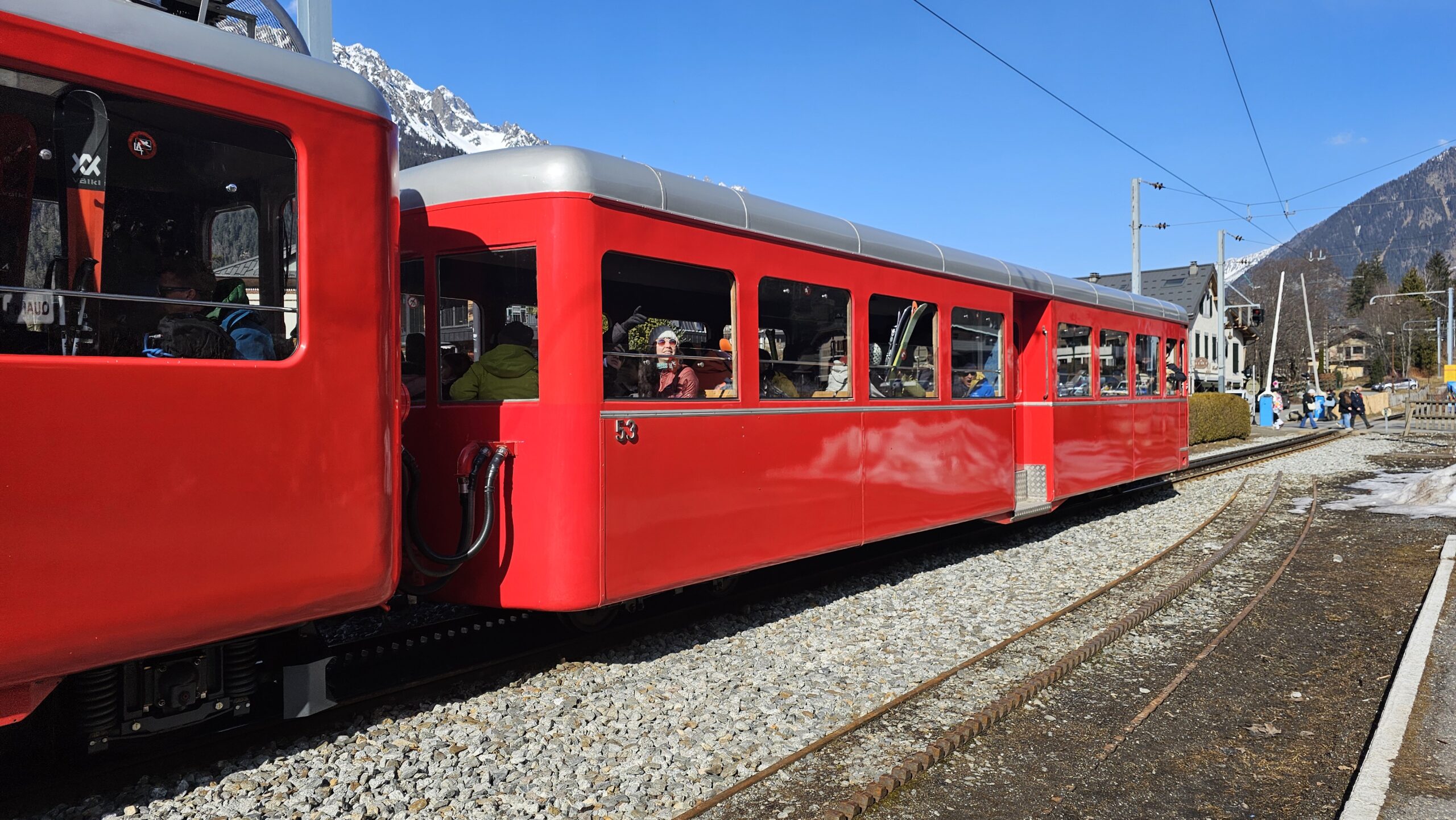
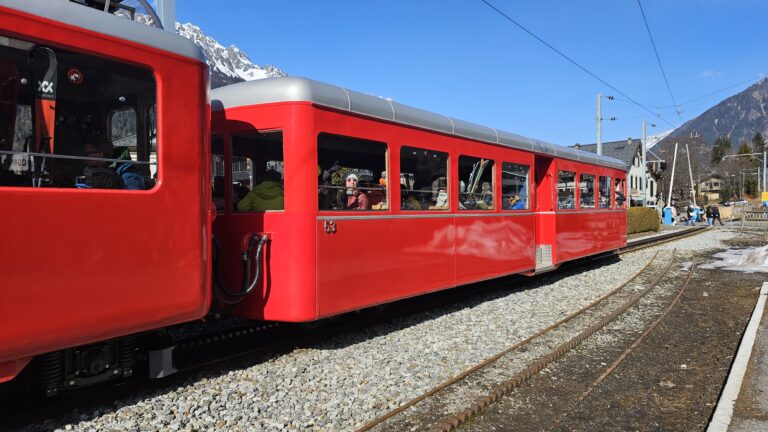
We visited in February as part of our 3-day Chamonix and Geneva itinerary, spending two nights in Geneva and travelling over to Chamonix for the day. We managed to fit in Aiguille du Midi, Step Into the Void, the Montenvers Railway and Mer de Glace, so February worked really well for the type of trip we wanted to do.
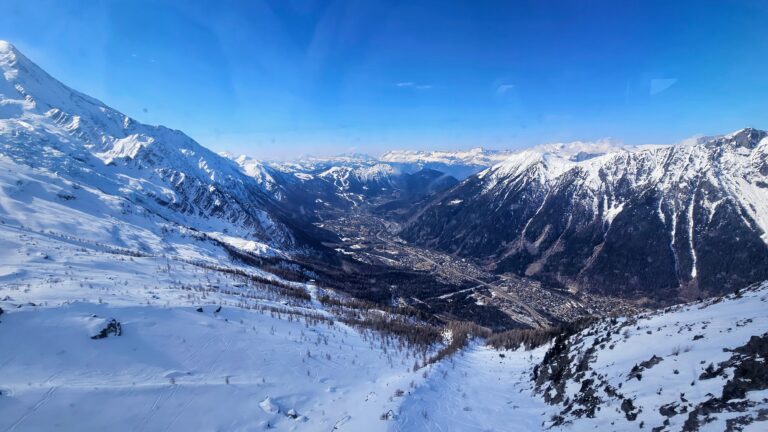
We had surprisingly good weather too. There was cloud right at the top of Aiguille du Midi, but below that the skies were clear and we had fantastic views across the mountains and valley.
Chamonix is also really easy to combine with Geneva. The journey takes around 90 minutes by road and there are buses, shared transfers and organised tours connecting the two. I've covered all the options separately in our guide to getting from Geneva to Chamonix.
If you're visiting Chamonix for sightseeing rather than skiing, February can be a great choice because the main winter season is well underway and there's a good chance of getting the snowy Alpine scenery most people come for. However, it is also a busy time, particularly around the February school holidays.
December can be a lovely time to visit Chamonix, but this is where I'd be particularly careful with your dates.
Don't assume that because there's snow on the mountains and the ski season is approaching, all of Chamonix's major attractions will automatically be open.
For 2026, Aiguille du Midi is scheduled to remain closed until 19 December, following its annual autumn closure. That means a trip during the first half of December could leave you unable to visit one of Chamonix's biggest attractions.
Once the main winter season begins, December becomes a very different proposition, with skiing, winter activities and the mountain lifts beginning their winter operations. If you're planning a pre-Christmas trip specifically to experience the mountains rather than just the town, I'd check the opening dates of everything you want to do before booking your flights.
January and February are better choices if you're specifically looking for a proper winter trip.
By this point, the ski season is underway and you're much less likely to run into the annual autumn closures. There's also a better chance of the snowy Alpine scenery most people picture when they think of Chamonix in winter.
February worked brilliantly for us as non-skiers. We were able to experience Chamonix in winter without building the trip around skiing at all, which is something I hadn't really appreciated before visiting. There's plenty to do here even if you have absolutely no intention of putting on a pair of skis.
The one thing you can never guarantee is the mountain weather. Conditions can change quickly and cloud can completely obscure the views from places such as Aiguille du Midi, even if the weather looks fine down in Chamonix itself.
We were lucky. Although there was cloud at the very top during our visit, visibility below it was excellent.
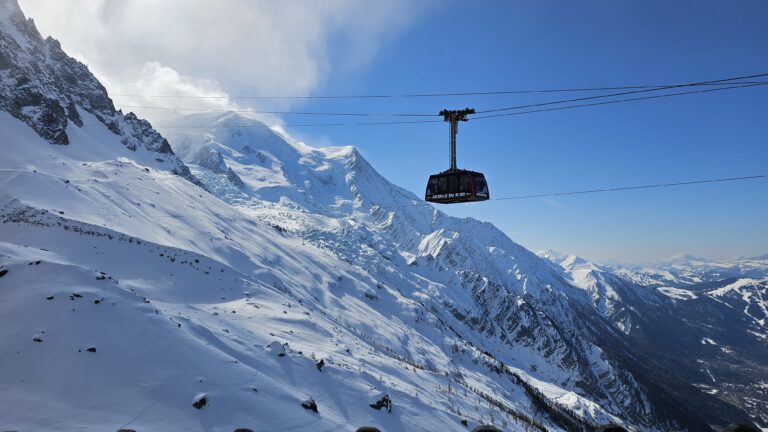
Spring can be a slightly trickier time to plan a trip to Chamonix because you're visiting between the main winter ski season and the summer hiking season.
April can still feel very wintry higher up the mountains, while conditions down in Chamonix itself can be much milder. As you move further into May, the snow begins to retreat at lower levels and the valley becomes greener, but that doesn't necessarily mean all of the summer mountain lifts and attractions are running yet.
This is another time of year when I'd check operating dates before booking rather than assuming everything will be open. Some lifts close at the end of the ski season and reopen later for summer, with dates varying depending on the attraction and conditions.
If Aiguille du Midi, Montenvers or another specific mountain experience is one of the main reasons for your trip, check its current timetable first. You can still visit Chamonix itself during these quieter periods, but it would be disappointing to arrive and discover the attraction you'd planned your trip around wasn't operating.
Spring does have advantages. Outside the Easter holidays, you may find Chamonix quieter than during the peak winter and summer periods, so it could suit you if exploring the town, enjoying the scenery and taking a more relaxed trip are more important than skiing or hiking.
For ideas beyond the mountain lifts, have a look at our 20 Things to Do in Chamonix, which includes the places and experiences we looked at when planning our own trip.
Summer is a completely different experience in Chamonix. The snow retreats from the valley, hiking trails open up and the focus shifts from skiing to walking, mountain biking and spending time outdoors.
If your main reason for visiting is sightseeing, summer also gives you long daylight hours to fit more into your day. Attractions such as Aiguille du Midi and the Montenvers Railway are normally operating throughout the main summer season, although mountain weather can still affect services on individual days.
July and August are peak season, so the trade-off for having more open is that Chamonix is also likely to be busier. If you're planning to visit the most popular attractions, I'd book anything essential in advance rather than leaving everything until you arrive.
You also don't need snow for Chamonix to be worth visiting. The mountains, cable cars, viewpoints and hiking trails make it a very different trip in summer, and I'd happily return at this time of year to see the area without its winter coat.
If I was choosing purely for a summer sightseeing trip, June or September would appeal to me more than the middle of July or August, simply because you can potentially get the benefits of the summer season without visiting right in the busiest weeks. The important thing, particularly towards the edges of the season, is still to check the operating dates for anything that's a must-do on your trip.
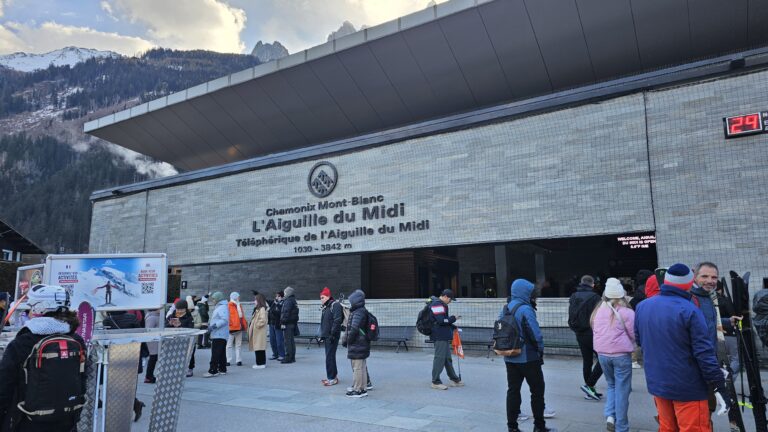
September can be a really good time to consider Chamonix if you want to visit outside the busiest summer months. You'll still have the chance to enjoy the mountains and walking trails, but with fewer of the peak summer crowds.
As you move further into autumn, though, planning becomes much more important. October and particularly November fall between the main summer and winter seasons, and this is when some of the mountain lifts close for maintenance before reopening for winter.
Aiguille du Midi is the big one to watch. In 2026, it's scheduled to close from 2 November to 18 December. If seeing Aiguille du Midi and Step Into the Void is one of the main reasons you're travelling to Chamonix, I'd avoid booking during its closure period.
November could otherwise look quite tempting. Flights and accommodation may be cheaper than during the main ski season and you might already be thinking of Chamonix as a winter destination. But snow on the mountains doesn't necessarily mean the winter season has started or that all the lifts are running.
This is why I wouldn't choose Chamonix dates based on weather alone. Check the opening dates for the attractions you most want to visit first, then book your trip around them.
If you're flexible with dates and want to visit in autumn, I'd personally be more drawn to September when there's a better chance of the summer operations still running and you can enjoy Chamonix before the main autumn maintenance period begins.
One of the biggest things I learned when researching Chamonix is that winter doesn't automatically mean everything is open.
Chamonix has several different mountain areas and attractions, and they don't all follow the same operating calendar. There are periods between the summer and winter seasons when lifts close for maintenance, and opening dates can also vary from one year to the next.
The most important one for many first-time visitors is Aiguille du Midi. For 2026, it's scheduled to close from 2 November to 18 December, reopening for the winter season on 19 December.
That's a fairly substantial closure and one I don't think is immediately obvious when you're planning a winter trip. If I was booking Chamonix for late November or the beginning of December, I'd probably assume a cable car taking you up a snow-covered mountain would be operating. It isn't necessarily the case.
The Montenvers Railway and Mer de Glace also have their own operating calendar, as do the other cable cars and mountain areas around Chamonix. On top of scheduled closures, services can be suspended because of weather or operational conditions.
I'd therefore do this before booking a Chamonix trip:
• Decide which mountain attractions are must-dos for you
• Check their official operating dates for the year you're visiting
• Check again shortly before travelling for any changes
• Have a backup plan in case poor weather affects the lifts on the day
We managed to visit both Aiguille du Midi and Montenvers/Mer de Glace during our February trip, but I'd have been gutted if we'd travelled all the way from Geneva and discovered one of them was closed simply because I'd chosen the wrong dates.
This is particularly important if you're only giving yourself one day in Chamonix, as we did. With a longer stay you have more flexibility to move things around if the weather isn't playing ball.
The best time to visit Chamonix really depends on what you want from your trip.
For a snowy winter trip: January to March. We visited in February and thought it was a great time to go, even though we weren't there to ski. We had the snowy mountain scenery we wanted and the main attractions on our itinerary were operating.
For skiing and snowboarding: The main winter season generally runs from December into April, although the exact dates vary between the different ski areas and depend on snow conditions.
For hiking and outdoor activities: July and August give you the widest choice of summer activities and mountain lifts, but they're also amongst the busiest months.
For summer sightseeing with potentially fewer crowds: June and September are worth considering. Just check the operating dates for the specific lifts and attractions you want to use, particularly towards the edges of the summer season.
For fewer crowds: Spring and autumn can be quieter, but this comes with a trade-off. These are also the periods when you're more likely to find mountain lifts closed between seasons.
For Aiguille du Midi: Don't choose your dates until you've checked its operating calendar. This is particularly important in November and early December when the annual maintenance closure usually takes place. In 2026, it's scheduled to close from 2 November until 18 December.
For a Geneva and Chamonix trip: Chamonix can work throughout much of the year because Geneva gives you plenty to do regardless of mountain conditions. We combined the two in February and found it really easy to visit both during one short trip.
For us, February was a great choice. We got proper winter scenery, good weather for most of our visit and everything we'd planned to do was operating. I wouldn't hesitate to visit at that time of year again.
| What you're visiting for | Best time to visit | Things to know |
|---|---|---|
| Snowy winter scenery | January to March | We visited in February and had fantastic winter scenery, even though we weren't there to ski. |
| Skiing & snowboarding | December to April | Exact opening dates vary between ski areas and depend on snow conditions. |
| Hiking & outdoor activities | July & August | The widest choice of summer activities, but also some of the busiest months. |
| Summer sightseeing | June & September | A good option outside the busiest summer weeks, but check lift dates towards the edges of the season. |
| Fewer crowds | Spring & autumn | Quieter, but seasonal lift closures can limit what you can do. |
| Aiguille du Midi | Check before booking | Annual maintenance closures are important. In 2026 it's scheduled to close from 2 November to 18 December. |
| Geneva + Chamonix | Most of the year | We combined the two in February and found it worked really well for a short winter trip. |
Chamonix's location in the Alps means the weather can vary considerably depending on both the time of year and your altitude.
This is particularly important if you're planning to visit places such as Aiguille du Midi. The weather down in Chamonix can look completely different from the conditions at almost 4,000 metres, so a clear morning in town doesn't necessarily guarantee clear views at the top.
We experienced this ourselves in February. The weather in Chamonix was lovely and we had really clear views across the valley and mountains, but once we reached the very top of Aiguille du Midi there was cloud around the summit. Thankfully, it was clear below that, so we still got some incredible views during the journey.
Conditions can also change quickly in the mountains, which is why I'd avoid planning a Chamonix trip around just one very tight weather-dependent activity if you have the option to stay for longer.
Yes. Chamonix is a major winter destination and snow is common in the mountains throughout the ski season. However, the amount of snow you'll see down in the town itself can vary.
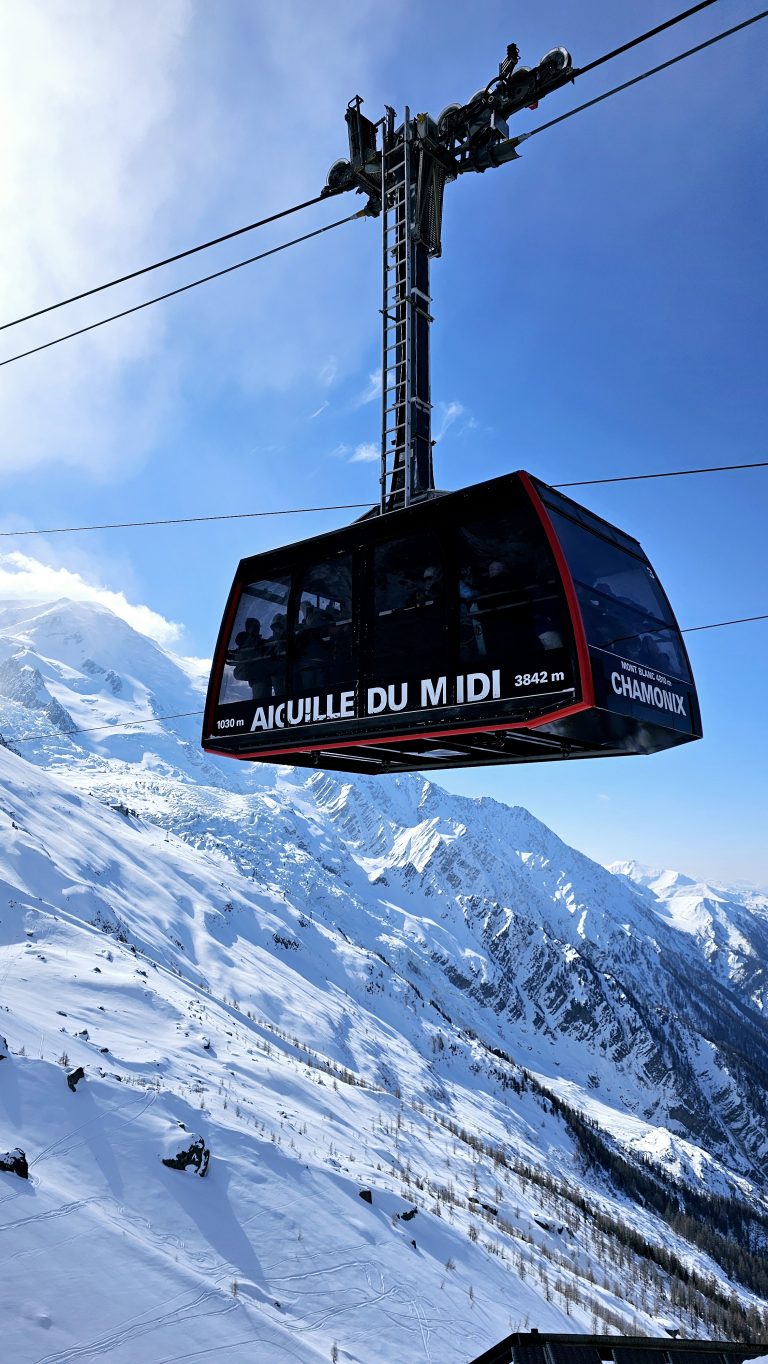
If you're visiting because you want that snowy Alpine scenery, I'd look at January to March rather than assuming you'll automatically find lots of snow in Chamonix at the beginning of December.
Even outside winter, you'll often still see snow on the highest peaks around Chamonix, which is part of what makes the scenery here so impressive.
We wore the ski jackets and winter boots we'd previously bought for Lapland. The ski jackets were definitely useful, particularly when we travelled higher up the mountain where it was much colder than it felt down in Chamonix.
Our winter boots were probably more than we actually needed for walking around the town itself, but I was still glad we'd worn them. They kept our feet really warm and, more importantly, gave us a good grip whenever we were walking around in the snow.
I'd also take warm layers, gloves and a hat, particularly if you're planning to visit Aiguille du Midi. Even if Chamonix feels quite mild and sunny, you're travelling thousands of metres higher and the temperature can feel completely different once you reach the top.
For us, dressing for proper winter conditions worked well. We could always remove a layer if we got too warm, but we never had to worry about being cold while we were out exploring.
Save 5% via the GetYourGuide app with our exclusive code BUILDABREAK5
It depends on what you want to do. For a winter trip, January to March gives you the best chance of snowy scenery with the main winter season underway. For hiking and summer activities, June to September is a better choice.
Definitely. We didn't visit Chamonix to ski and still easily filled our time. Aiguille du Midi, Montenvers and Mer de Glace were the main reasons we wanted to visit, alongside seeing Chamonix itself. You can read more about what we liked, what we'd change and whether we'd go back in our Is Chamonix Worth Visiting? guide, or find more ideas in our 20 Things to Do in Chamonix guide.
I wouldn't necessarily say there's a time you need to avoid Chamonix completely, but I'd be careful with November and early December if the mountain attractions are important to you. This is when annual maintenance closures can affect some of the major lifts. In 2026, Aiguille du Midi is scheduled to close from 2 November until 18 December.
It was a great time for our trip. We had snowy mountain scenery, the attractions we wanted to visit were operating and we had good weather overall. February is also firmly within the winter season, although it can be busy around school holidays.
You can see a surprising amount in one full day, which is what we did when we visited from Geneva. If you want more flexibility around mountain weather, do some hiking or explore at a slower pace, I'd allow longer.

Planning your own Chamonix trip? These guides might help:
• 3-Day Chamonix & Geneva Itinerary – Our full trip, including how we combined Geneva and Chamonix, what we did and our real costs.
• How to Get from Geneva to Chamonix – Bus, transfer and other transport options, including the route we used for our own trip.
• 20 Things to Do in Chamonix – Our guide to the best things to see and do, including Aiguille du Midi, Step Into the Void and Montenvers/Mer de Glace.
• Is Chamonix Worth Visiting? – Our experience visiting Chamonix as non-skiers, including what we loved, what we'd change and whether we'd visit again.








Copyright © Build a Break | Website by Furness Media