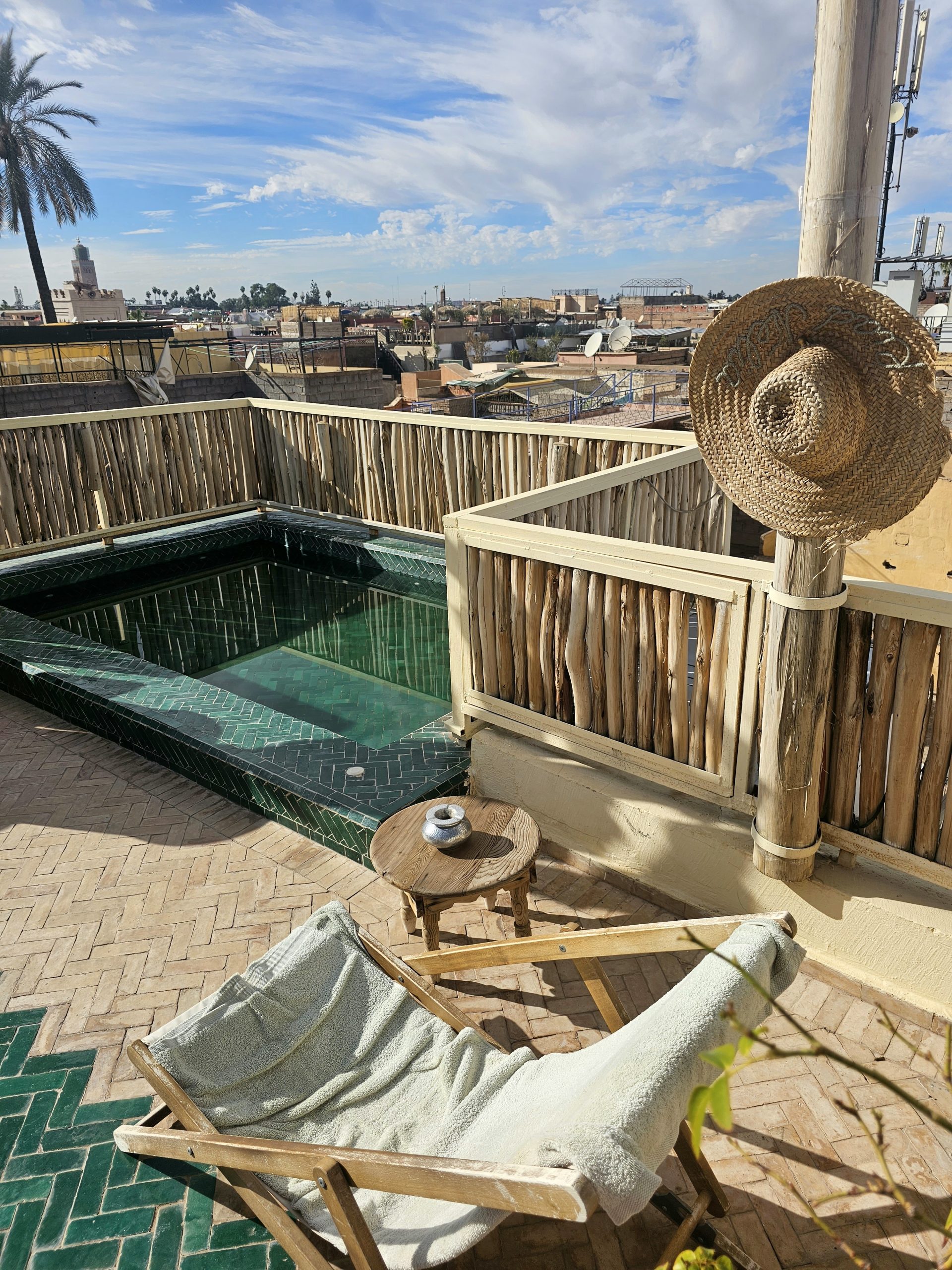
I visited Marrakech with my husband in February, and there were a few things I was glad we’d sorted before arriving, along with others we worked out as we went.
Having mobile data made finding our way through the medina much easier, and arranging a driver through our riad took the hassle out of getting to places we couldn’t walk to.
We loved wandering through the souks, stopping to look at the colourful shops and heading out for rooftop dinners, but Marrakech felt quite different from the European city breaks we’d done before.
There’s a lot going on, particularly around Jemaa el-Fnaa, and knowing a little about getting around, shopping and what to expect helps make those first few hours less confusing.
These Marrakech travel tips cover the practical things worth knowing before a first visit, including cash, clothing, transport, mobile data and finding your way around the medina. I’ve included what worked for us and the things I’d keep in mind when planning another trip.
Some of the links in this guide are affiliate links. This means we may earn a small commission if a purchase is made through them, at no extra cost to you. Thanks for supporting Build a Break.
Arrival: Arrange an airport transfer through the accommodation if that makes arrival easier, and check where the driver can drop off.
Getting around: Explore the medina on foot, wear comfortable shoes and save the riad’s location on your phone.
Mobile data: Check roaming charges before travelling and compare an eSIM or local SIM if Morocco isn’t included.
Money: Have some Moroccan dirhams for smaller purchases and check whether accommodation and restaurants accept cards.
Taxis: Confirm the fare or use of the meter before the journey starts.
Shopping: Haggling is common in the souks, but agree a price that feels fair rather than aiming for a fixed discount.
Clothing: Lightweight clothes that cover shoulders and knees are a practical choice for exploring, with a layer for cooler evenings.
Photos and offers: Ask before photographing people, and agree any price before accepting a service.
Planning: Leave time for wandering, cafe stops and a break at the riad rather than filling every hour
Getting from Marrakech Airport to the accommodation is worth thinking about before travelling, especially when staying in a riad tucked away in the medina. An airport taxi is one option, but I’d also ask the accommodation about a private transfer, as ours made arriving really straightforward.
We arranged our transfer through Riad Nelia, which cost £20 for the two of us when we visited. The riad sent a private driver who knew exactly where we were staying and walked us right to the door, so there was no wandering through unfamiliar streets trying to find the entrance.
We didn’t need any cash on arrival either, as the transfer was added to our room bill. For £20, we felt it was well worth arranging through the riad, particularly for a first visit.
If you’d rather organise a taxi on arrival, Marrakech Airport has an official taxi counter outside arrivals. Give your destination and pay the fixed fare by card or cash, then scan the receipt at the kiosk to receive a ticket showing your allocated taxi. Indicative fares to the city centre are around 150–180 MAD, although the exact price should be confirmed at the counter.
Whichever option you choose, check where the driver can drop off and whether there’s a final walk to the accommodation. Save the address, contact number and any arrival instructions on your phone before travelling, and ask whether someone can meet you if the entrance is difficult to find.
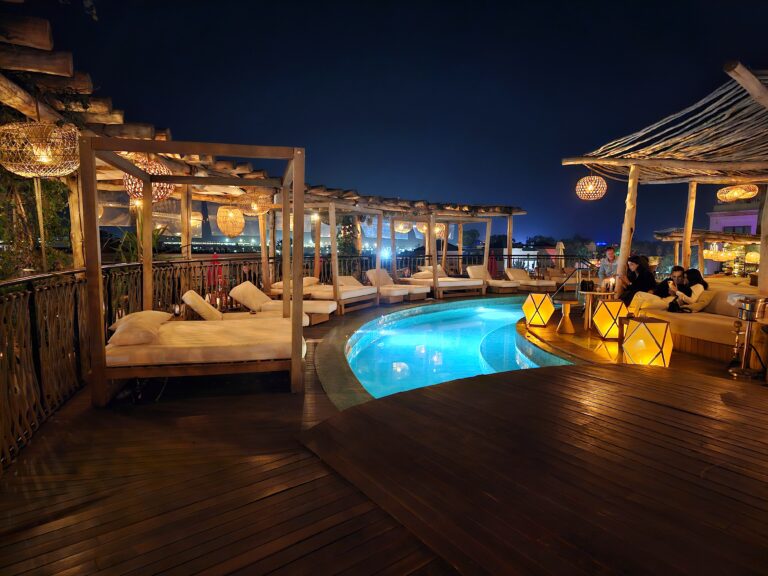
Morocco isn’t covered by a European roaming allowance, so check what your provider charges before travelling. Using our usual BT package would have cost around 60p per text and a few pounds per minute for a call when we visited, which soon adds up when keeping in touch with home.
We’d left the children with family, so we wanted to check in without worrying about the bill every time we called or sent a message. Instead, we arranged a separate SIM package for around £10 for the whole trip, which gave us 1GB of data along with some included calls and messages. That was a much more affordable option for us.
The data was also useful when exploring Marrakech. Plenty of the alleyways in the medina looked similar to us, particularly at night, and being able to check Google Maps made finding our way back to the riad much easier.
Most hotels and some restaurants also have Wi-Fi, which is handy for catching up with family, but we were glad to have our own connection when out and about. Before buying a SIM or eSIM, check that it works with the phone and compare the allowance, how long it lasts and whether calls and messages to the UK are included, as some packages only provide data.

Walking through the medina was one of our favourite parts of Marrakech, but it took us a little while to get our bearings. There are narrow streets leading off in every direction, and when distracted by the shops, it’s quite easy to forget which turning you’ve just taken.
We used Google Maps a lot during our stay, particularly when heading back to the riad at night. Having the directions on the phone felt more discreet than standing with a paper map, although I’d still ask the accommodation for any useful landmarks near the entrance.
For the first wander, I’d leave plenty of time rather than heading out with a restaurant reservation in ten minutes and assuming the route will be obvious. Comfortable shoes are useful too, and it’s worth paying attention to the streets around the riad so they become more familiar each time you return.
If someone offers directions without being asked, there’s no need to follow them. Some offers of help can come with an expectation of payment, so if unsure, ask in a shop or cafe, or contact the accommodation instead. Equally, there’s no need to feel suspicious of everyone who speaks to you; a polite “no, thank you” is enough when help isn’t wanted.
A guided walk is another option for getting to know the medina, especially if interested in its history as well as finding the way around. We enjoyed exploring independently, but I’d book a guide through the accommodation or a clearly advertised tour rather than agreeing to an unexpected offer in the street.

For journeys around Marrakech, check the fare or whether the meter will be used before getting into a taxi. It’s much easier to sort that out at the start than arrive at the destination with two different ideas about what the journey should cost.
Have the destination ready on your phone, particularly when travelling to a restaurant or riad with a name that could be confused with somewhere else. If agreeing a fixed fare, confirm that it’s the total for everyone travelling, and check whether payment needs to be in cash.
We used a driver arranged through our riad for some journeys during the trip. It wasn’t always the cheapest option, but for a short break we were happy to pay for the convenience of having someone who knew where we wanted to go and how to get us back.
If unsure what a journey should cost, ask the accommodation before heading out. They may also be able to arrange transport or explain where to find a taxi nearby.
It’s worth thinking about the return journey too, especially for dinner somewhere away from the medina. We found it easier to have a plan than finish a lovely evening and then start working out how to get back to the riad.
The Moroccan dirham, usually shown as MAD or DH, is a closed currency and isn’t normally available from UK bureaux de change. Plan to withdraw some cash from an ATM or exchange money when you arrive in Morocco, as you’ll need dirhams for some payments during the trip.
We had to pay part of our stay in cash, including extras such as our driver. These were added to our room bill, which made keeping track of everything easy, but we still needed cash to settle those charges before leaving.
It’s worth asking the accommodation beforehand what can be paid by card and what needs to be paid in cash, including transfers, other extras and any local taxes. That way, you can arrange enough money without making an unexpected trip to an ATM just before checking out.
Keep some smaller notes handy for shopping in the souks, food stops and taxis too, rather than assuming cards will be accepted everywhere. When withdrawing money, check any fee shown by the ATM along with the overseas withdrawal charges from your own bank.
Towards the end of the trip, work out what still needs paying before withdrawing more. Dirhams aren’t easily exchanged outside Morocco, so it’s better to avoid going home with lots of unused cash.
Browsing the souks was one of our favourite things to do in Marrakech. We particularly loved the light and lantern shops, although travelling with hand luggage only meant we had to leave some lovely things behind. It’s worth thinking about how something will get home before getting too attached to it!
Haggling is common in the souks, so the first price given isn’t necessarily the final one. Have a look around a few stalls to get an idea of prices, then decide what you’re comfortable spending before starting to negotiate.
As a rough starting point, try offering around 30% of the asking price and leave room to work upwards. That’s an opening offer rather than a guaranteed final price, and how much room there is to negotiate will depend on the item and the seller. Keep it friendly and aim for a price you’re both happy with.
There’s no obligation to buy something just because you’ve stopped to look, and it’s fine to politely decline and walk away if the price is more than you want to spend. Once you’ve agreed a price and committed to buying, have the payment ready rather than reopening the negotiation.
Give yourself time to browse without feeling that every stop needs to result in a purchase. The colours, displays and variety of shops were a big part of what we enjoyed about Marrakech, even when we weren’t buying anything.
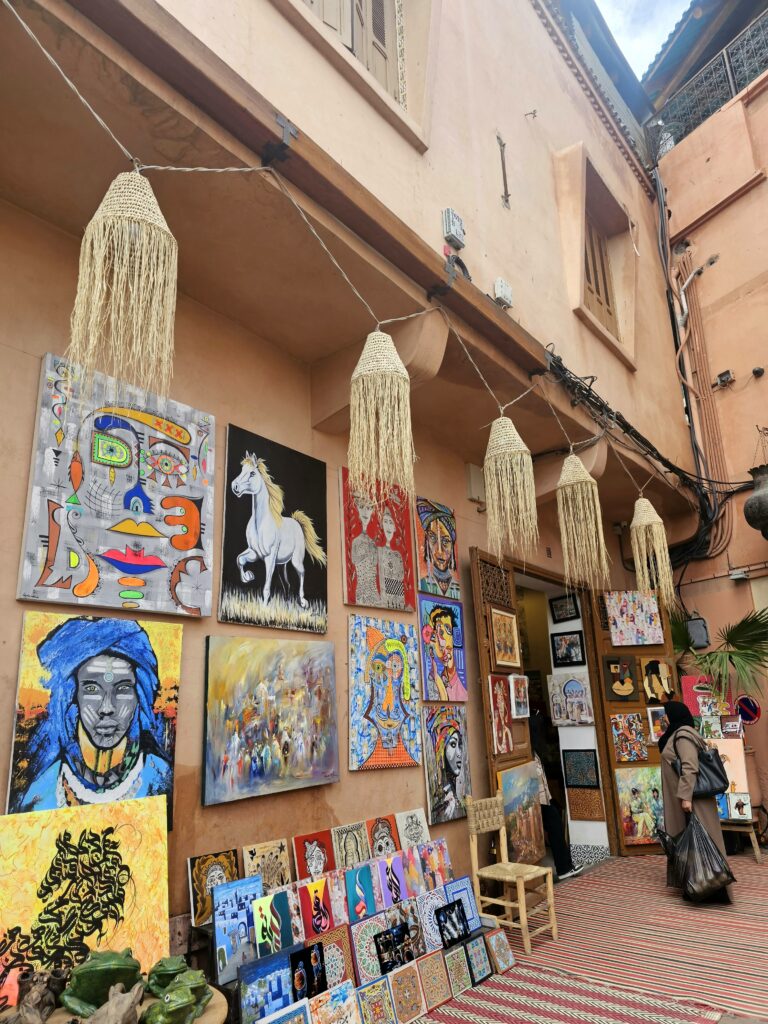
For exploring Marrakech, I’d pack lightweight, loose-fitting clothes and comfortable shoes. There’s plenty of walking involved in the medina, and something that feels fine for a quick stroll at home might be less comfortable after several hours wandering through the souks.
Clothes that cover shoulders and knees are a straightforward choice for respecting local customs, particularly in the more traditional parts of the city. That doesn’t mean buying a whole new holiday wardrobe, as loose trousers, longer skirts or dresses and light tops can all work well.
Check any dress requirements for the places on your sightseeing list, and consider carrying a light scarf or overshirt if extra coverage might be needed. For rooftop dinners, I’d also check whether the restaurant has a dress code before packing.
We visited in February and enjoyed lovely warm weather, but I’d still take a cardigan or light jacket for the evenings rather than packing entirely for summer. Think about any activities too, as the clothes and shoes needed for quad biking or a walking tour may be different from those chosen for dinner.
With hand luggage only, pieces that can be worn together and used during both the day and evening help keep the packing manageable.
Marrakech gave us plenty to photograph, from the colourful displays in the souks to the little streets around our riad. When people are the subject of a photo, though, ask first rather than assuming they’re happy to be included. If photographing a shop display, it’s polite to check with the seller too.
Around Jemaa el-Fnaa, don’t assume that posing with a performer or taking a close-up photo is free. Ask whether there’s a charge and agree the amount beforehand, rather than finding out afterwards that payment is expected.
The same applies to henna or any other service offered while walking around. If interested, choose somewhere with clear prices and agree the design and cost before anything is applied. If not interested, a firm but polite “no, thank you” makes your intentions clear.
There’s no need to accept an offer because someone is persistent, and it’s fine to keep walking. Knowing what you’ve agreed to, including the price, makes these situations easier to handle without turning every interaction into something to worry about.
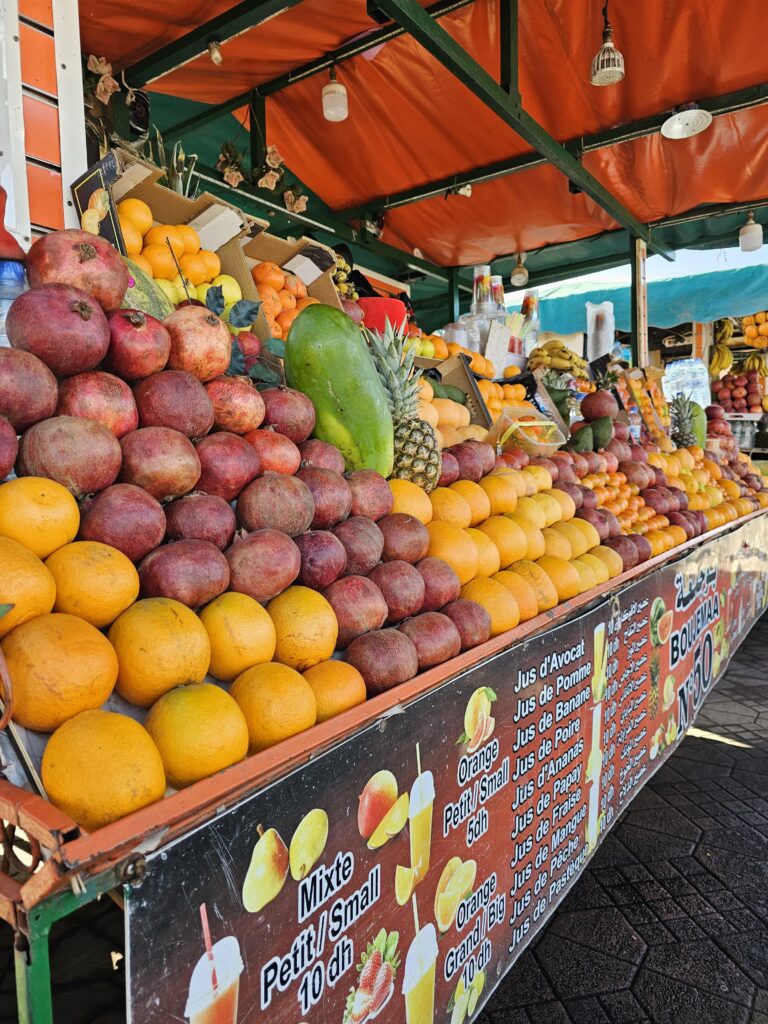
Before travelling, decide which sights, restaurants and activities matter most to you, then check whether they need booking ahead. There’s still plenty of room to wander and make plans as you go, but it would be a shame to miss something you’d been looking forward to because the tickets or tables had gone.
For Jardin Majorelle, buy a timed ticket through the official ticket website. Check what’s included before paying, as garden entry and the different museum options aren’t all the same. Save the confirmation on your phone and leave enough time to get there for the booked slot.
I’d also reserve any rooftop restaurant that’s a priority, particularly if hoping to eat around sunset. We loved our evenings at Dar Dar and La Trattoria, and having dinner arranged gave us something to look forward to without spending the evening searching for a table.
For activities outside the centre, check the pickup arrangements carefully. A tour offering hotel collection may have a meeting point for guests staying down streets that vehicles can’t reach, so confirm the details rather than assuming pickup means the riad’s front door.
Read the cancellation terms and what’s included too, especially transfers, admission fees and meals. Once those bookings are in place, leave some gaps for browsing the souks, stopping for a drink and enjoying the riad rather than filling every hour.
You can find our restaurant experiences in the Where to Eat in Marrakech guide.
For drinking water in Marrakech, sealed bottled water is a straightforward option. Check that the seal is intact when buying it, and don’t assume water from a tap or an unlabelled jug has been treated for drinking. If unsure about the water supply, use bottled or properly treated water for brushing teeth too.
It’s also worth checking that ice is made from safe drinking water, or leaving it out if that can’t be confirmed. Keep water handy while exploring, particularly on warmer days when it’s easy to spend several hours walking around the medina.
When choosing somewhere to eat, look for food freshly prepared, cooked thoroughly and served hot. Wash your hands before eating, and carry hand sanitiser for occasions when there isn’t somewhere to wash them.
There’s plenty to enjoy about eating in Marrakech, so this doesn’t need to become a worry at every meal. A few sensible precautions can help reduce the chance of a stomach bug interrupting a short break.
There’s no need to arrive in Marrakech knowing exactly how everything works, but a little preparation makes those first few hours easier. These are the main things I’d keep in mind for a first visit.
• Check how to reach the accommodation and find its entrance.
• Sort mobile data and save useful contact details before travelling.
• Have some dirhams available and check which accommodation charges need paying in cash.
• Agree taxi fares and the cost of any services beforehand.
• Compare prices and keep haggling friendly.
• Ask permission before photographing people.
• Leave time to wander and enjoy the city between bookings.
• Assume the usual European roaming allowance covers Morocco.
• Assume everywhere accepts cards.
• Feel obliged to buy something or accept unwanted help.
• Take a performer’s photo without checking whether payment is expected.
• Pack so much into each day that there’s no time for a break.
We loved our February trip, and having a few practical things sorted meant we could spend more time enjoying Marrakech. Once the arrival, money and phone arrangements are covered, there’s room to relax and explore at your own pace.
For help choosing a base, our Where to Stay in Marrakech guide compares riads, hotels and villas. Once that’s sorted, our 18 Things to Do in Marrakech guide can help you choose your activities, while our 3-Day Marrakech Itinerary suggests how to fit them into a short break
Whenever I spot great-value flights and accommodation for DIY breaks to Marrakech and other destinations from UK airports, I share them with members of the Build a Break Travel Club, with links to book each part independently.








Copyright © Build a Break | Website by Furness Media