Bernina Express vs Regional Train: Is the Extra Cost Worth It?
11th October | Sarah Kenny
Last updated July 20, 2026
Bernina Express vs Regional Train: Quick Answer
If this is your first time travelling the Bernina route from Chur to Tirano, I would choose the Bernina Express.
The additional reservation fee is relatively small compared to the overall cost of travelling to Switzerland, and the panoramic carriages make the journey feel more special.
However, if you're travelling on a budget, want complete flexibility or plan to stop at places such as Alp Grüm or Ospizio Bernina, the regional train may actually be the better option.
The important thing to know is this:
Both trains travel along exactly the same UNESCO World Heritage railway.
The scenery is identical.
The difference is simply how you choose to experience it.
If you're still planning your route around Switzerland, my Switzerland Travel Guide brings together all of my Bernina Express guides, scenic train routes, itineraries and destination advice in one place.
Sarah
Build a Break
I've completed specialist Swiss public transport training and regularly update my knowledge with the Swiss Tourist Board, alongside exploring Switzerland myself.
Photography is one of the main reasons travellers choose one train over the other.
Many websites claim the regional train is better because the windows open.
That isn't entirely true.
Bernina Express Photography
One of the biggest myths is that you can't take glare-free photographs on the Bernina Express.
In reality, second-class panoramic carriages have drop-down windows located in the carriage doors.
These allow you to capture photographs without reflections.
We have travelled on the Bernina Express ourselves and found the drop-down door windows worked brilliantly for taking glare-free photos.
Bernina Express Panoramic Carriage Door
Regional Train Photography
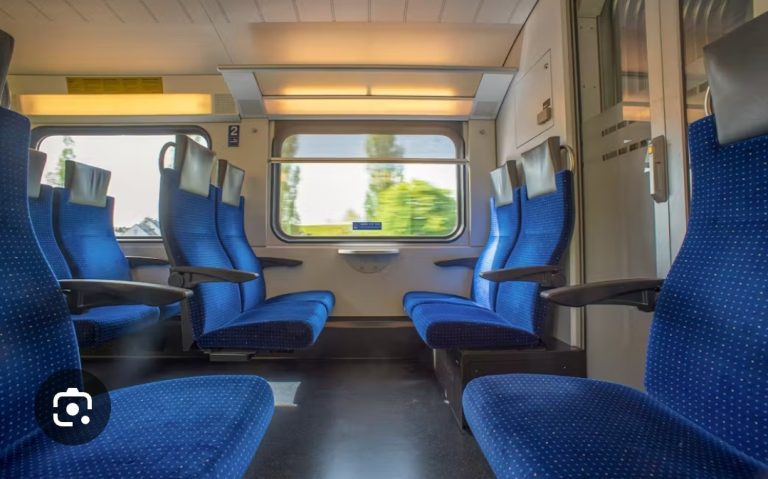
Regional trains can also be excellent for photography.
Depending on the carriage, some windows open, allowing unrestricted photos.
Because trains are often quieter, it can be easier to move around and switch sides.
Regional Red Train Layout
Photography Verdict
If photography is your main priority, I would give a slight edge to the regional train.
While the Bernina Express does have drop-down windows in the carriage doors that allow for glare-free photos, the regional train offers more opportunities to photograph the scenery through open windows and move around the carriage.
That said, both trains provide excellent photography opportunities and you'll see exactly the same spectacular scenery regardless of which service you choose.
For most travellers, I don't think photography alone is a good enough reason to choose one train over the other. However, if capturing the best possible photos is your top priority, the regional train probably has a small advantage.
Is Bernina Express 2nd Class Worth It?
We travelled in Bernina Express 2nd Class ourselves and never felt we were missing out.
The seats were comfortable, spacious and perfectly adequate for a journey of just over four hours.
The panoramic windows are exactly the same experience you'll enjoy throughout the train.
For most travellers, I don't believe upgrading to first class offers enough additional value to justify the higher fare.
If you're considering the Bernina Express, second class is the option I would recommend.
Which Train Is Better for Families?
For families, I think the Bernina Express has the edge.
The guaranteed seats, larger windows and uninterrupted journey make the experience easier and more enjoyable.
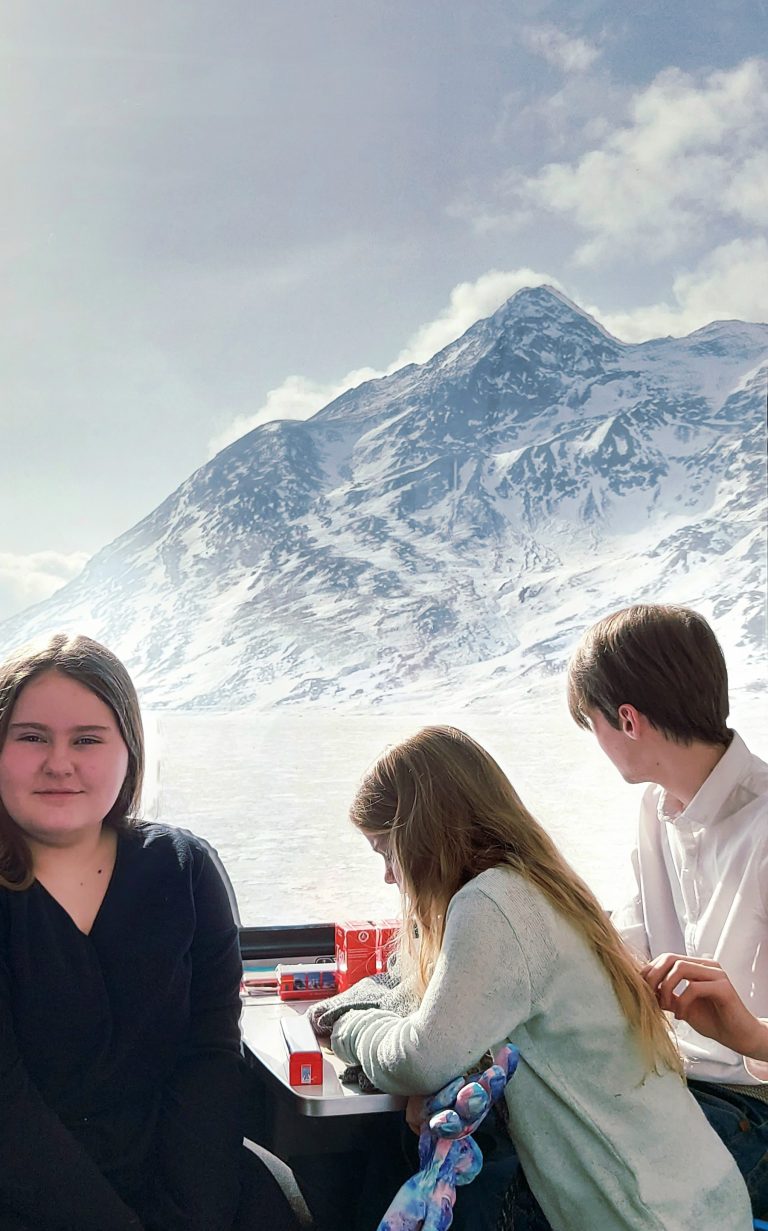
We travelled on the Bernina Express with four children aged 7, 11, 13 and 17 and all of them enjoyed the journey.
As a family, we have travelled extensively through Italy by train, from the north of the country right down toCalabria and across to Sicily. If you're continuing beyond Tirano, myLake Como guides, Northern Italy travel guidesand 16 Day Italy by Train itinerary can help you plan the next part of your journey.
Which Train Is Better for a Switzerland to Italy Itinerary?
If you're travelling from Switzerland to Italy and simply want to enjoy the journey, the Bernina Express works brilliantly.
You board in Chur and remain on the same train all the way to Tirano.
From there you can continue onwards to:
Lake Como
Milan
Verona
Venice
This is exactly the route we followed ourselves as part of our 5 Day Bernina Express Itinerary, continuing from Tirano through Lake Como before exploring more of Italy by train.
If you're planning a longer rail holiday through Switzerland, our 10 Day Switzerland Itinerary may also be useful.
Alp Grum Station on Bernina Express
Cost Comparison
Bernina Express
Base fare: approximately CHF 66
Seat reservation: approximately CHF 36
Total: approximately CHF 102
Regional Train
Base fare: approximately CHF 66
Reservation fee: none
Total: approximately CHF 66
The actual difference comes down to the reservation supplement.
For most travellers, the question is whether the panoramic experience is worth an additional CHF 36.
If you're travelling around Switzerland for several days, it's also worth checking whether a Swiss Travel Pass works out better value than buying individual tickets.
Bernina Express Pros and Cons
Pros
Panoramic windows
Reserved seating
No train changes
Comfortable journey
Onboard commentary
Feels more special
Cons
Higher cost
Limited departures
Less flexibility
Regional Train Pros and Cons
Pros
Cheaper
Flexible timetable
Easier to stop along the route
Great for photography
No reservations required
Cons
May require train changes
Less premium experience
Standard interiors
Which Train Would I Choose?
If this is your first time travelling the Bernina route, I would choose the Bernina Express.
However, if you've already travelled on the Bernina Express before, want complete flexibility or plan to make multiple stops along the route, the regional train is an excellent alternative.
The scenery is identical.
The difference is simply how you choose to experience it.
For us personally, the price difference isn't significant enough to choose the regional train over the Bernina Express.
For most people, this is a once-in-a-lifetime journey, which is why I'd still choose the Bernina Express. If you're looking for more unforgettable rail journeys afterwards, my guide to the best scenic train journeys in Switzerland includes several other routes I'd happily travel again.
Frequently Asked Questions
Is the Bernina Express worth the extra cost?
For most first-time visitors, yes. The panoramic windows, reserved seating and uninterrupted journey make the experience feel more special.
Does the regional train follow the same route?
Yes. Both trains use exactly the same UNESCO World Heritage railway from Chur to Tirano.
Which train is cheaper?
The regional train is cheaper because there is no reservation fee.
Which train is best for photography?
Both are excellent. The regional train has opening windows on some services, while the Bernina Express has drop-down windows in the carriage doors. But I would give a slight edge to the regional train due to the additional opportunities for reflection-free photography.
Which train is best for families?
I would choose the Bernina Express due to the reserved seating and more relaxed experience.
Can I take the Bernina Express one way and the regional train back?
Absolutely. In fact, this is one of the best ways to experience both options.