The Bernina Express is widely considered one of the most spectacular railway journeys in the world.
Running from Switzerland to Italy through the heart of the Alps, this UNESCO World Heritage railway passes glaciers, mountain lakes, dramatic viaducts and some of Europe's most breathtaking scenery.
Unlike many famous mountain railways, the Bernina Express doesn't rely on cogwheels or rack railways to climb the mountains. Instead, it uses an incredible network of spiral tunnels, bridges and carefully engineered gradients to reach an altitude of 2,253 metres above sea level.
Whether you're planning a day trip from Milan, a Switzerland rail holiday or simply wondering if the Bernina Express is worth it, this guide covers everything you need to know.
If you're still planning your route, my Switzerland Travel Guide brings together all of my Bernina Express guides, scenic train routes, itineraries and destination advice in one place.
This post may contain affiliate links. If you make a purchase through these links, we may earn a small commission at no extra cost to you. Thank you for supporting Build a Break.
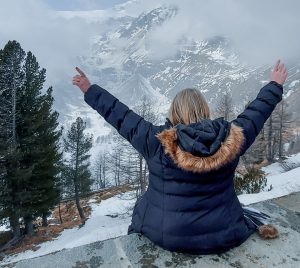
I've completed specialist Swiss public transport training and regularly update my knowledge with the Swiss Tourist Board, alongside exploring Switzerland myself.
In this guide you'll find information on:
I've travelled the Bernina Express myself, created Bernina content viewed over 100 million times and hold the Swiss Travel System Gold Diploma, awarded by the Swiss Travel System Excellence Programme.
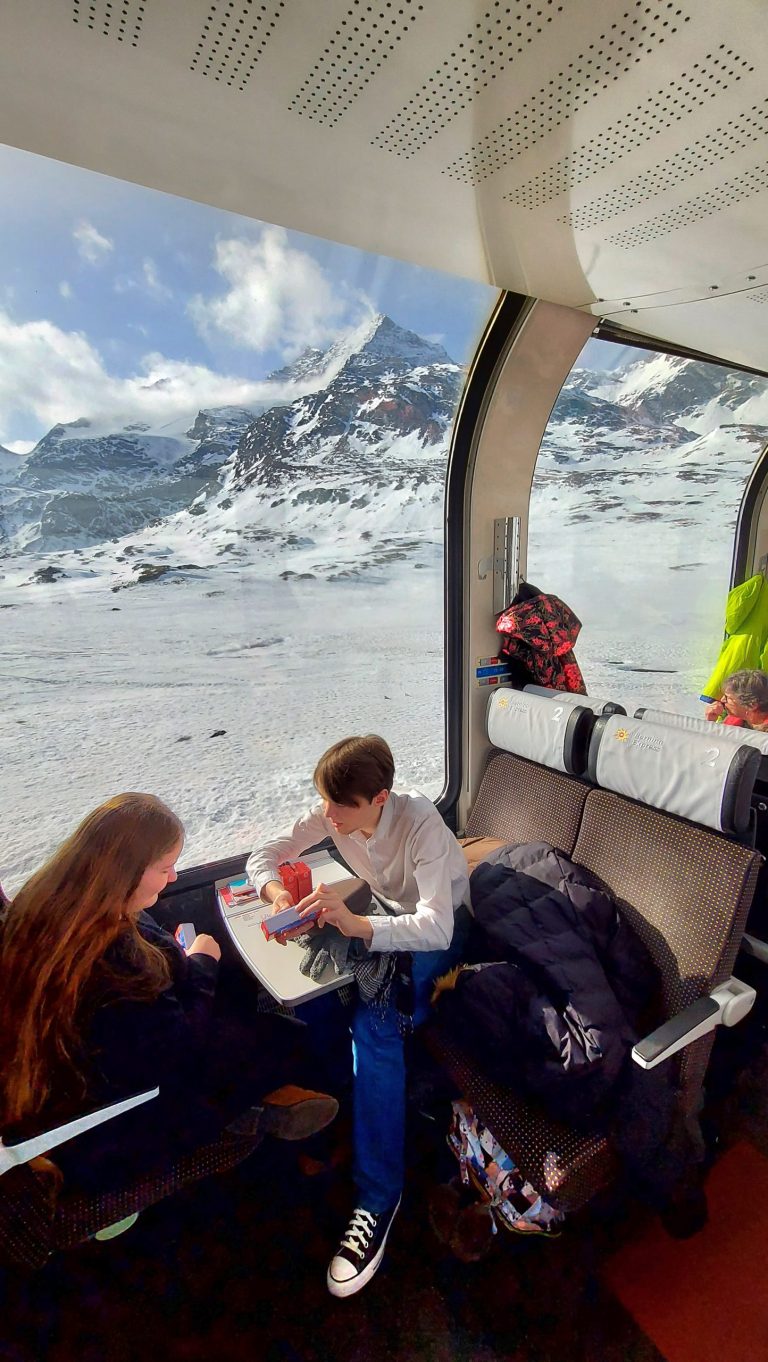
Route: Chur or St Moritz to Tirano
Country: Switzerland & Italy
Journey Time: 2 hrs 20 mins to 4 hrs 20 mins
Highest Point: Ospizio Bernina (2,253m)
Reservations Required: Yes
Best Starting Point: Chur
Best Time to Travel: Year-round
UNESCO World Heritage Route: Yes
Family Friendly: Yes
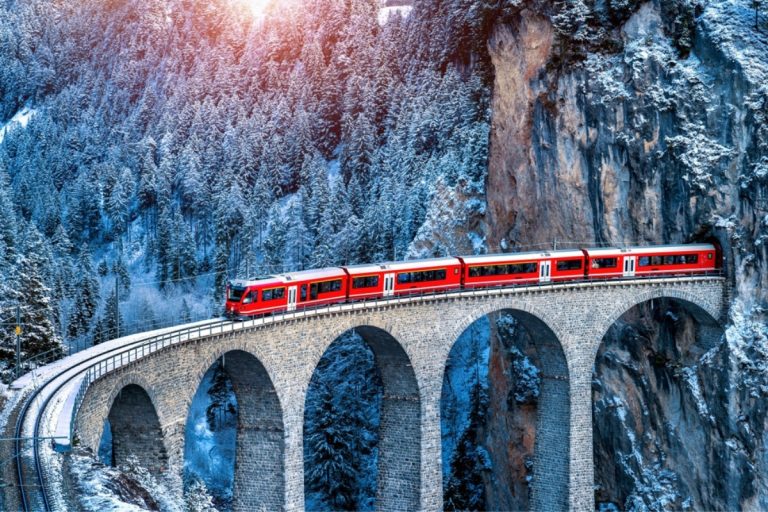
The Bernina Express is a panoramic sightseeing train operated by the Rhaetian Railway (RhB).
It travels along two UNESCO World Heritage railway lines:
Together, these routes create one of the most remarkable railway journeys in the world.
The train connects northern Switzerland with northern Italy, travelling between Chur or St Moritz and Tirano.
During the journey you'll pass:

One of the most fascinating aspects of the Bernina Express is how dramatically the scenery changes.
In just a few hours you'll travel from the high Swiss Alps to the Mediterranean atmosphere of northern Italy.
The total cost of travelling on the Bernina Express depends on your route, class of travel and the time of year.
In addition to a valid train ticket (or rail pass), passengers travelling in the panoramic Bernina Express carriages must also pay a compulsory seat reservation fee.
As a rough guide:
Children under 6 travel free and children aged 6-16 usually receive discounted fares.
For the most up-to-date pricing and reservation fees, always check the official Bernina Express website before booking.
For a family of six, the costs quickly add up, but the journey itself was one of the highlights of our Switzerland and Italy trip. The scenery is unlike anything we've experienced elsewhere in Europe and, for most travellers, this is a once-in-a-lifetime journey.
Yes.
The Swiss Travel Pass fully covers the train fare on the Bernina Express route, meaning you don't need to purchase a separate train ticket. However, you will still need to pay the compulsory seat reservation fee if travelling in the panoramic Bernina Express carriages.
If you're planning to travel extensively around Switzerland before or after your Bernina Express journey, a Swiss Travel Pass can often represent excellent value.
Read our full guide: Is the Swiss Travel Pass Worth It?
If you're travelling around Switzerland for several days, you'll also find example routes in my 6 Day Switzerland Rail Itinerary and 10 Day Switzerland Itinerary.
The Bernina Express operates year-round and each season offers a completely different experience.
Winter (December-February)
Snow-covered mountains, frozen lakes and dramatic alpine scenery.
Spring (March-May)
Waterfalls, snow-capped peaks and fewer crowds.
Summer (June-August)
Long days, bright colours and ideal conditions for combining the journey with Lake Como.
Autumn (September-October)
Golden forests, quieter trains and excellent photography opportunities.
Personally, winter remains my favourite due to the contrast between snowy Switzerland and sunny northern Italy.
There are plenty of scenic railways around the world, but very few offer such dramatic scenery in such a short distance.
Highlights include:
Unlike many scenic railways where the highlights are concentrated into a short section, the Bernina Express delivers spectacular scenery throughout the entire journey.
It's one of the reasons the route regularly appears on lists of the world's greatest train journeys.
The Bernina Express operates between Switzerland and Italy.
You can start your journey from either:
Chur
or
St Moritz
and travel to:
Tirano
in northern Italy.
The train also operates in the opposite direction, allowing you to travel from Tirano to either Chur or St Moritz.
Approximate journey time: 4 hours 20 minutes
This is the full Bernina Express experience.
The route includes:
Albula Valley
Landwasser Viaduct
Filisur
Bergün
Preda
Pontresina
Bernina Pass
Ospizio Bernina
Lake Bianco
Alp Grüm
Poschiavo
Brusio Circular Viaduct
Tirano
For most travellers, this is the route I recommend.
Approximate journey time: 2 hours 20 minutes
This shorter route skips the Albula section.
However, it still includes:
Bernina Pass
Ospizio Bernina
Lake Bianco
Alp Grüm
Brusio Circular Viaduct
It's ideal if you're short on time or already staying in St Moritz.
This is one of the most common questions travellers ask.
Choose Chur If:
Choose St Moritz If:
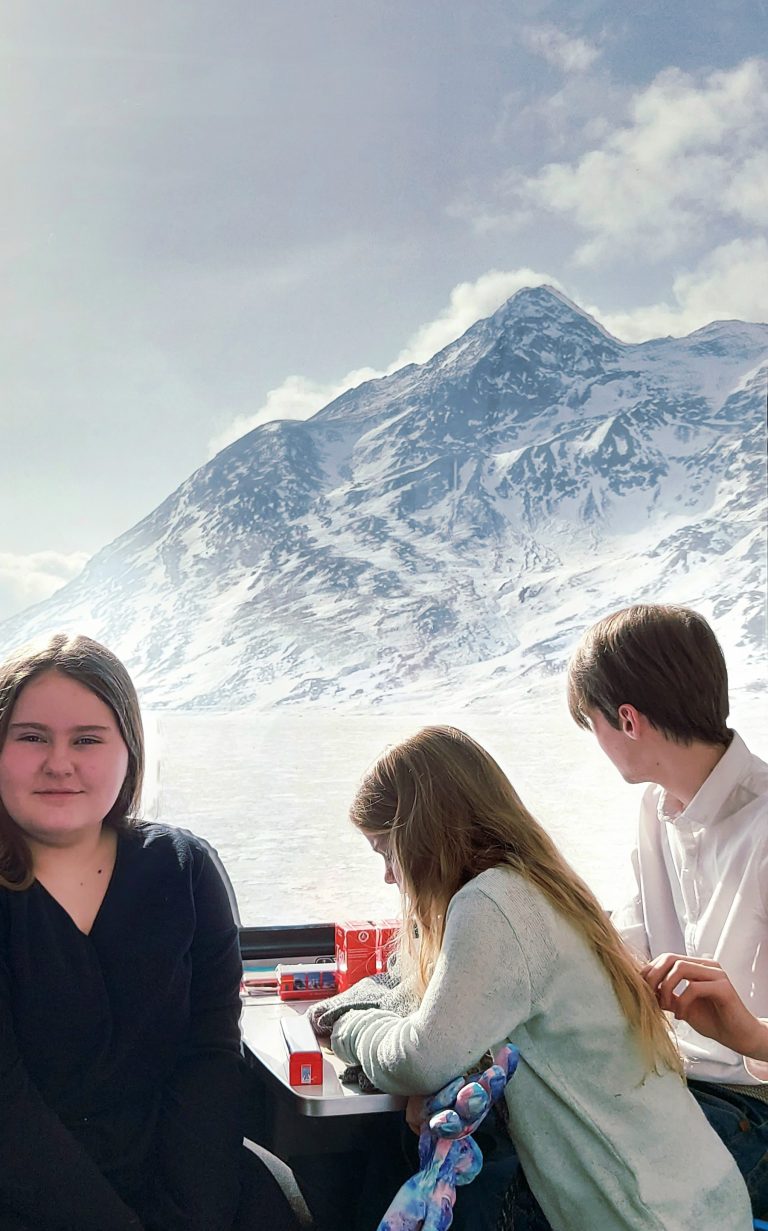
If possible, choose Chur.
The Albula section is one of the most impressive parts of the entire route and many visitors don't realise they'll miss it by starting in St Moritz.
The Bernina Express is spectacular in both directions.
However, if you're able to choose your seat, I recommend:
Chur → Tirano
Sit on the right-hand side
Tirano → Chur
Sit on the left-hand side
This generally provides the best views of:
Landwasser Viaduct
Albula Valley
Lake Bianco
Mountain scenery around Ospizio Bernina

The Bernina Express reservation system doesn't clearly show which side of the train you're selecting, and the scenery appears on both sides throughout the journey.
In reality, you'll enjoy spectacular views regardless of where you sit.
If photography is important to you, spend some time at the drop-down windows located in the carriage doors, where you'll have the opportunity to capture glare-free photos on either side of the train.
For me, choosing a window seat is far more important than worrying about which side of the carriage you're on.
One of the reasons the Bernina Express is so famous is because of how varied the scenery is.
The route travels through forests, mountain passes, glaciers, lakes, vineyards and historic villages, all within a single journey.
The train climbs from lowland Switzerland to 2,253 metres above sea level before descending into Italy.
This dramatic change in landscape is what makes the route so unique.

Chur is Switzerland's oldest city and the starting point for the full Bernina Express route.
The compact Old Town is filled with cobbled streets, cafés and historic buildings.
It's also one of the easiest places to reach from Zurich Airport, making it a popular overnight stop before boarding the Bernina Express.
We stayed overnight in Chur ourselves and would highly recommend doing the same if your itinerary allows.
We included Chur as an overnight stop on our own Switzerland to Italy rail itinerary, giving us an early start for the full Bernina Express route the following morning.
After leaving Chur, the train begins climbing through the beautiful Albula Valley.
Expect:
The scenery here feels distinctly Swiss and offers a wonderful introduction to the journey ahead.
This is arguably the most famous section of the entire route.
The six-arched stone viaduct curves dramatically across a deep gorge before disappearing directly into a cliffside tunnel.
Many people recognise the Landwasser Viaduct before they've even heard of the Bernina Express.
It's one of the most photographed railway structures in the world.
A traditional Swiss village surrounded by mountains.
Many travellers choose to stay here when exploring the Albula region.
It's also one of the best places to view the Landwasser Viaduct from the ground.
These sections showcase some of the greatest railway engineering in Europe.
To gain altitude without exceeding safe gradients, the railway loops through tunnels and spirals around the mountainside.
It's an incredible achievement and one of the most fascinating parts of the journey.
Located close to St Moritz, Pontresina marks the transition towards the Bernina section of the route.
The scenery becomes increasingly alpine, with forests giving way to dramatic mountain landscapes.
As the train climbs above the tree line, you'll begin to understand why this route is considered one of the world's greatest train journeys.
Snow can often be seen here even during late spring and early summer.
The scenery becomes rugged, wild and spectacular.
At 2,253 metres above sea level, this is the highest point of the Bernina Express journey.
The landscape here feels almost Arctic.
Expect:
Even in summer, temperatures can feel surprisingly cool at this altitude.

One of the most common questions travellers ask is whether first class is worth the extra cost.
The good news is that both classes offer an excellent experience.
Unlike many trains, you won't miss out on the scenery by choosing second class.
The panoramic windows are available throughout the Bernina Express and the route itself remains exactly the same.
For most travellers, second class offers the best balance of comfort and value.
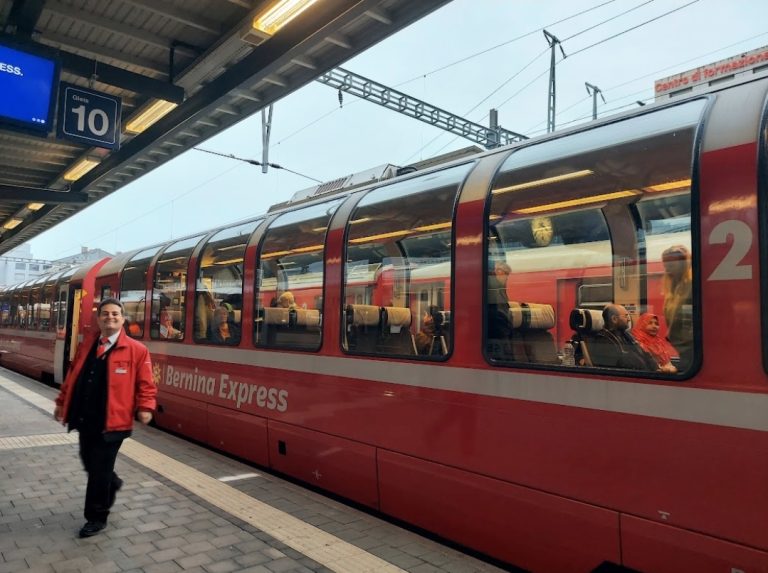
This is the option we chose ourselves.
Second class offers:
Despite being the cheaper option, it still feels special.
The seats are comfortable enough for the four-hour journey and the panoramic windows provide fantastic views.
For families and budget-conscious travellers, second class is usually the best choice.
We travelled in second class ourselves and never felt we were missing out.
First class offers:
If you prefer a more relaxed environment or simply enjoy travelling first class, the upgrade may be worthwhile.
However, the scenery is exactly the same.
For most travellers, I would choose second class.
The views are identical and the money saved can often be better spent elsewhere during your trip.
If budget isn't a concern and you enjoy a quieter carriage, first class is a lovely upgrade.
For everyone else, second class is more than sufficient.
I also compare First and Second Class on the GoldenPass Express and Belle Époque if you're planning to include more of Switzerland's scenic railways.
The Bernina Express is one of the most family-friendly scenic train journeys we've experienced.
We travelled on the Bernina Express with four children aged 7, 11, 13 and 17 and all four enjoyed the journey.
The constantly changing scenery helps keep children engaged throughout the trip.
Highlights for younger travellers include:
The train also offers:
Travelling with children?
Read our complete Bernina Express With Kids guide.

For most families, I recommend travelling from Chur to Tirano as the scenery develops gradually and helps keep children interested throughout the journey.
Not everyone realises that you don't actually need to travel on the Bernina Express panoramic train to experience the famous route.
Regional trains operate along the same railway and pass through exactly the same scenery.
The biggest differences are:
Many travellers choose the Bernina Express one way and the regional train on the return journey.
Not sure which is best?
Read our detailed Bernina Express vs Regional Train comparison.
The Bernina Express is generally very accessible and many services offer facilities for wheelchair users.
If you require assistance, it's worth arranging this in advance.
The railway operator can help with:
Always check current accessibility arrangements before travelling.
One of the great things about Swiss rail travel is that luggage restrictions are minimal.
You don't need to worry about weighing your suitcase or paying baggage fees.
Most travellers bring:
Storage is available:
If possible, I would still recommend travelling light.
It makes station changes much easier, particularly if you're continuing to Lake Como or Milan.

Yes.
Dogs are welcome on the Bernina Express.
You'll need:
Many travellers bring their dogs on board and the journey is generally very comfortable for pets.
Check current regulations before travelling as requirements can occasionally change.
Bicycles are not permitted on the panoramic Bernina Express carriages.
However, they are allowed on many regional trains operating along the same route.
If travelling with a bike, the regional service may be the better option.
The Bernina Express is one of the most photographed train journeys in Europe.
If you're hoping to capture great photos during the journey, a little preparation can make a huge difference.
Arguably the most famous landmark on the entire route.
The train curves dramatically across the viaduct before disappearing into a tunnel carved into the mountainside.
Keep your camera ready as this section arrives quickly.
One of the highlights of the Bernina Pass.
The bright turquoise water contrasts beautifully against the surrounding mountains and snowfields.
Alp Grüm
Many photographers consider Alp Grüm the most beautiful point on the route.
The views across the Palü Glacier and Poschiavo Valley are spectacular.
One of the most unique railway structures in Europe.
The train loops around itself in a complete circle before continuing towards Tirano.

Reflections are one of the biggest frustrations when photographing through train windows.
A few simple tips help:
The drop-down windows in the panoramic carriage doors are often the best option for glare-free images.
Another common question is whether the Bernina Express is better in winter or summer.
The truth is that both seasons offer completely different experiences.
Expect:
Snow-covered mountains
Frozen lakes
White forests
Dramatic alpine scenery
Winter creates the classic Bernina Express experience many people imagine when booking.
Bright blue skies
Green valleys
Turquoise lakes
Long daylight hours
Summer is ideal if you're combining the journey with destinations such as Lake Como, Milan or the Italian Lakes.
Which Is Better?
If your priority is snow and dramatic mountain scenery, choose winter.
If your priority is warmer weather and combining the route with a longer European trip, choose summer.
Personally, I love winter for the contrast between snowy Switzerland and sunny Italy.

One of the reasons the Bernina Express is so popular is how easy it is to continue exploring after reaching Tirano.
Travelling onwards to Milan is straightforward.
Simply board a regional train from Tirano.
Journey time is approximately 2 to 2.5 hours.
Milan makes an excellent overnight stop and is ideal for onward flights.
Lake Como is one of the most popular additions to a Bernina Express itinerary.
From Tirano you can travel directly to:
Both make excellent bases for exploring the lake.
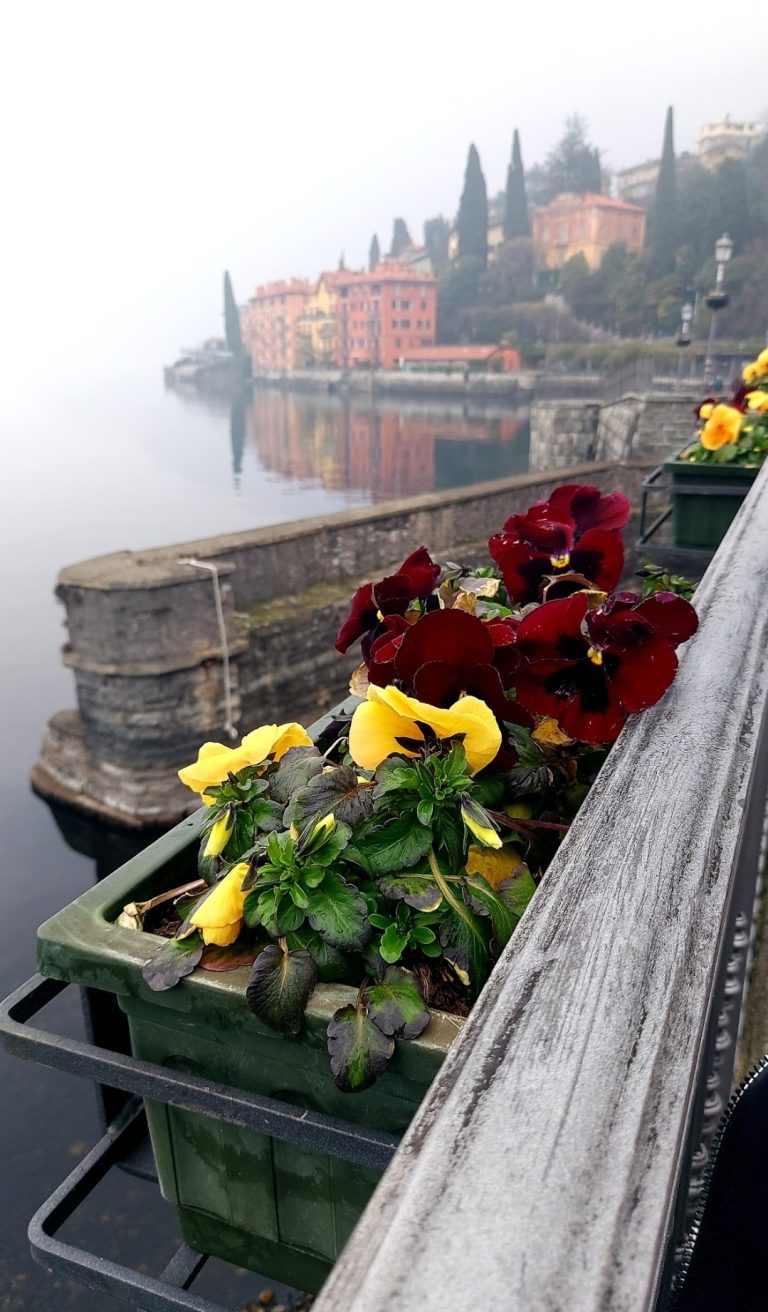
We chose Bellano ourselves and found it significantly cheaper than many of Lake Como's more famous towns.
Venice can easily be reached from Tirano by changing trains in Milan.
High-speed Frecciarossa services connect Milan and Venice in around 2 hours 15 minutes, making Venice a popular addition to a Bernina Express itinerary.
Florence can also be reached via Milan using Italy's excellent high-speed rail network.
If you're continuing further south, simply connect in Milan and board a Frecciarossa high-speed service.

We've travelled extensively through Italy by train, from the north of the country right down to Calabria and across to Sicily. If you're continuing beyond Tirano, my Lake Como guides, Northern Italy travel guides and 16 Day Italy by Train itinerary can help you plan the next part of your journey.
Perfect if you're based in Milan and short on time.
This is one of the most popular routes and the exact itinerary we followed ourselves.
Read our full Switzerland to Italy Bernina Express itinerary.
Having travelled the Bernina Express myself and spent years creating content about the route, these are the mistakes I see mentioned most often.
Not Reserving Seats Early Enough
Summer departures can sell out weeks in advance.
Book early if travelling during school holidays.
Starting in St Moritz Without Realising What You'll Miss
Many travellers choose St Moritz because the journey is shorter.
However, you'll miss:
-Landwasser Viaduct
-Albula Valley
-The spiral tunnels
-Some of the route's most impressive engineering
If possible, start in Chur.
Rushing Through Tirano
Many visitors immediately board the next train (something we were guilty of too).
Tirano deserves at least a few hours.
Not Extending the Trip
One of the biggest advantages of the Bernina Express is how easily it can be incorporated into a wider Switzerland and Italy itinerary. After arriving in Tirano, it's simple to continue onwards to destinations such as Lake Como, Milan, Venice, Verona and Florence, making the train journey part of a much bigger adventure. For many travellers, the Bernina Express isn't the entire trip, but rather the highlight of a longer journey through some of the most beautiful parts of Switzerland and northern Italy.
That's exactly what we did on our own trip, continuing from Chur to Lake Como via the Bernina Express. You can follow the same route in my 5 Day Bernina Express Itinerary.
Is the Bernina Express worth it?
In my opinion, absolutely.
It remains one of the most spectacular train journeys in Europe and offers scenery that's difficult to find anywhere else.
How long does the Bernina Express take?
Approximately:
Chur to Tirano: 4 hours 20 minutes
St Moritz to Tirano: 2 hours 20 minutes
What is the highest point of the Bernina Express?
Ospizio Bernina at 2,253 metres above sea level.
Do you need a reservation?
Yes, if you're travelling in the panoramic Bernina Express carriages.
Is the Swiss Travel Pass valid on the Bernina Express?
Yes. The Swiss Travel Pass covers the train fare, but passengers travelling in the panoramic Bernina Express carriages must still pay the compulsory seat reservation fee.
Is the Bernina Express suitable for children?
Yes.
It's one of the most family-friendly scenic train journeys in Europe.
Can I travel from Switzerland to Italy on the Bernina Express?
Yes.
The route directly connects Switzerland and Italy via Tirano.
Can I do the Bernina Express as a day trip from Milan?
Yes.
Many travellers visit as a day trip from Milan.
Is the Bernina Express better than the regional train?
That depends on your priorities.
The scenery is identical, but the experience differs.
For a detailed comparison, see our Bernina Express vs Regional Train guide.
After researching the route extensively and travelling it myself, these are the tips I would prioritise most:
The Bernina Express is one of those journeys that genuinely lives up to the hype. Whether you're travelling with children, planning a Switzerland rail holiday or combining the route with Lake Como and Milan, it's an experience I'd happily recommend and one I'd love to do again myself.
If you're still planning your trip, these guides may help:
Bernina Express
Bernina Express vs Regional Train
Scenic Trains
Best Scenic Train Journeys in Switzerland
Planning









Copyright © Build a Break | Website by Furness Media