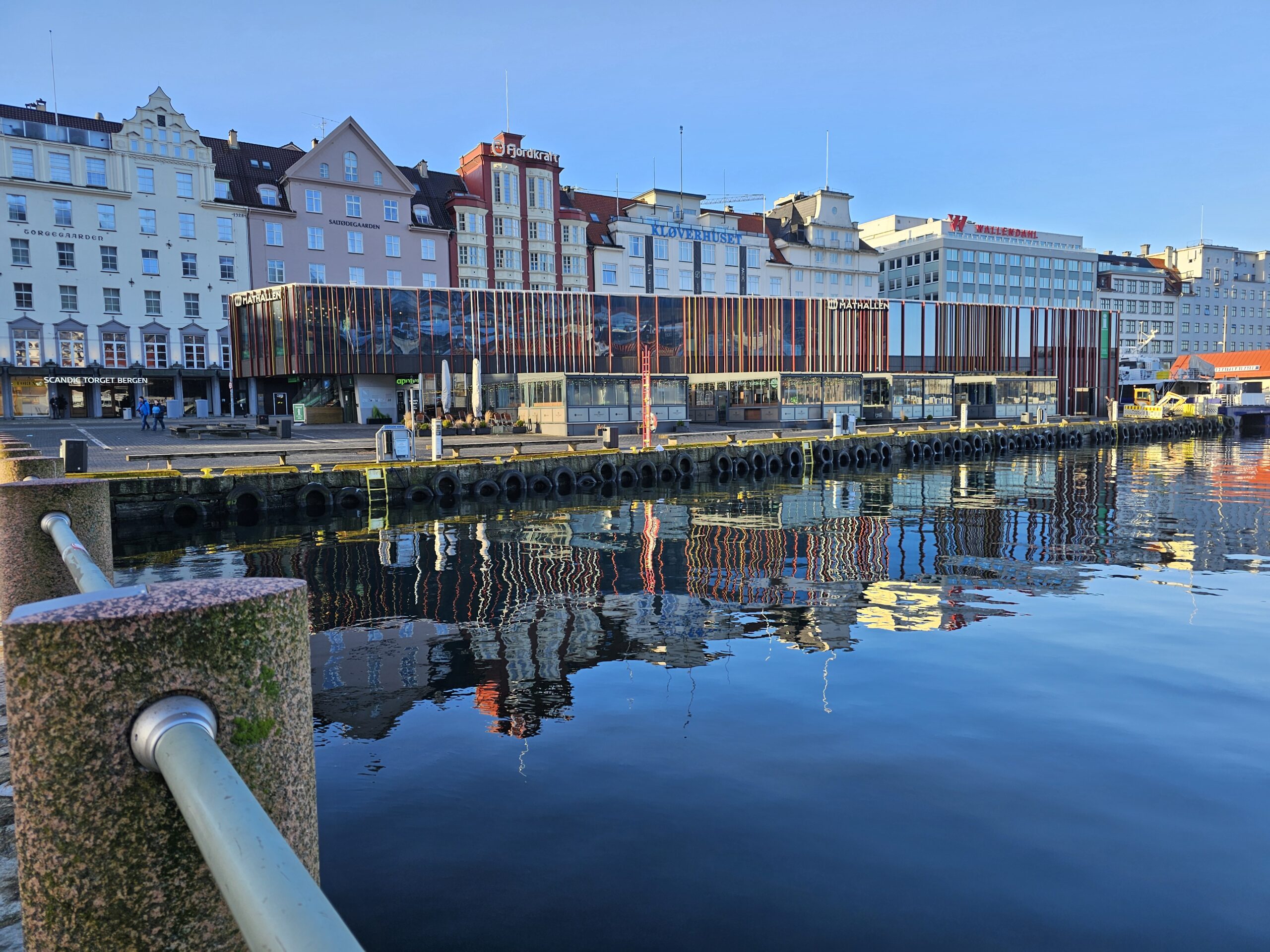
The best time to visit Bergen depends on what you want to do. June to August gives you the mildest weather, long daylight hours and the widest choice of fjord trips and outdoor activities, but I wouldn't rule out visiting Bergen in winter.
I visited Bergen in February on a solo trip and loved seeing the city and surrounding fjords in winter. I had clear skies when I took the Fløibanen Funicular up Mount Fløyen, while my Mostraumen Fjord Cruise took me past snow-covered mountains, icy water and a frozen waterfall.
Winter also meant I was visiting outside Bergen's busiest season. The trade-off is shorter days, colder weather and the fact that you can't rely on snow in the city itself. Bergen's coastal climate means winter temperatures often sit around freezing or a few degrees above it, and rain is always something you need to be prepared for.
For most first-time visitors who want the easiest conditions for sightseeing, hiking and fjord trips, I'd choose late spring through to early autumn. But if lower-season travel and snowy mountain scenery appeal to you, my February trip proved that Bergen can work brilliantly as a winter city break too.
In this guide, I'll go through Bergen season by season, including the weather you can expect, when to visit for fjord cruises and what I'd consider after visiting in winter myself.
Just a quick note before we begin. Some of the links in this guide are affiliate links. This means we may earn a small commission if you make a purchase through them, at no extra cost to you. We only recommend products, services and experiences we've used ourselves or genuinely believe will help you plan your trip. Thanks for supporting Build a Break.
Best overall weather: June to August
Long daylight hours: May to July
Fjord cruises: Year-round
Hiking: June to September
Fewer crowds: Spring or autumn
Winter scenery: December to February
Christmas atmosphere: December
Snowy fjords & mountains: January to March
A budget city break: Compare dates outside the summer peak
| If You Want... | Best Time to Visit |
|---|---|
| Best overall weather | June to August |
| Long daylight hours | May to July |
| Fjord cruises | Year-round |
| Hiking | June to September |
| Fewer crowds | Spring or autumn |
| Winter scenery | December to February |
| Christmas atmosphere | December |
| Snowy fjords & mountains | January to March |
| A budget city break | Compare dates outside the summer peak |
Yes. Bergen is one of Norway's wettest cities, with the Norwegian Meteorological Institute reporting average annual precipitation of around 2,500mm.
Rain is possible at any time of year, so there isn't really a season when you can visit Bergen and confidently leave the waterproofs at home. Even Visit Bergen recommends packing a waterproof jacket and shoes, regardless of when you visit.
Ironically, I visited Bergen in February and didn't see any rain at all. I had dry weather for my whole trip, including my time exploring Bryggen, taking the Fløibanen up Mount Fløyen and heading out on a Mostraumen Fjord Cruise.
Obviously, I wouldn't book a February trip expecting the same luck! Bergen's weather is famously changeable, so I'd pack for rain whatever the forecast says.
Spring is a good time to visit Bergen if you want to avoid the busiest summer months while still having increasingly longer days for sightseeing.
March can still feel quite wintry, particularly in the mountains surrounding Bergen, while April and May gradually bring milder temperatures and more daylight. By May, you'll have very long days, making it easier to fit plenty into a short city break.
Fjord cruises operate during spring too, and earlier in the season you may still see snow on the surrounding mountains. As you move towards May, Bergen becomes greener and the hiking season starts to open up.
The main thing to remember is that spring weather can be unpredictable. Pack layers and waterproofs rather than relying on the forecast, particularly if you're planning to spend time outdoors or take a fjord cruise.
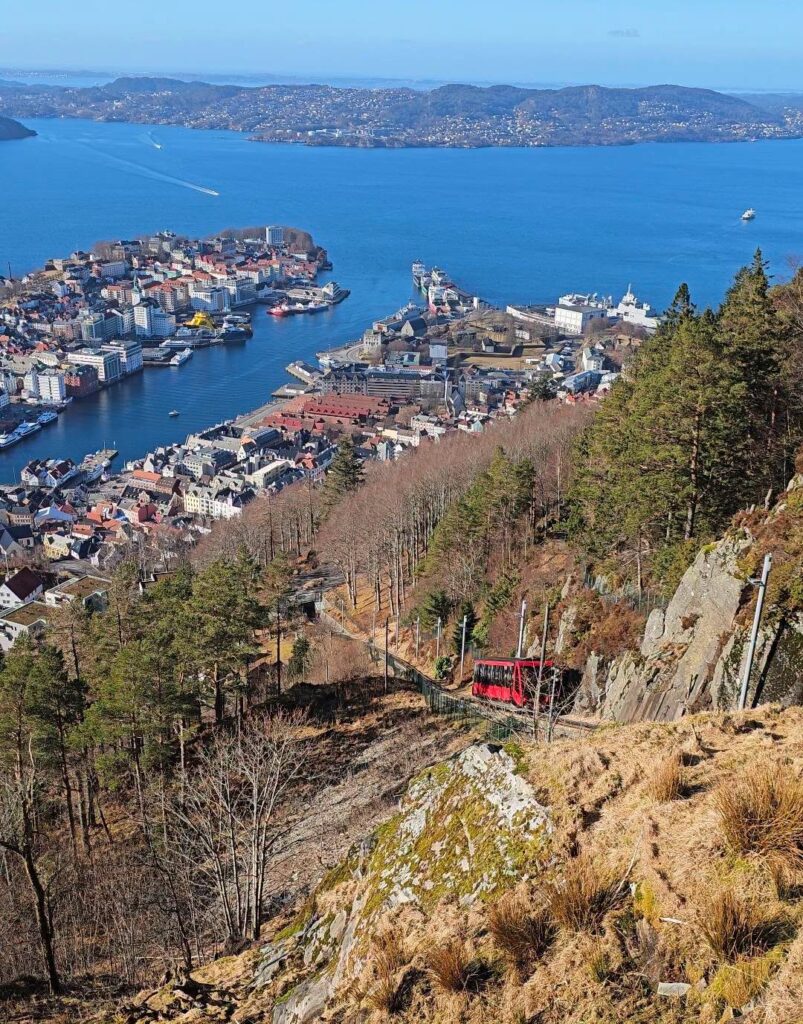
Summer is the most popular time to visit Bergen, with milder temperatures, very long days and the widest choice of outdoor activities.
June and July have particularly long daylight hours, giving you plenty of time to explore the city and still fit in a fjord cruise or a trip up Mount Fløyen. It's also one of the best times for hiking, with more trails accessible once the winter snow has cleared.
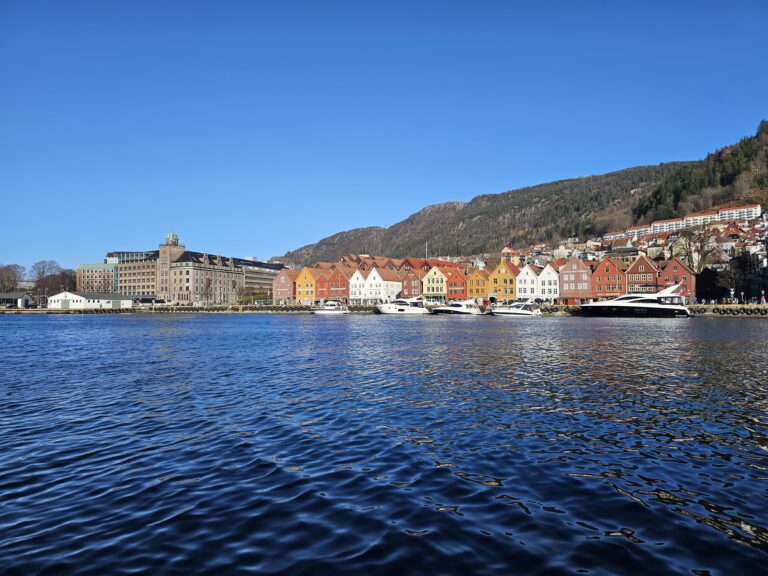
The downside is that summer is Bergen's busiest period. Accommodation can be more expensive, popular attractions and fjord cruises are busier, and you'll see more cruise ship visitors around Bryggen and the harbour.
Don't assume summer means dry weather. It can still rain in Bergen in June, July and August, so I'd pack a waterproof even if the forecast looks good.
Autumn brings cooler temperatures, shorter days and fewer visitors to Bergen as the busy summer season comes to an end.
September can be a good compromise if you still want enough daylight for sightseeing and outdoor activities without visiting during the busiest months. As you move into October and November, the days become much shorter and the weather gets colder.
This is also one of the wetter times of year in Bergen, so waterproof clothing is particularly important. If you're planning a fjord cruise, I'd also take plenty of warm layers as it can feel much colder once you're out on the water.
The advantage is that Bergen is generally quieter than during summer, making autumn worth considering if you're more interested in exploring the city and fjords than hiking and long days outdoors.

Winter in Bergen means short days, colder weather and a much quieter feel than you'll find during the summer months. You shouldn't expect Bergen itself to be covered in snow throughout winter, but the surrounding mountains and fjords can look completely different at this time of year.
I visited Bergen in February, and winter turned out to be a brilliant time for my trip. I had dry weather throughout my stay and even had clear skies when I took the Fløibanen up Mount Fløyen.
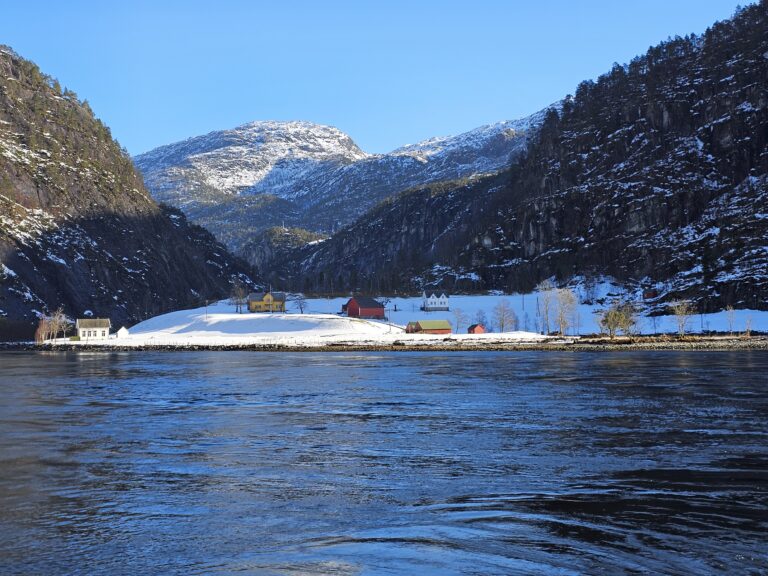
The highlight was my Mostraumen Fjord Cruise. The mountains were covered in snow, parts of the water were icy and we sailed right up to a frozen waterfall. It was exactly the sort of winter scenery I'd hoped to see.
It was extremely cold outside on the upper deck of the boat though, particularly with the wind chill. I'd definitely recommend a warm waterproof coat, gloves, hat and plenty of layers if you're planning a winter fjord cruise.
The biggest thing to consider is daylight. You'll have far fewer hours for sightseeing than during spring or summer, so you'll need to plan your days a little more carefully.
You can take fjord cruises from Bergen throughout the year, so there isn't one single best month to go. The experience changes quite a lot depending on the season.
Summer gives you long daylight hours and generally milder temperatures, making it a popular time for being out on the water. Spring and autumn can be quieter, while winter gives you the chance to see snow-covered mountains and a completely different side of the fjords.
I took the Mostraumen Fjord Cruise in February, and the winter scenery was one of the highlights of my trip. We passed snowy mountains, travelled through icy water and got close to a frozen waterfall.
If you're considering a winter fjord cruise, don't let the cold put you off. The boat had a warm indoor seating area, so I could head inside whenever I needed to. Just make sure you're properly dressed if you want to spend time outside enjoying the views, because the wind chill on the upper deck was very cold.
For me, February was a fantastic time to experience the fjords, and I'd choose winter again for the scenery.
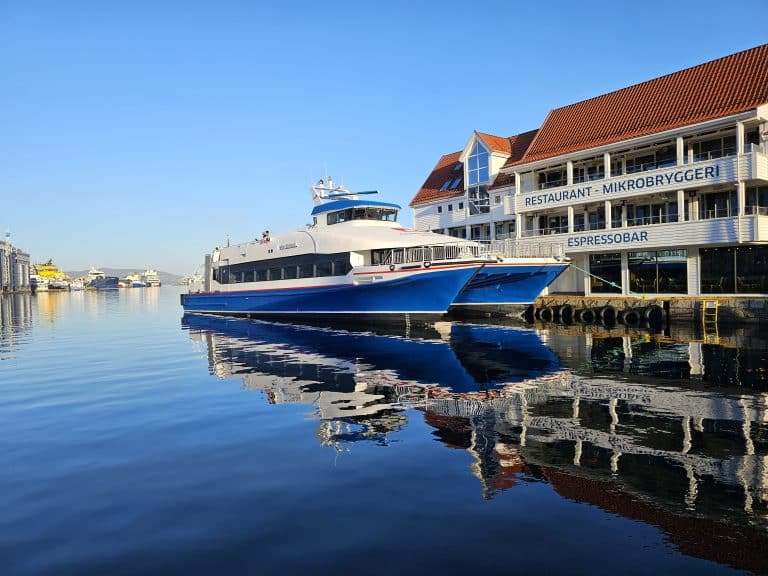
If hiking is one of the main reasons for your trip, June to September is generally the best time to visit Bergen. You'll have longer days, milder temperatures and better access to trails once the winter snow has cleared.
Bergen is surrounded by seven mountains, so you don't need to travel far from the city centre to find walking and hiking routes. Mount Fløyen is one of the easiest places to start, particularly as you can take the Fløibanen up and explore the trails from the top.
You can still enjoy Mount Fløyen outside the main hiking season. I visited in February and had clear views across Bergen from the top, although winter conditions obviously need more preparation than a summer walk.
If you're planning longer or more challenging hikes, check the conditions before setting off. Snow can remain at higher elevations well beyond winter, so don't assume every trail will be suitable just because the weather in Bergen itself feels mild.
If you're trying to keep costs down, I'd start by looking at dates outside the main summer season, particularly during late autumn, winter and early spring.
Flights and accommodation can vary massively depending on your departure airport and exact dates, so I wouldn't say there is one guaranteed cheapest month. Being flexible and comparing a few different weekends is usually far more useful.
Taking my own trip outside the summer season helped me keep the overall cost down. I paid £122 for two nights at Ole Bull Hotel & Apartments in central Bergen, which worked out at just £61 per night.
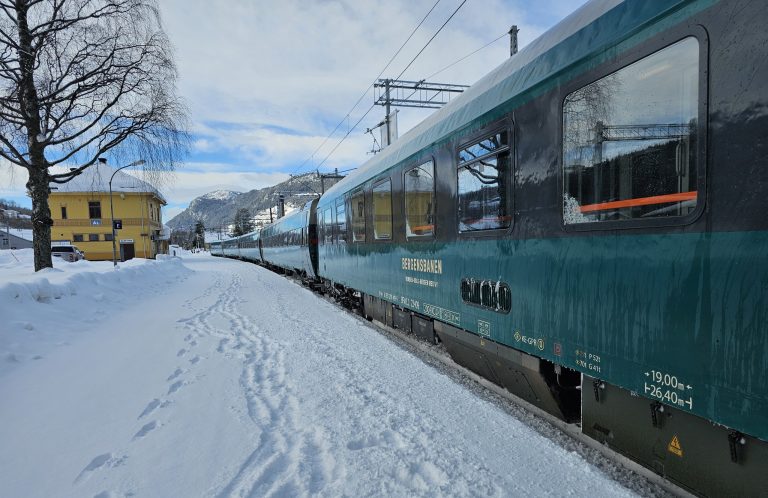
Winter also didn't mean missing out on the main things I wanted to do. The Fløibanen was running, I took a Mostraumen Fjord Cruise and then continued to Oslo on the Bergensbanen railway.
If budget is important, I'd compare dates across the quieter months rather than automatically assuming Bergen needs to be a summer trip.
Whatever time of year you visit Bergen, I'd pack for changeable weather rather than relying too heavily on the forecast.
A waterproof jacket and comfortable waterproof shoes are useful year-round. Layers are also a good idea, as temperatures can feel very different depending on whether you're walking around the city, up on Mount Fløyen or out on a fjord cruise.
For my February trip, warm layers were essential, particularly on the Mostraumen Fjord Cruise. The boat itself was warm inside, but the wind chill on the upper deck made it feel much colder than it did walking around Bergen.
In winter, I'd pack a warm coat, hat, gloves and scarf as well as waterproof footwear. In summer, you'll generally need lighter clothing, but I'd still bring a waterproof jacket and an extra layer for cooler evenings and trips out on the water.
Bergen is definitely somewhere I'd rather pack a waterproof and not need it than leave it at home and regret it.
For warmer weather and long days, June to August are the most popular months. However, the best month really depends on what you want from your trip. I visited in February and loved experiencing Bergen and the fjords in winter.
July is generally the warmest month in Bergen, although temperatures are still fairly mild compared with many European summer destinations.
Autumn is generally the wettest period, particularly September to November. However, Bergen receives rain throughout the year, so waterproofs are worth packing whatever month you visit.
I think so. I visited in February and had dry weather, clear views from Mount Fløyen and beautiful snowy scenery on my Mostraumen Fjord Cruise. The main disadvantages are the shorter daylight hours and colder temperatures.
It can snow in Bergen during winter, but because of its coastal climate, you shouldn't expect the city to remain covered in snow throughout the season. You're much more likely to see reliable snowy scenery in the surrounding mountains.
I'd recommend at least two days. That gives you enough time to explore central Bergen and Bryggen, take the Fløibanen up Mount Fløyen and fit in a fjord cruise. Bergen also works really well as the starting point for a longer Norway trip, particularly if you're continuing to Oslo on the Bergensbanen railway.
Planning your own trip to Bergen? These guides may also help:
• 20 Best Things to Do in Bergen, Norway
• Where to Stay in Bergen: Best Areas & Where I Stayed
• How to Get from Bergen Airport to the City Centre
• Mostraumen Fjord Cruise from Bergen: Is It Worth It?
• Fløibanen Funicular Bergen: Is Mount Fløyen Worth Visiting?
• Bergen to Oslo by Train: The Bergensbanen Railway
• 3-Day Bergen & Oslo Itinerary with Real Costs
You can also browse all my Norway travel guides for more help planning your trip.
Whenever I spot great-value DIY flights and accommodation from UK airports, I share them with members of the Build a Break Travel Club.








Copyright © Build a Break | Website by Furness Media