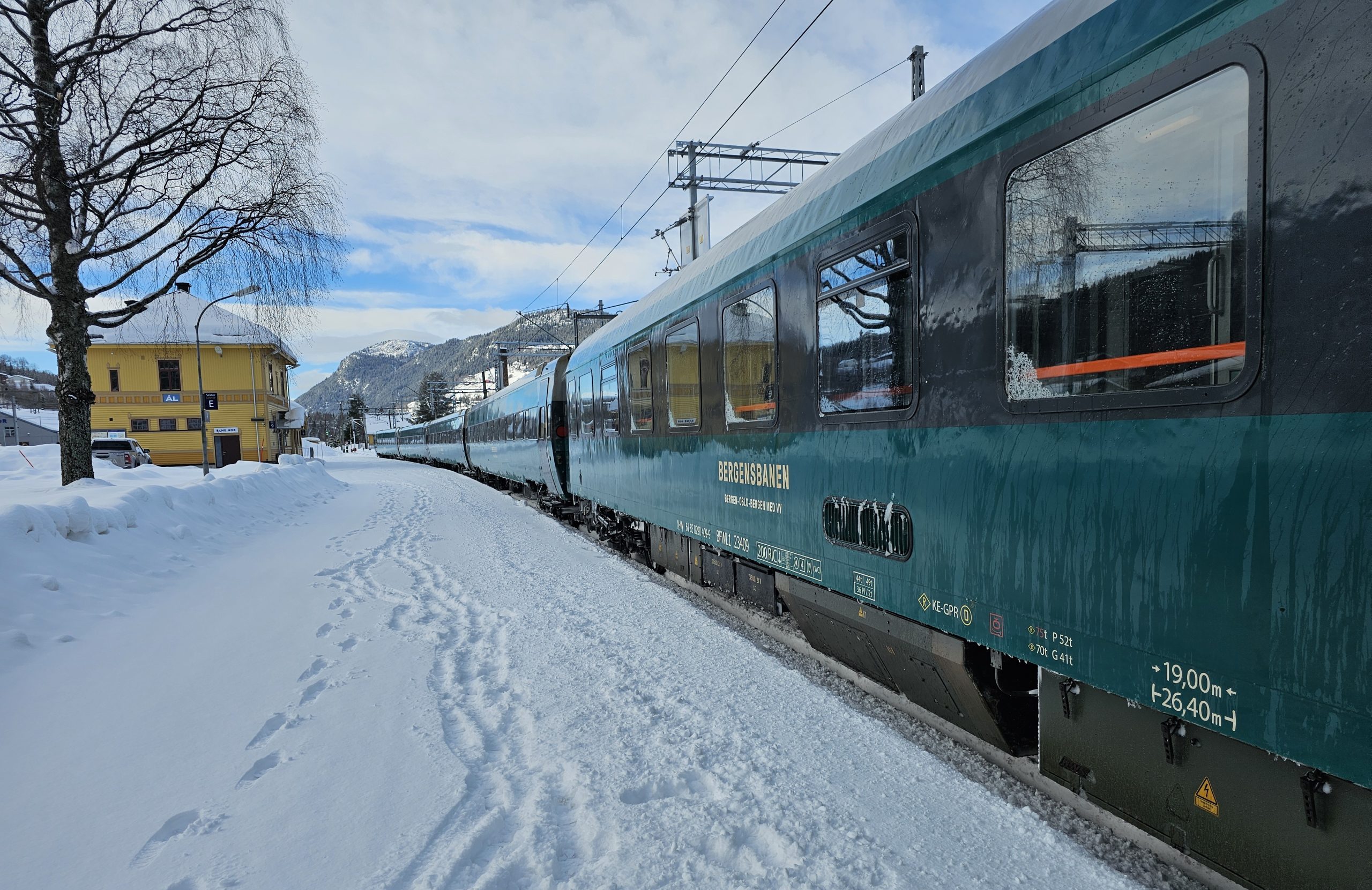
This trip came about completely by accident. Over Christmas, I was watching a Channel 4 programme about the Bernina Express, a train journey I'd already done and loved. The programme that followed was Nordic Train at Christmas, which follows the Bergensbanen across Norway between Bergen and Oslo.
I'd never even heard of the Bergensbanen before, but after seeing it travel across the snowy Hardangervidda mountain plateau, I immediately wanted to do it.
Within about two hours, I'd booked the whole trip. I found cheap flights into Bergen and home from Oslo, booked two nights in Bergen, one night in Oslo and then booked the seven-hour train journey between the two. This is fairly typical of how my trips come about!
If you're new here, I'm Sarah and I absolutely love a scenic train journey. I've travelled on some incredible rail routes around Europe, but the Bergensbanen was completely different to the tourist trains I'd done before.
It's a normal working railway used by locals, families and skiers travelling across Norway, but it also happens to cross some incredible scenery. I travelled from Bergen to Oslo in February, when the mountains and Hardangervidda plateau were covered in snow, and the train journey ended up being the highlight of the whole trip.
In this guide, I'll cover the route I took, which side of the train I found best for the views, what I paid, what it's like onboard, food and luggage, travelling with children, the best time of year to go and everything else I learned from doing the journey myself.
Just a quick note before we begin. Some of the links in this guide are affiliate links. This means we may earn a small commission if you make a purchase through them, at no extra cost to you. We only recommend products, services and experiences we've used ourselves or genuinely believe will help you plan your trip. Thanks for supporting Build a Break.
• Route: Bergen ↔ Oslo
• Duration: 6.5–7 hours
• Distance: 496 km
• Trains per day: 5 + night train
• Best time: Winter for snow, summer for green valleys
• Scenic highlight: Hardangervidda mountain plateau
• Operator: Vy (Norwegian Railways)
The Bergensbanen runs between Bergen and Oslo, crossing Norway's mountainous interior and the Hardangervidda plateau along the way. The scenery changes considerably throughout the journey, which is one of the reasons the seven hours passed so quickly for me.
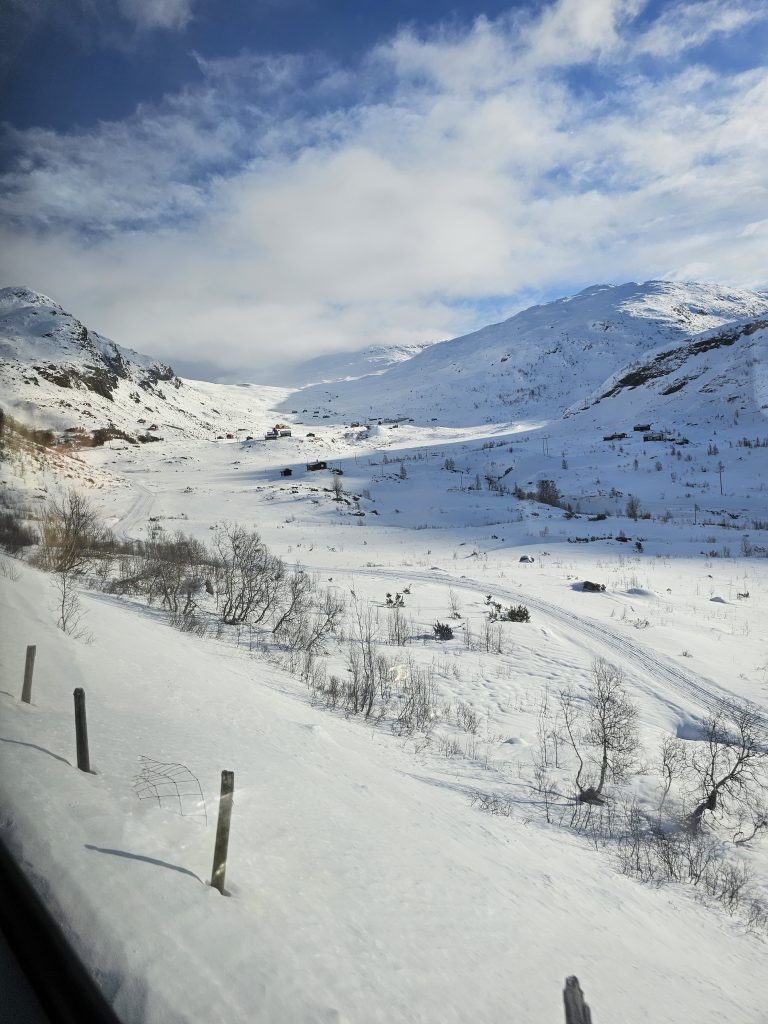
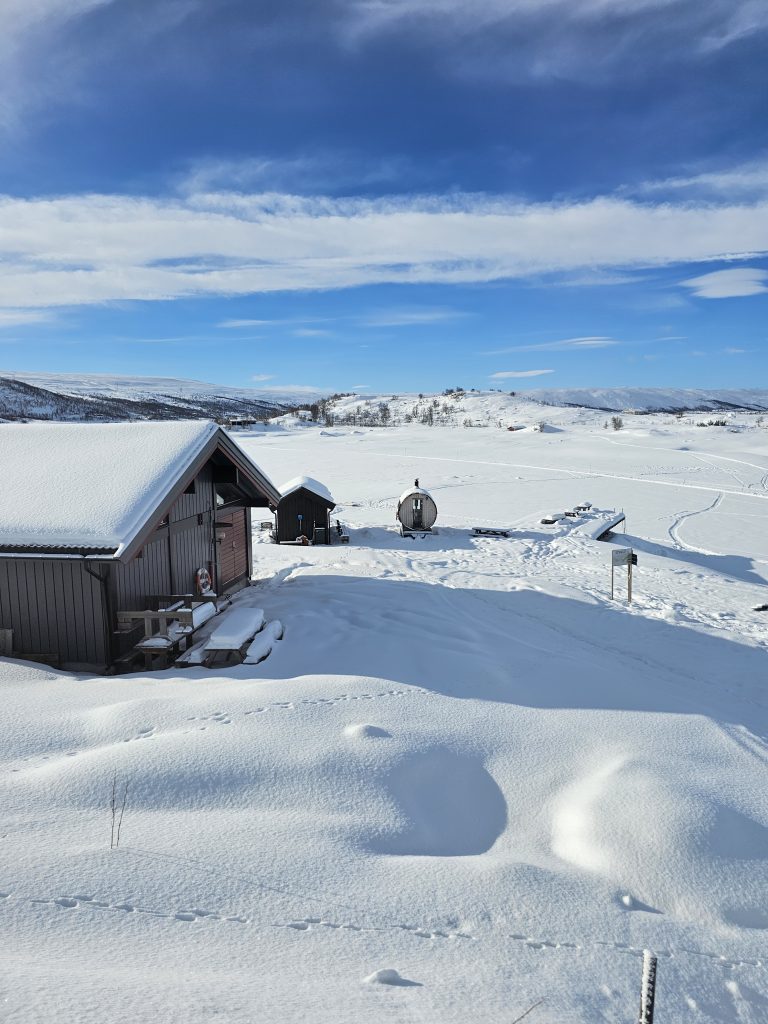
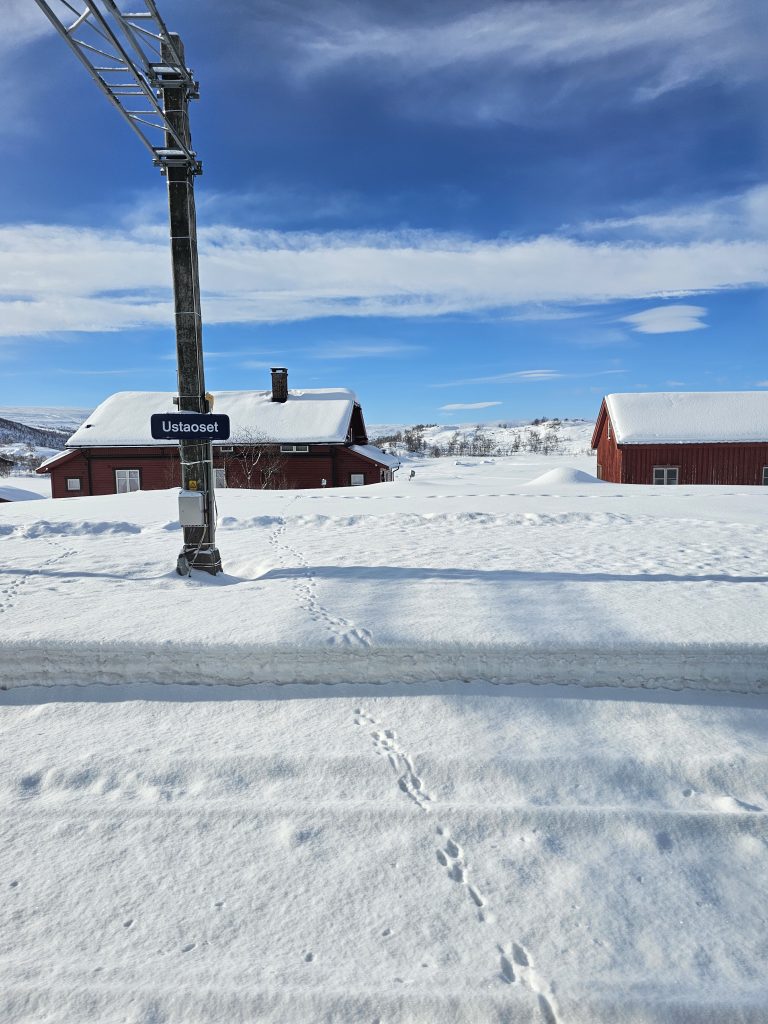
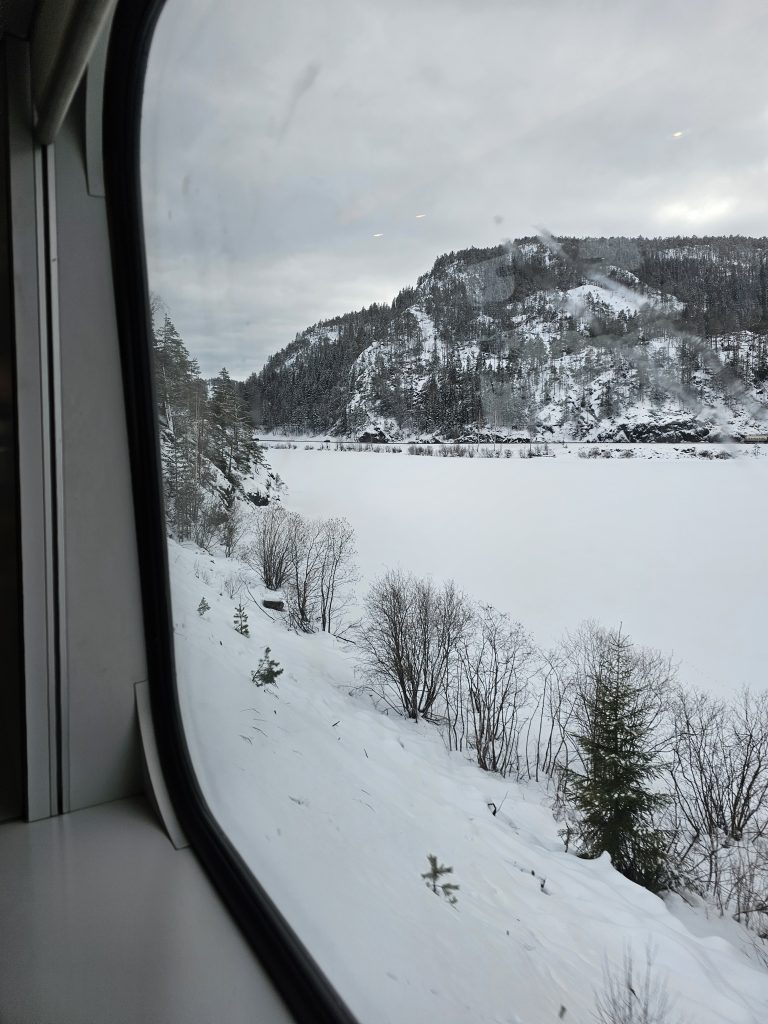
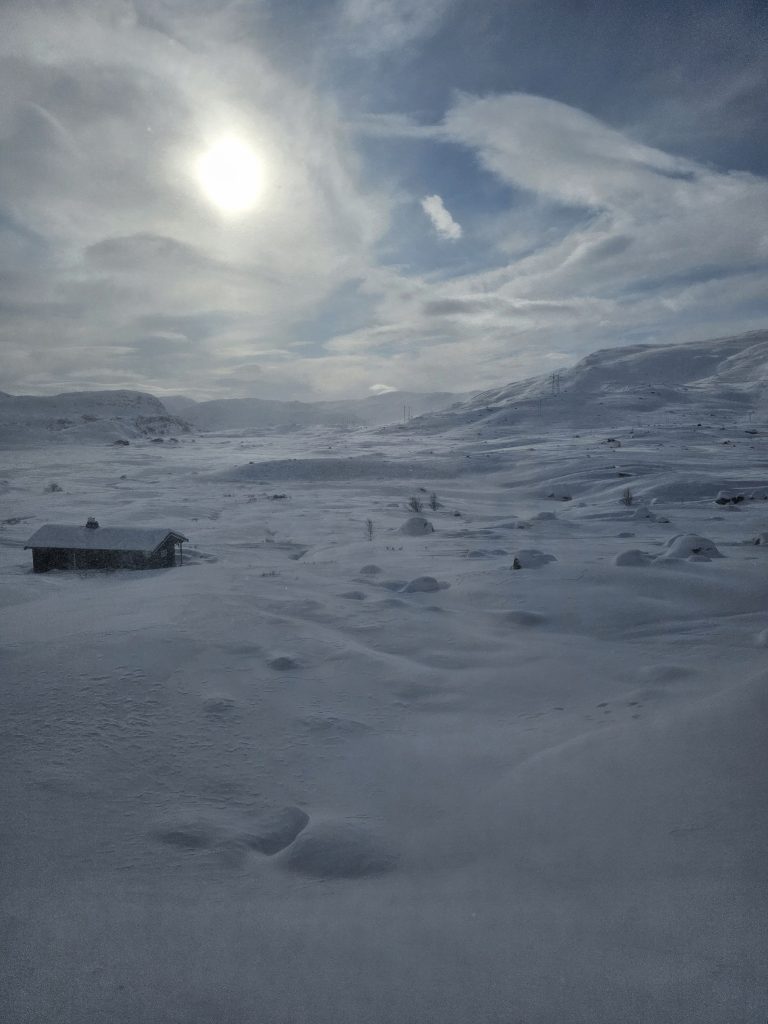
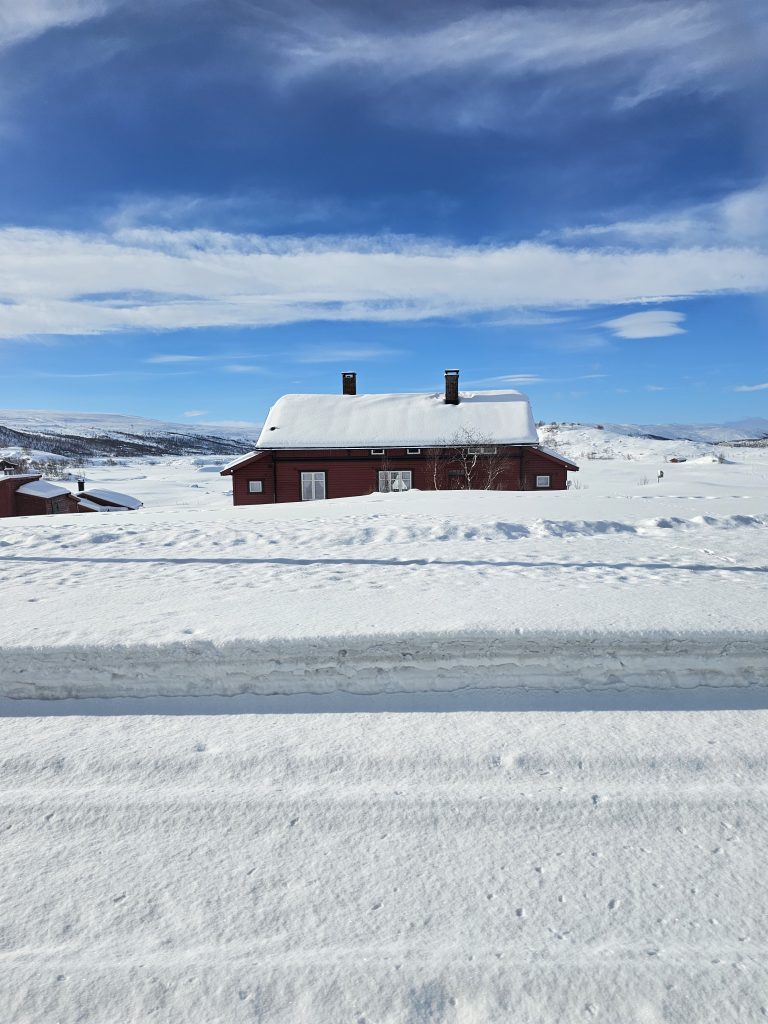
Travelling from Bergen in February, the landscape became increasingly snowy as we climbed higher into the mountains. For long stretches there were frozen lakes, snow-covered valleys and isolated wooden cabins, with very few roads or other signs of civilisation.
Around two hours into my journey, the snow was so deep that at times it was difficult to tell where the ground ended and the sky began. This was the part of the route I'd booked the trip to see, and it looked exactly as I'd hoped it would.
The train stops at several places along the route, including Voss, Myrdal, Finse and Geilo. Myrdal is where passengers can change for the famous Flåm Railway, while Voss is a popular stop for skiing and other mountain activities.
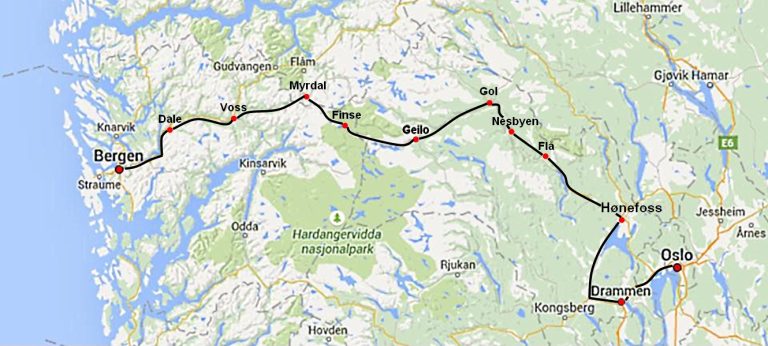
Bergen → Arna → Voss → Myrdal → Finse → Haugastøl → Geilo → Ål → Gol → Nesbyen → Flå → Hønefoss → Sandvika → Oslo
The Bergensbanen crosses Norway’s mountainous interior between Bergen and Oslo, stopping at remote mountain stations and ski resorts along the way.
The Bergensbanen journey between Bergen and Oslo covers around 496km and takes roughly 6.5 to 7 hours, so this definitely isn't a quick train journey. I treated it as a full day of the trip rather than simply a way of getting from one city to another.
Seven hours on a train might sound like a long time, but it honestly didn't feel like it. I thought I'd end up reading or watching something on my phone, but there was so much to look at that I barely did either. The scenery changes constantly as the train leaves Bergen and heads up through the mountains, eventually crossing the Hardangervidda plateau before continuing towards Oslo.
There are also plenty of stops along the way, with people regularly getting on and off at places such as Voss, Myrdal, Finse and Geilo. I found that made the journey feel much less like sitting on the same train for seven hours, and it also meant I could move around and change seats when better window views became available.
Journey times can vary slightly depending on the service and conditions. I travelled in February when there was deep snow across the higher sections of the route, although despite a couple of delays during my journey, we still arrived in Oslo on time.
For me, the length of the journey was part of the experience. I wouldn't choose the Bergensbanen because it's the quickest way to travel between Bergen and Oslo. I'd choose it because the journey itself is one of the main reasons to do the trip.
Several trains operate daily in each direction, making it easy to plan around flights or connections.
On average there are 5 services a day plus a night train.
Services run year-round and are used heavily by locals, not just tourists.
If you're travelling in winter, I'd definitely consider which train you book rather than simply choosing the cheapest departure. The first train from Bergen leaves at around 6am, which means you'll spend the beginning of the journey travelling in darkness and miss some of the scenery as you leave Bergen.
I chose the 8:08am departure and found the timing worked really well. By the time we left Bergen it was fully light, which meant I could enjoy the views right from the start and we crossed the most scenic mountain sections during daylight.
This is particularly important in winter when daylight hours are much shorter. Leaving later in the day risks reaching some of the route when it's starting to get dark, whereas the morning train gives you much more time to enjoy the scenery.
The 8:08am service also arrives in Oslo just after 3pm, so I still had plenty of time to check into my hotel, have a wander around Oslo and go out for something to eat. For a winter trip, I thought it was a really good balance between not having to get up ridiculously early and still getting as much daylight as possible for the journey.
The Bergensbanen isn't a tourist train. It's a normal working railway used by people travelling between towns and cities along the route, as well as those heading into the mountains.
When I travelled, there were lots of families returning from ski holidays with all their equipment, children playing games and locals who had brought packed lunches for the journey. Some people were travelling all the way to Oslo, while others were only onboard for a few stops.
I'd expected most passengers to stay in their seats for the full seven hours, but there was actually quite a lot of movement throughout the journey. As people got on and off, empty seats regularly became available, which meant I could move between the two sides of the train to get different views and take photos.
I really liked this about the journey. It felt relaxed and there was no pressure to stay in one place for seven hours. I could get up, go to the dining carriage, move to a better window when a seat became free and just enjoy the journey at my own pace.
I travelled on the Bergensbanen as part of a solo weekend exploring Bergen and Oslo, and I felt completely comfortable throughout the journey. I even ended up chatting to a lovely Norwegian lady who'd been visiting family in Bergen. If you're considering a similar trip, I've written a separate guide sharing my experiences of travelling solo in Norway, including how safe I felt exploring both cities, using public transport and travelling independently.
Both sides of the train have fantastic views, so I really wouldn't worry too much if you can't get the seat you want.
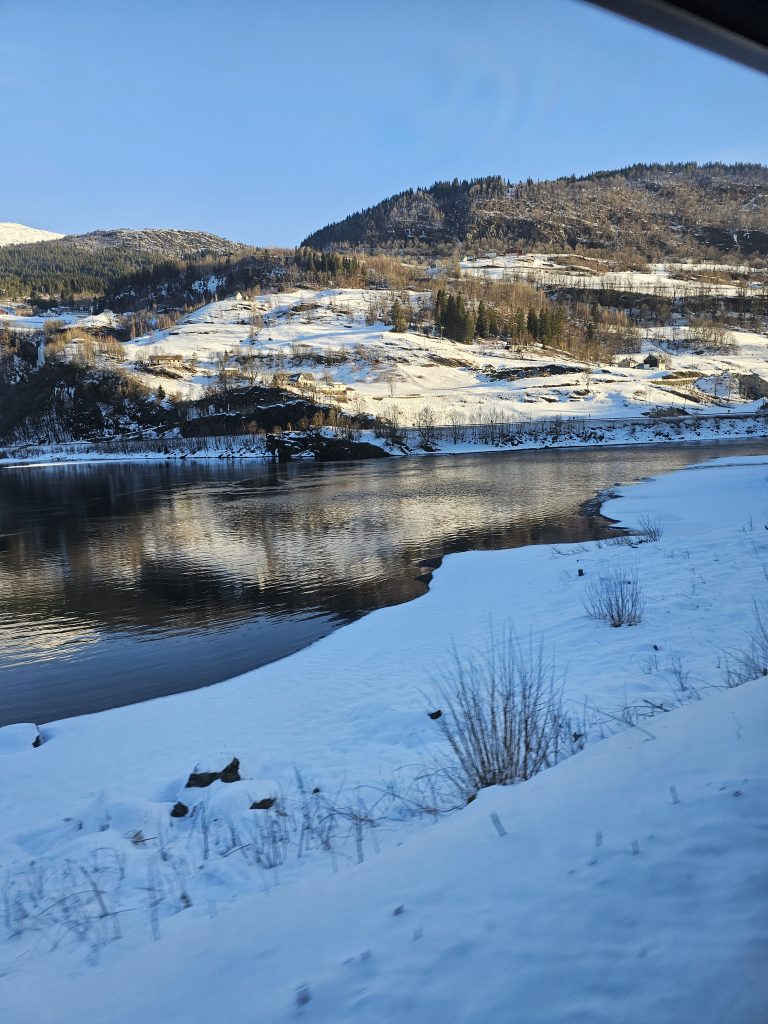
Travelling from Bergen to Oslo, I found the left-hand side best during the earlier part of the journey, particularly for the fjord and mountain views. As we got further into the journey and reached the vast mountain plateaus, I found the right-hand side had some of the best views.
If you're travelling in the opposite direction from Oslo to Bergen, I'd reverse this and start on the right before moving to the left later in the journey.
The good thing about the Bergensbanen is that people are getting on and off throughout the route, so seats do become available. I moved around when I spotted an empty window seat with a better view rather than staying in my allocated seat for the full seven hours.
In winter especially, there really isn't a bad side. Once you reach the snow-covered mountain sections, there are incredible views from both sides of the train.
The Bergensbanen is a very different journey depending on the time of year, and there isn't really one season that's best for everyone.
I travelled in February because I specifically wanted to see the route in winter. Once we climbed higher into the mountains, there was deep snow everywhere, with frozen lakes, buried cabins and huge stretches of completely white landscape across the Hardangervidda plateau. If the snowy scenery is the reason for booking the train, winter would be my choice.
Summer gives a completely different view of the same route. The lower sections are much greener, waterfalls are flowing and the longer daylight hours mean there's no need to plan the train around the limited daylight like there is in winter.
However, don't assume summer means there won't be any snow. The Bergensbanen reaches more than 1,200 metres above sea level at its highest point, and snow can linger around the highest parts of the route well into summer. It's even possible to see patches of snow around Finse and the Hardangervidda plateau in August.
So even in summer, it's possible to get that contrast of green valleys lower down and snow around the highest mountain sections.
If you're planning to spend a few days in Bergen either side of the train journey, I've also put together a guide to the best time to visit Bergen, including the weather and what to expect in each season.
The biggest thing to think about when booking the Bergensbanen in winter is daylight. In December and January especially, the days are short, so choosing the right departure matters if you're taking the train for the scenery. I'd avoid a late departure and choose a morning service so that as much of the journey as possible is in daylight.
I travelled in February on the 8:08am train from Bergen, which worked really well. It was already light when we left and we crossed the main mountain sections during the day, arriving in Oslo just after 3pm.
Winter weather can also affect the journey, particularly across the higher sections of the route. On my trip we had a couple of delays along the way, although we still arrived in Oslo on time.
I'd also book ahead if travelling during Norwegian school holidays or popular skiing periods. My train was full of families returning from ski trips, and I paid 1,362 NOK (around £106) for my ticket because I'd booked during a particularly busy period.
Spring is an interesting time to travel on the Bergensbanen because conditions can look completely different depending on where you are along the route. Lower sections may already be green while there can still be plenty of snow around Finse and across the higher parts of Hardangervidda.
May also brings much longer daylight hours, so there's far less need to plan the journey around sunrise and sunset than there is in winter. Melting mountain snow means waterfalls can be particularly impressive at this time of year too.
If you like the idea of seeing a mixture of snowy mountains and greener valleys on the same journey, May could be a really good time to travel.
Summer brings the longest daylight hours, so there's no need to think too carefully about which daytime departure to choose for the scenery. The lower parts of the route are much greener, and this is also the season when hiking around places such as Finse and along the Hardangervidda becomes more accessible.
It's worth remembering that summer in the Norwegian mountains doesn't necessarily mean completely snow-free scenery. Snow can remain around the highest sections of the route, and it's possible to still see patches of snow around Finse and Hardangervidda even in August.
Summer is also a popular time to travel, so I'd book ahead rather than relying on buying a ticket close to departure, particularly if there's a specific train or seat you want.
Autumn is a good option if you want to travel outside the busy summer period while still having enough daylight to enjoy the journey. September in particular can work well, with autumn colours beginning to appear through the valleys while the higher mountain sections start to feel much more wintry.
Conditions can change quite quickly at this time of year. Snow can begin falling around Finse and the higher parts of Hardangervidda during autumn, particularly as you move into October, so it's possible to see autumn colours lower down and snow higher in the mountains during the same journey.
Daylight also starts reducing quickly as autumn progresses, so by late October I'd pay more attention to departure times and choose a morning train to make the most of the views.
Ticket prices for the Bergensbanen are dynamic, so the amount paid will depend on the date, demand, ticket type and how far ahead the journey is booked.
I booked my Bergen to Oslo ticket around 60 days before departure through Vy and paid 1,362 NOK (around £106) for a flexible ticket. This was definitely at the higher end, but I was travelling at the end of a Norwegian holiday weekend when lots of families were returning from ski trips.
Interestingly, the same train the following day was around half the price. However, changing my dates would have meant paying more for my flight home and adding another night in Oslo, so it wouldn't actually have made the trip any cheaper overall.
Tickets are generally released a few months before departure, although the exact booking window can vary. If you're travelling during summer, school holidays, weekends or popular skiing periods, I'd start checking as soon as tickets become available.
It's also worth checking the dates either side if your trip is flexible. As I found with my own booking, travelling just one day later can sometimes make a big difference to the train fare.
Vy offers several different ticket types, with the cheapest fares generally having the least flexibility.
Lowfare is normally the cheapest option and is worth looking for if your travel plans are fixed. Restrictions apply to changes and refunds, so check the conditions before booking.
Flex costs more but gives greater flexibility if plans change. This is the type of ticket I booked for my journey.
Plus offers an upgraded experience with more comfortable seating and additional onboard benefits, which can vary by service.
There are also private compartments available on some departures, which can be useful for families or groups wanting their own space.
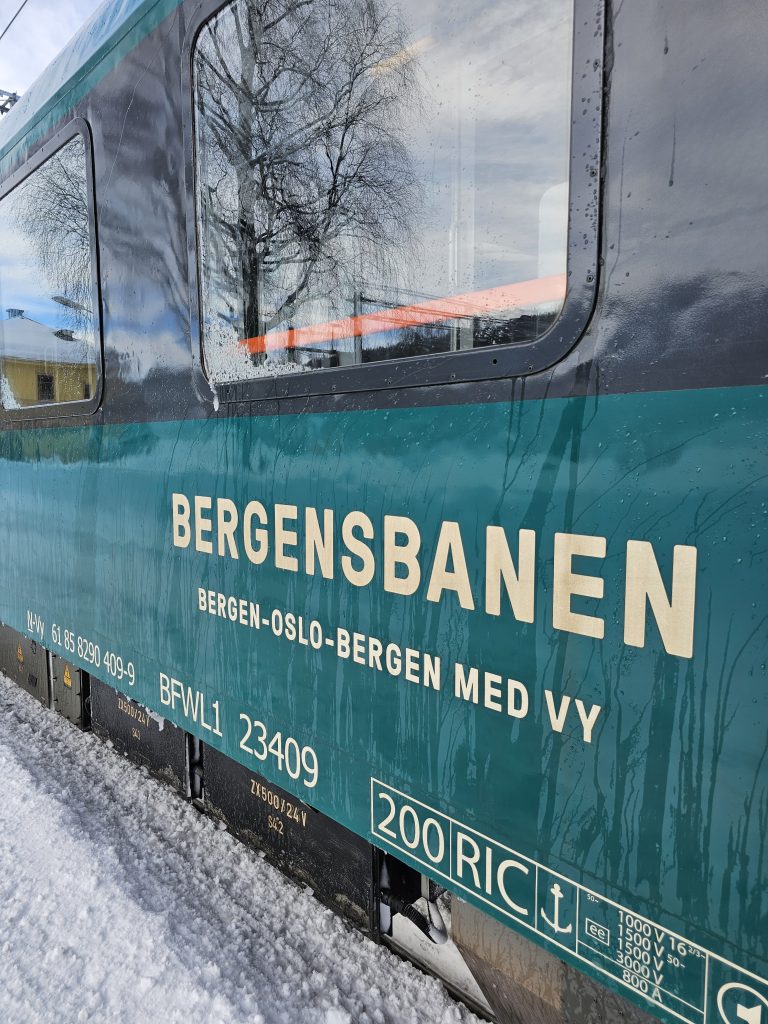
A seat reservation is included with most Bergensbanen tickets. Depending on the fare and service booked, it's also possible to select a seat or change an allocated seat if availability allows.
If there's a particular side of the train you want to sit on, I'd check the seat map when booking. However, I wouldn't worry too much if your preferred seats have gone. People got on and off throughout my journey and I was able to move to other empty seats for different views.
There isn't one fixed price for the Bergen to Oslo train. Fares change according to demand, departure and how far ahead you book, with the cheapest Lowfare tickets selling first.
This means two trains on consecutive days can have very different prices, as I found when researching my own trip.
Rather than relying on a typical fare, I'd check the exact dates directly with Vy and compare a few departures if your plans are flexible.
Discounted fares are available for certain passengers, including children, with the exact price depending on the journey and ticket being booked.
For families, it's worth checking the family options as well as the basic ticket price, as some Bergensbanen services have dedicated family facilities and compartments.
Yes. There are overnight services between Bergen and Oslo, with different seating and sleeping options available.
I've got more detail on the night train further down this guide, including the different accommodation options and when I'd choose it over the daytime service.
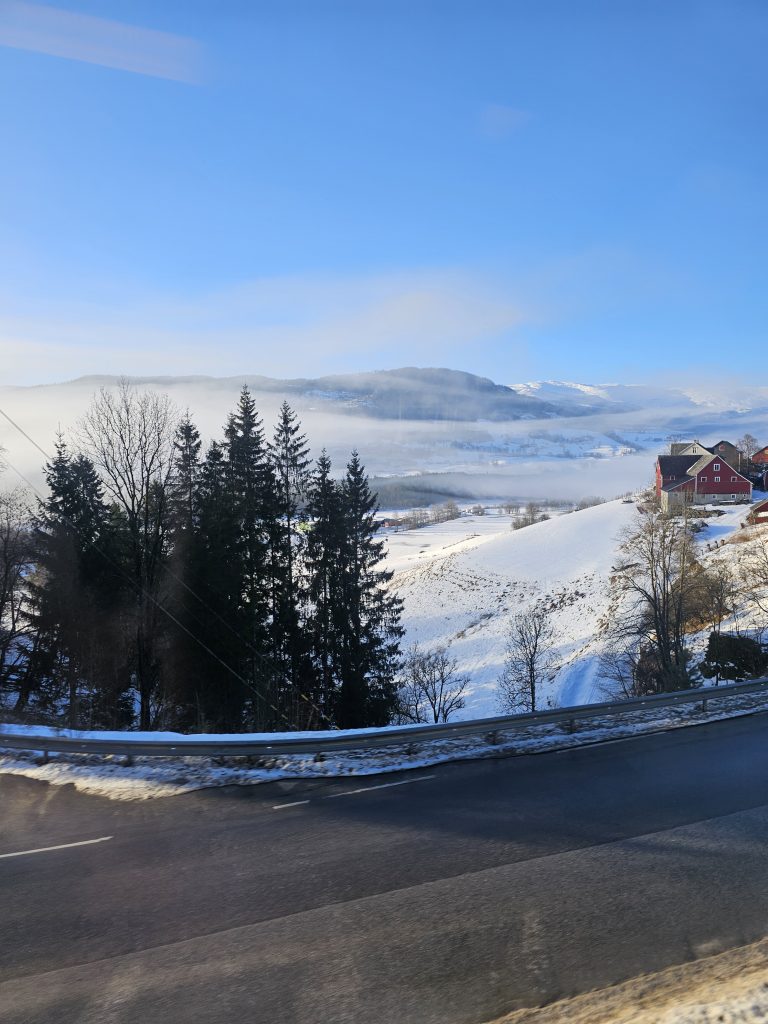
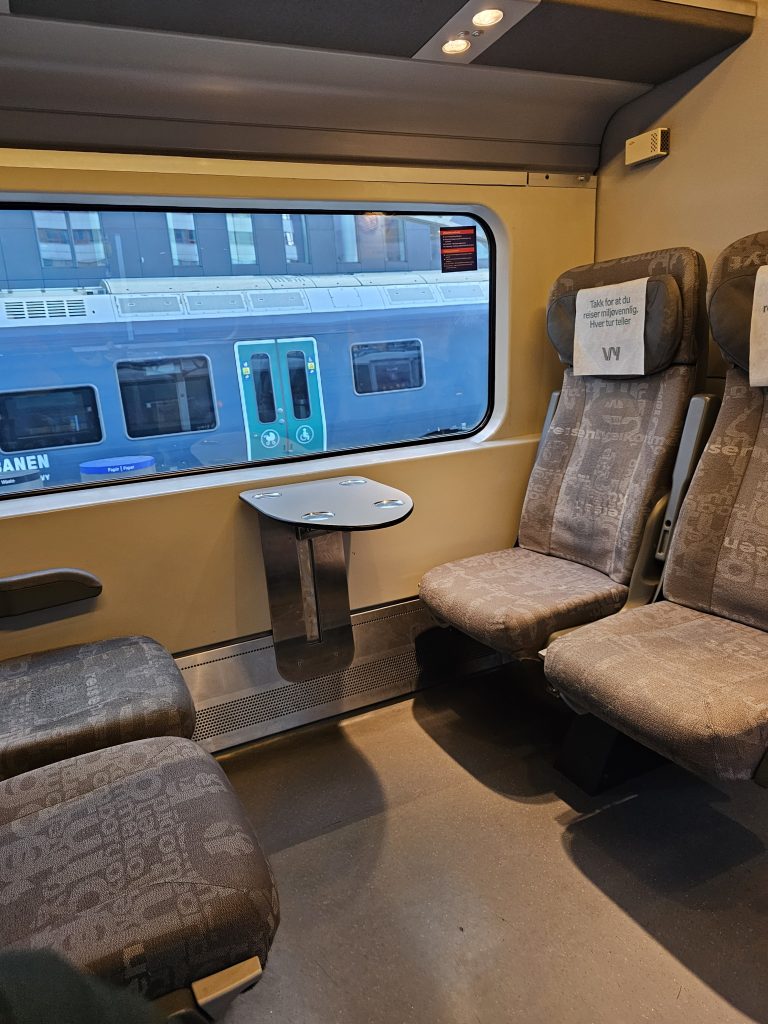
I travelled in standard seating and found it perfectly comfortable for the seven-hour journey from Bergen to Oslo.
The seats were modern, with large windows for the views, and I didn't feel I needed to upgrade
There are upgraded seating options available if you'd prefer more space or a quieter environment. The options can vary between services, so it's worth checking what's available for the specific train when booking through Vy.
For me, where I was sitting mattered far more than the class of ticket. I moved between empty seats during the journey so I could see the scenery from both sides of the train.
There's plenty of space for luggage on the Bergensbanen, which makes sense considering how many passengers use the route to travel to Norway's mountain and ski destinations.
There are dedicated areas for larger suitcases and ski equipment, along with overhead storage for smaller bags, coats and backpacks.
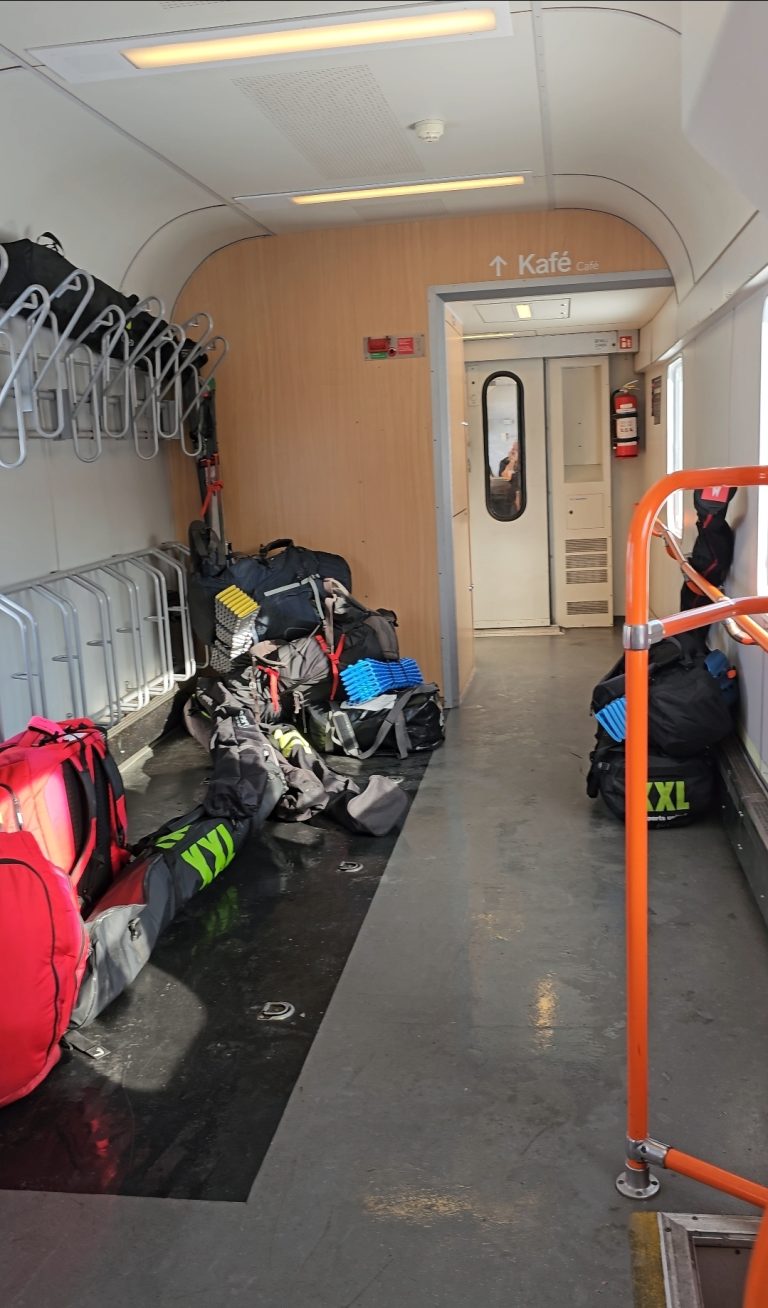
I was travelling with just a backpack, so storing my luggage was easy. From what I saw onboard, though, the trains are well set up for passengers travelling with considerably more luggage or bulky ski equipment.
The Bergensbanen is well set up for families, and I noticed plenty of children travelling when I took the train from Bergen to Oslo.
Many of them were returning from ski holidays, so this definitely isn't a journey where families with children feel out of place.
Some services have a dedicated family carriage with an onboard play area, giving younger children somewhere to move around during what is otherwise a fairly long journey.
There's also space for prams, pushchairs and luggage, which makes travelling with everything children need much easier.
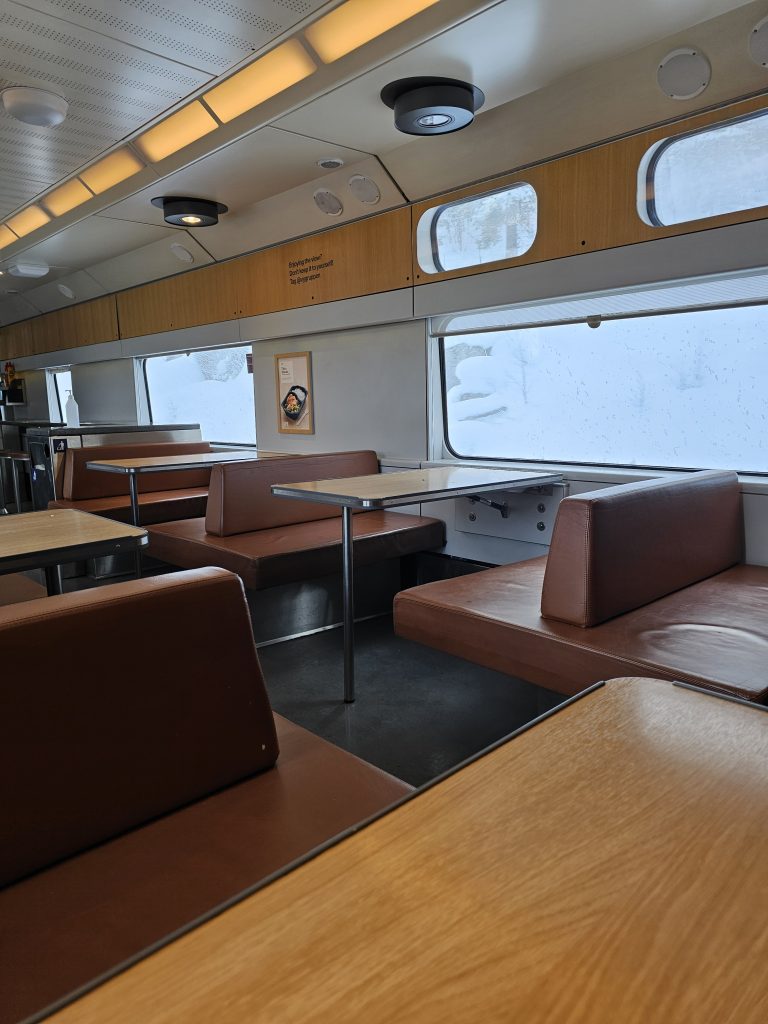
The dining carriage is useful for families too, with proper tables where it's possible to sit and eat rather than taking everything back to your seat.
For families who would prefer their own space, some services also have private compartments seating up to six people. I've covered those in more detail below.
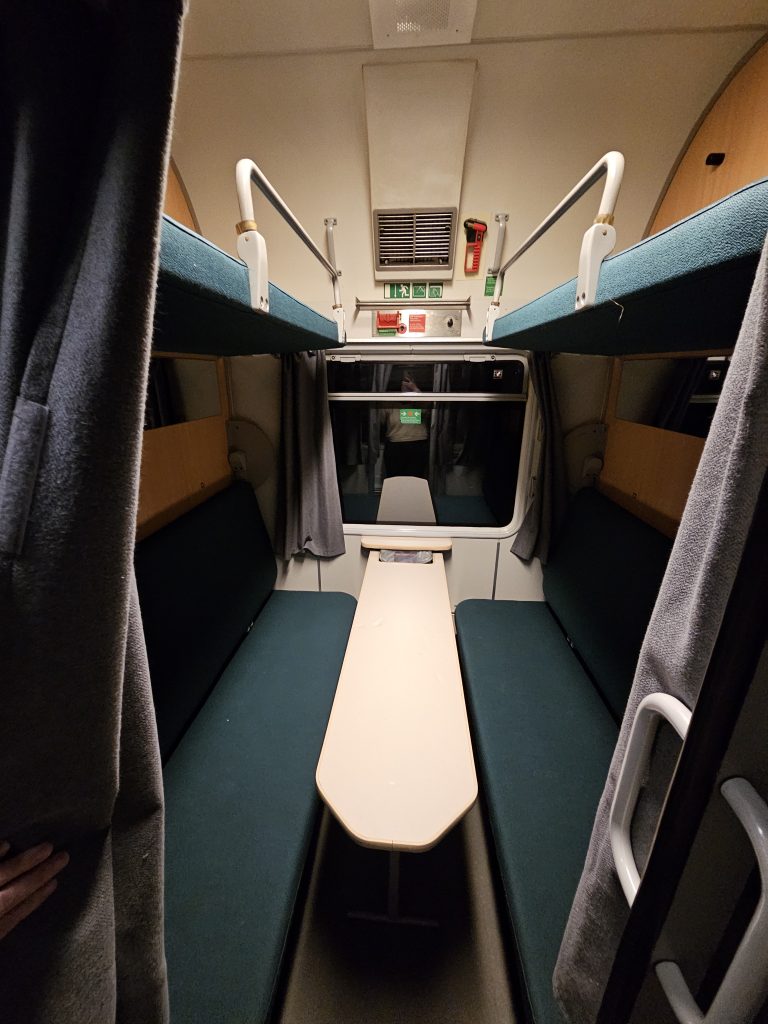
Some Bergensbanen services also have private compartments which can seat up to six people. I saw these onboard and thought they'd be a really good option for families or groups travelling together.
The compartments have facing seats with a table in the middle and are separated from the main carriage, so everyone can sit together without having to book several individual seats around the train. There's also more freedom for children to chat, play games or move around without worrying quite so much about disturbing other passengers.
For a seven-hour journey, I can definitely see the appeal, particularly if travelling with younger children or as a larger family.
Availability is limited though, so if a private compartment is important, I'd look for one when booking rather than leaving it until closer to departure.
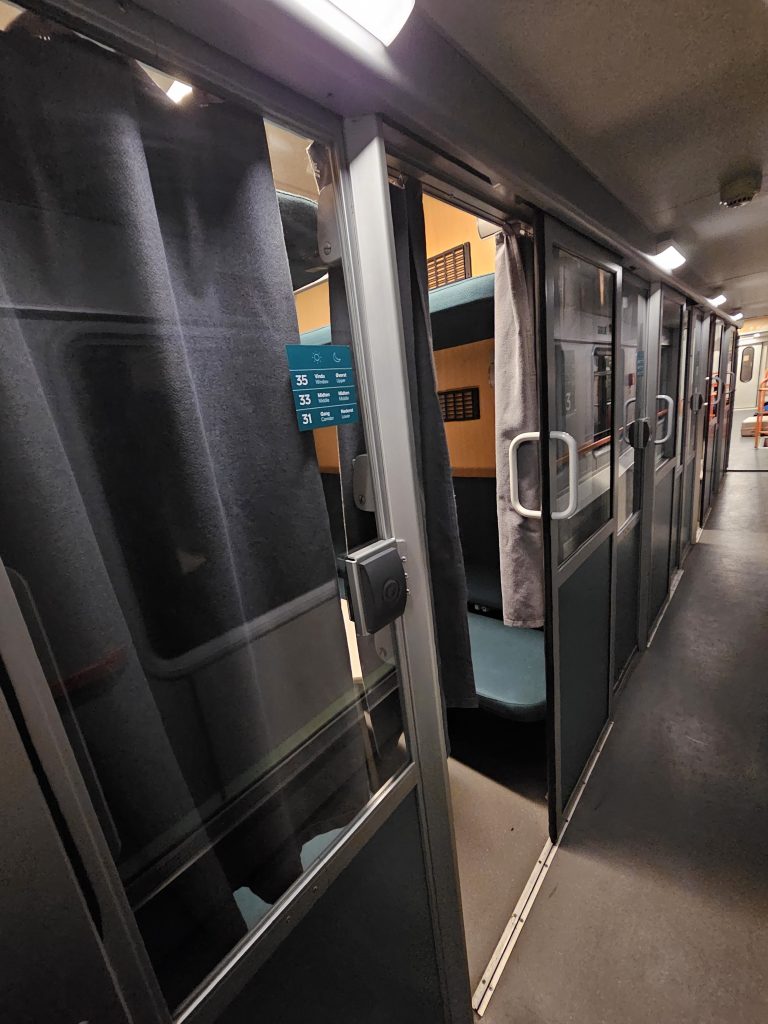
You can bring your own food and drinks onto the Bergensbanen, which plenty of passengers did on my journey. There's also a dining carriage onboard if you'd rather buy something on the train.
Food can be ordered using the QR code at your seat or bought directly from the dining carriage. The menu includes hot meals, paninis, wraps, sandwiches, snacks and drinks, with beer and wine also available.
When I travelled, hot meals such as meatballs and chicken tikka masala were 229 NOK, while paninis, wraps and sandwiches were 219 NOK. There was also a selection of chocolate, sweets and other snacks, and staff could warm baby food if needed.
I actually ended up spending around three hours in the dining carriage. My original seat didn't have a table and wasn't next to the window, so I moved there for something to eat and ended up staying much longer than planned. It was quiet, spacious and I had a much better view of the scenery, so it worked out really well.
There is also an overnight Bergensbanen service between Bergen and Oslo, which can be a useful option if you're short on time or want to save the cost of a hotel for the night.
The night train leaves late in the evening and arrives the following morning, so rather than using most of a day travelling between the two cities, you can sleep on the train and wake up at your destination.
As much as I love a sleeper train, I wouldn't have chosen it for this particular trip. The whole reason I wanted to travel on the Bergensbanen was to see the scenery I'd watched on TV, so travelling through most of it in darkness would have defeated the point for me.
There are several ways to travel overnight depending on how much comfort and privacy you want. Options include standard seats, lie-flat sleeping options and private sleeping compartments.
A private compartment would be particularly useful for couples or families who want their own space, while the cheaper options make it possible to use the night train without paying for a cabin.
One option I really like is travelling during the day in one direction and taking the night train back.
This means you still get the full Bergensbanen experience in daylight, including Hardangervidda and the mountain scenery, but don't need to spend another seven hours covering the same route on the return journey.
For example, you could travel from Bergen to Oslo on the 8:08am daytime service, arriving just after 3pm, spend some time in Oslo and then use the overnight service when travelling back to Bergen.
For a trip where you need to return to the same city for your flight home, I think this makes far more sense than taking the daytime train in both directions.
There's no need to arrive at Bergen Station ridiculously early. My train was due to leave at 8:08am and I arrived at around 7:20am, which gave me more than enough time.
There's no airport-style security or lengthy boarding process. The departure board shows the platform and boarding information, then it's simply a case of heading to the train once boarding begins.
My journey actually left slightly late and we had another delay while waiting for an oncoming train, followed by a medical emergency later in the journey.
Despite all of that, we still arrived in Oslo exactly on schedule.
The one thing I hadn't really considered was just how bright the snow would be. If you're travelling in winter, take sunglasses.
The glare from hours of snow-covered scenery was incredibly strong and I was very glad I had mine with me.
I'd also take a few snacks even if you're planning to use the dining carriage, along with a drink and something to do. That said, I barely touched the entertainment I'd downloaded because I spent most of the journey looking out of the window.
Layers are useful too. Even though the train itself is heated, you're travelling for around seven hours and being able to add or remove a layer makes the journey more comfortable.
There are power sockets at the seats, which is useful when you're taking hundreds of photos and videos throughout the journey.
WiFi is available onboard, but don't rely on having a perfect connection for the entire route. The train crosses some very remote mountain areas, so I'd download anything you want to watch or listen to before travelling.
Taking photos through the windows can be tricky because of reflections. I found getting my phone or camera as close to the glass as possible helped, particularly when the light outside was much brighter than inside the carriage.
If you're travelling in winter, the combination of bright snow and reflections from inside the train can make this even more noticeable. Moving to another window or the opposite side of the carriage sometimes made a big difference.
If you've travelled on Switzerland's famous scenic trains, such as the Bernina Express or GoldenPass Express, the Bergensbanen is quite a different experience.
I've travelled on all three, and the biggest difference is that the Bergensbanen doesn't really feel like a tourist attraction. It's a regular railway carrying locals, families, skiers and people travelling between towns, which just happens to cross some incredible scenery along the way.
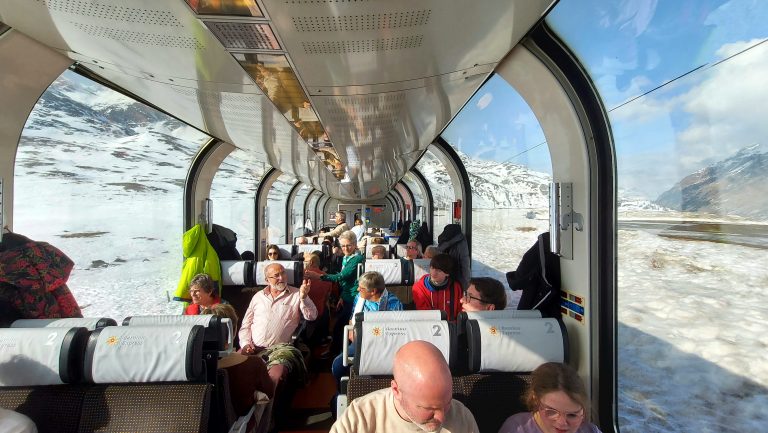
The Bergensbanen uses regular long-distance trains rather than the panoramic carriages associated with many Swiss scenic routes. People get on and off throughout the journey, there's a dining carriage and the whole experience feels much more like everyday train travel.
The scenery is different too. Rather than constantly passing villages and attractions, there are long stretches across Hardangervidda where the landscape feels incredibly remote. In February, I spent hours looking out at snow-covered mountains, frozen lakes and isolated cabins.
Trains such as the Bernina Express are much more geared towards the scenic journey itself. The panoramic windows, seat reservations and route are all part of the experience, and sights such as the Landwasser Viaduct, glaciers and Alpine villages come one after another.
The GoldenPass Express is different again, with panoramic windows and a more premium feel as it travels between Interlaken and Montreux.
I wouldn't really say one is better than the other. The Swiss trains feel like scenic train experiences, whereas the Bergensbanen feels like a normal train journey that happens to cross one of the most spectacular railway routes in Norway. That's probably the biggest difference I noticed.
I'd recommend the Bergensbanen if the journey itself is part of the trip rather than simply a way of getting from Bergen to Oslo. Seven hours is a long time to spend on a train, but if you enjoy scenic rail journeys, mountain scenery or slower travel, it really doesn't feel like a wasted travel day.
It's also an easy way to combine Bergen and Oslo in the same trip without flying between them or hiring a car. For families, there's plenty of space to move around, food available onboard and family facilities on some services, so the length of the journey is probably more manageable than it first sounds.
However, if the priority is simply getting between Bergen and Oslo as quickly as possible, flying may make more sense. Likewise, if you're expecting a luxury panoramic tourist train like some of the Swiss scenic routes, that's not what the Bergensbanen is.
I built my own trip around the railway, spending two nights in Bergen before taking the Bergensbanen to Oslo and staying there for my final night.
For me, absolutely. The Bergensbanen was the reason I booked this trip in the first place, and after watching it on TV at Christmas, I had pretty high expectations of what the journey would be like.
It didn't disappoint. I travelled in February when there was deep snow across the mountains and Hardangervidda, and I spent far more of the seven-hour journey looking out of the window than I'd expected. Even when I moved to the dining carriage for something to eat, I ended up staying there for around three hours because I was enjoying the views so much.
I paid 1,362 NOK (around £106) for my ticket, which was expensive compared with some of the fares I'd seen when planning the trip. Even at that price, I thought it was worth it because I wasn't really paying just to get from Bergen to Oslo. The train journey was one of the main experiences of the weekend.
Yes, but next time I'd probably choose a completely different season. I loved seeing the route covered in snow, but I'd like to go back in summer and see how different Hardangervidda, the mountains and the valleys look without it.
I'd also happily build another Norway trip around the railway. For me, that's probably the best indication of whether the Bergensbanen was worth it. I travelled to Norway specifically to do this journey, and I'd go back and do it all over again.
• 20 Best Things to Do in Bergen, Norway
• Where to Stay in Bergen: Best Areas & Where I Stayed
• Is Bergen Worth Visiting?
• Best Time to Visit Bergen: Weather, Seasons & Price
• How to Get from Bergen Airport to the City Centre
• Fløibanen Funicular Bergen: Is Mount Fløyen Worth Visiting?
• Mostraumen Fjord Cruise from Bergen: Is It Worth It?

Whenever I spot great-value DIY flights and accommodation from UK airports, I share them with members of the Build a Break Travel Club.







Copyright © Build a Break | Website by Furness Media