
Wondering how to see the Northern Lights in Iceland? The good news is that you don't necessarily need to pay for an expensive tour. If you're visiting during the darker months, it's possible to see the aurora independently, and sometimes you don't even need to leave Reykjavík.
However, there's one thing I'd recommend understanding before you travel. Seeing the Northern Lights isn't simply about choosing the right month or visiting somewhere with plenty of aurora activity. You also need suitable weather conditions, particularly clear skies.
We discovered just how important this was during our November 2026 trip to Iceland. There was Northern Lights activity throughout the week surrounding our visit, but unfortunately the weather wasn't on our side.
We arrived in Reykjavík to heavy rain and strong winds. Although the aurora forecasts looked promising at times, thick cloud meant we couldn't see anything from the ground.
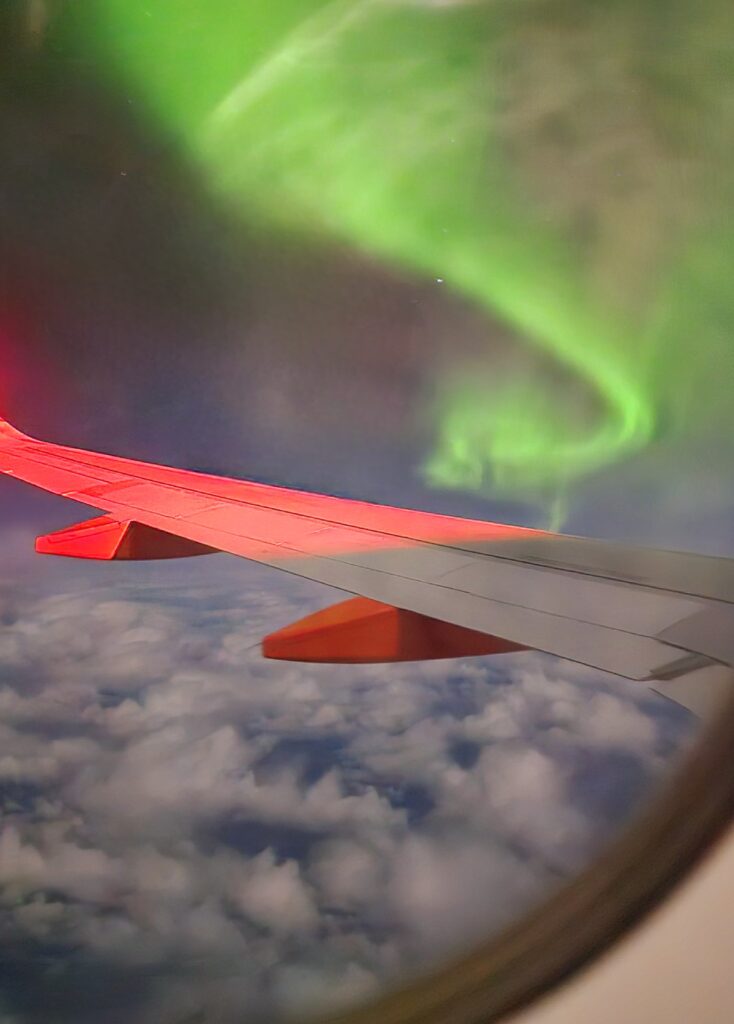
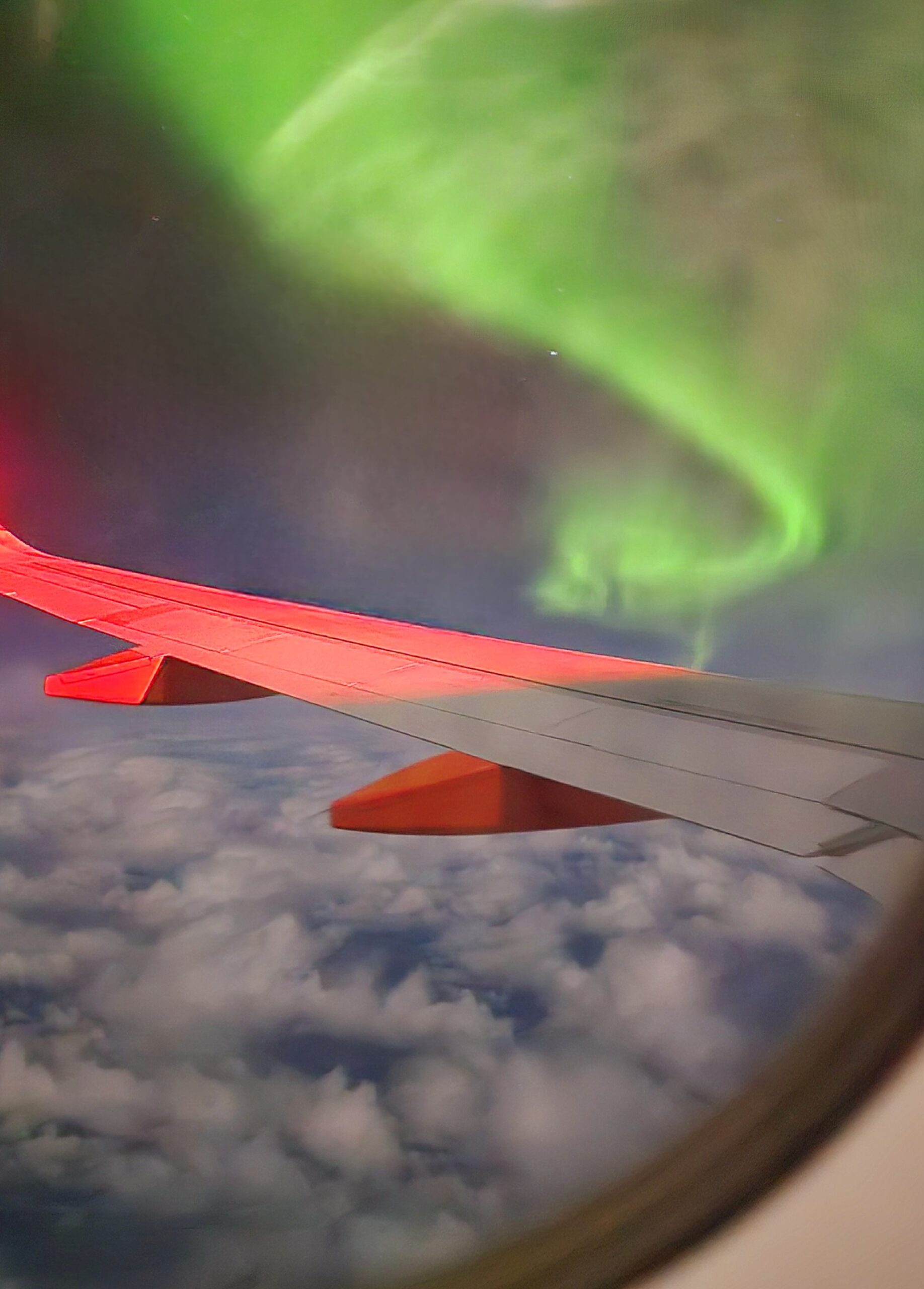
Fortunately, we were lucky enough to see the Northern Lights from our flight home to the UK. We've now spotted them from the plane on both of our Iceland trips, which has made me realise that it's always worth keeping an eye on the sky, even when you're leaving the country!
Before our November visit, I'd researched the best places to see the Northern Lights around Reykjavík, downloaded an aurora forecasting app and prepared photography settings for my Samsung Galaxy S24.
In this guide, I'll explain how to read the Iceland Northern Lights forecast, where to look for the aurora in Reykjavík without a tour, the best time of year to visit and whether booking a Northern Lights excursion is worth the money.
I'll also share the Samsung phone settings I'd prepared for photographing the aurora, including how to take Northern Lights photographs from an aircraft window.
Planning your own Iceland adventure? Our complete guide to planning a trip to Iceland covers flights, accommodation, airport transfers, activities and itineraries to help you organise your trip independently.
This guide combines our firsthand experiences in Iceland in March 2025 and November 2026 with researched viewing locations and practical photography advice. We saw the Northern Lights from our flights, but the cloudy weather prevented us seeing them from Reykjavík during our November visit. Some links are affiliate links, which means Build a Break may earn a commission at no extra cost to you.
Can You See the Northern Lights in Iceland Without a Tour?
Yes, absolutely. The Northern Lights are a natural phenomenon, and you don't have to pay to see them.
If the aurora is active, the sky is dark and the weather conditions are suitable, you could potentially see the lights from Reykjavík's waterfront, a quieter coastal location or somewhere more rural outside the city.
In fact, Iceland is one of the countries where the Northern Lights can be visible even when aurora activity isn't especially high, because of its location close to the auroral zone.
However, light pollution from buildings, roads and streetlights can make fainter displays more difficult to see.
For the best chance, I'd recommend finding somewhere with open views and less artificial lighting, then checking the aurora and cloud-cover forecasts before heading outside.
We had planned to try watching from Reykjavík's waterfront during our November trip because it was within walking distance of our hotel.
Unfortunately, the cloud never cleared sufficiently for us to do that, which shows that even a carefully planned trip doesn't guarantee you'll see anything.
When Is the Northern Lights Season in Iceland?
The Northern Lights season in Iceland generally runs from September until April, when the country has enough hours of darkness for the aurora to become visible.
Although Northern Lights activity can take place throughout the year, the summer months are much less suitable for viewing because Iceland experiences extremely long daylight hours.
During June and July, the sky doesn't become properly dark for much of the night, particularly around the summer solstice.
For that reason, I'd recommend concentrating on September through to March if seeing the Northern Lights is one of your main priorities.
However, choosing the right month is only part of the equation. Cloud cover, aurora activity and how many nights you spend in Iceland can all make an enormous difference.
What Is the Best Month to See the Northern Lights in Iceland?
There isn't one month that guarantees the best Northern Lights display.
October through to March gives you plenty of darkness, but the weather can be unpredictable throughout the season.
Some people are lucky enough to see an incredible display on their first evening, while others spend a week in Iceland without seeing anything because of the weather.
Personally, I'd be more interested in finding a period with several nights available than choosing one particular month based solely on Northern Lights forecasts.
Longer stays give you more opportunities for clear skies and suitable aurora activity.
Can You See the Northern Lights in Iceland in November?
Yes, November is a good time of year in terms of darkness, and it's when we made our most recent visit.
However, November can also be very wet, windy and cloudy, particularly around Reykjavík.
We experienced exactly that in November 2026.
There was promising aurora activity during the week surrounding our visit, but the weather prevented us seeing anything from the ground.
Our first day was particularly wet and windy, although we did enjoy much better weather for Blue Lagoon the following morning.
Unfortunately, having a lovely clear morning doesn't necessarily help when you're trying to see something that requires darkness!
November is still a month I'd happily visit again, but I'd recommend having realistic expectations about the weather.
If you'd like to compare every month, our Best Time to Visit Iceland guide
What Time Do the Northern Lights Appear in Iceland?
The Northern Lights don't appear at a fixed time every evening.
Many visitors concentrate on approximately 10pm to 2am, but displays can happen earlier or later whenever the sky is dark enough and the conditions are suitable.
In the middle of winter, when Iceland has long hours of darkness, you may have opportunities to see the aurora relatively early in the evening.
I'd recommend checking the forecast after sunset, particularly if an app suggests that aurora activity is increasing.
It's also worth remembering that a display can change very quickly.
Sometimes the Northern Lights appear as a relatively faint glow, while stronger displays can develop into bright, moving curtains of green light.
That means I'd avoid deciding that nothing is happening simply because you look outside once and can't see anything.
How to Check the Northern Lights Forecast in Iceland
If you're planning to see the Northern Lights without a tour, I'd strongly recommend learning how to check the forecast before travelling.
There are two main things I'd look at: the aurora activity forecast and the weather forecast.
It's entirely possible to have strong Northern Lights activity above Iceland but be unable to see anything because of thick cloud.
Equally, you could have a beautifully clear evening with relatively modest aurora activity and still be lucky enough to see a display.
That's why I wouldn't rely on a Northern Lights app by itself.
What Is the Kp Index?
Many aurora forecasting apps show something called the Kp index, which measures geomagnetic activity on a scale from 0 to 9.
Generally speaking, higher numbers suggest stronger geomagnetic disturbances, which can make the Northern Lights visible across a wider area.
However, Iceland is already well positioned for seeing the aurora, so you don't necessarily need a particularly high Kp number.
I wouldn't automatically abandon your plans because an app is showing a relatively low forecast.
Instead, I'd look at the current activity, check the cloud cover and keep monitoring the sky.
I'd also pay more attention to the short-term forecast once I'm in Iceland, rather than relying on an activity prediction several weeks before travelling.
How to Read Iceland's Northern Lights Cloud Forecast
The most useful resource I'd recommend is the official Icelandic Meteorological Office Northern Lights forecast.
It combines information about predicted aurora activity with a map showing cloud cover across Iceland.
You can access it for free here:
Check Iceland's Official Northern Lights Forecast and Cloud Map
What Do the Green and White Areas Mean?
One thing that's important to understand is that the map colours might be the opposite of what you'd initially expect.
White areas indicate clearer skies.
Green areas indicate cloud cover.
If you're planning to watch the Northern Lights, you'll generally want to look for areas with more white and less green.
There are different shades representing cloud conditions, and you can move through the forecast times to see how the weather is expected to change during the evening.
For example, Reykjavík might be covered in cloud at 8pm but have a clearer spell forecast later at night.
Alternatively, the city might remain cloudy while another area further inland has much better conditions.
That's when having a car or booking an organised Northern Lights tour could become useful.
My biggest Northern Lights tip: Don't concentrate entirely on the aurora activity number. Check the cloud forecast too. We had promising activity around our November visit, but the persistent cloud meant we couldn't see the lights from Reykjavík.
Can You Check Whether the Northern Lights Are Visible in Reykjavík Tonight?
Yes, but it's important to understand that no website or app can guarantee what you'll actually see.
For tonight's conditions, I'd start with the official Reykjavík Northern Lights forecast and look at the current and upcoming cloud cover.
I'd then check my aurora app for activity alerts and any recent reports from people nearby.
If the forecast is promising, I'd head somewhere safe with open views rather than standing in the middle of the city beneath bright streetlights.
The Aurora App I Use in Iceland
For our November trip, I used an aurora forecasting app to keep an eye on both longer-term predictions and shorter-term activity.
One of the things I like about using an app is that you can check the forecast throughout the day without needing to keep searching online.
I'd recommend looking for an app that includes current aurora activity, short-term forecasts, longer-range predictions and notifications when activity is increasing.
I find it useful to check the longer-range forecast before travelling, but I pay more attention to the shorter-term information once I'm actually at the destination.
It's also worth enabling notifications so you don't need to keep opening the app throughout the evening.
However, I still check the official Icelandic weather forecast alongside it, because an aurora alert doesn't automatically mean the sky above your hotel is clear.
Some apps also offer community reports showing where people have recently seen the lights. These can be helpful, but I'd check how recent and reliable the reports are before travelling somewhere based on them.
Where to See the Northern Lights in Reykjavík for Free
One of the advantages of staying in Reykjavík is that there are several places where you can try to see the Northern Lights without booking a tour.
Some are within walking distance of central accommodation, while others are further away and may require a bus, taxi or hire car.
The most important things I'd look for are a safe place to stand, an open view of the sky and as little direct lighting as possible.
These are locations I've researched and would consider for a future visit, rather than places where I've personally seen the aurora from the ground.
1. Reykjavík Old Harbour
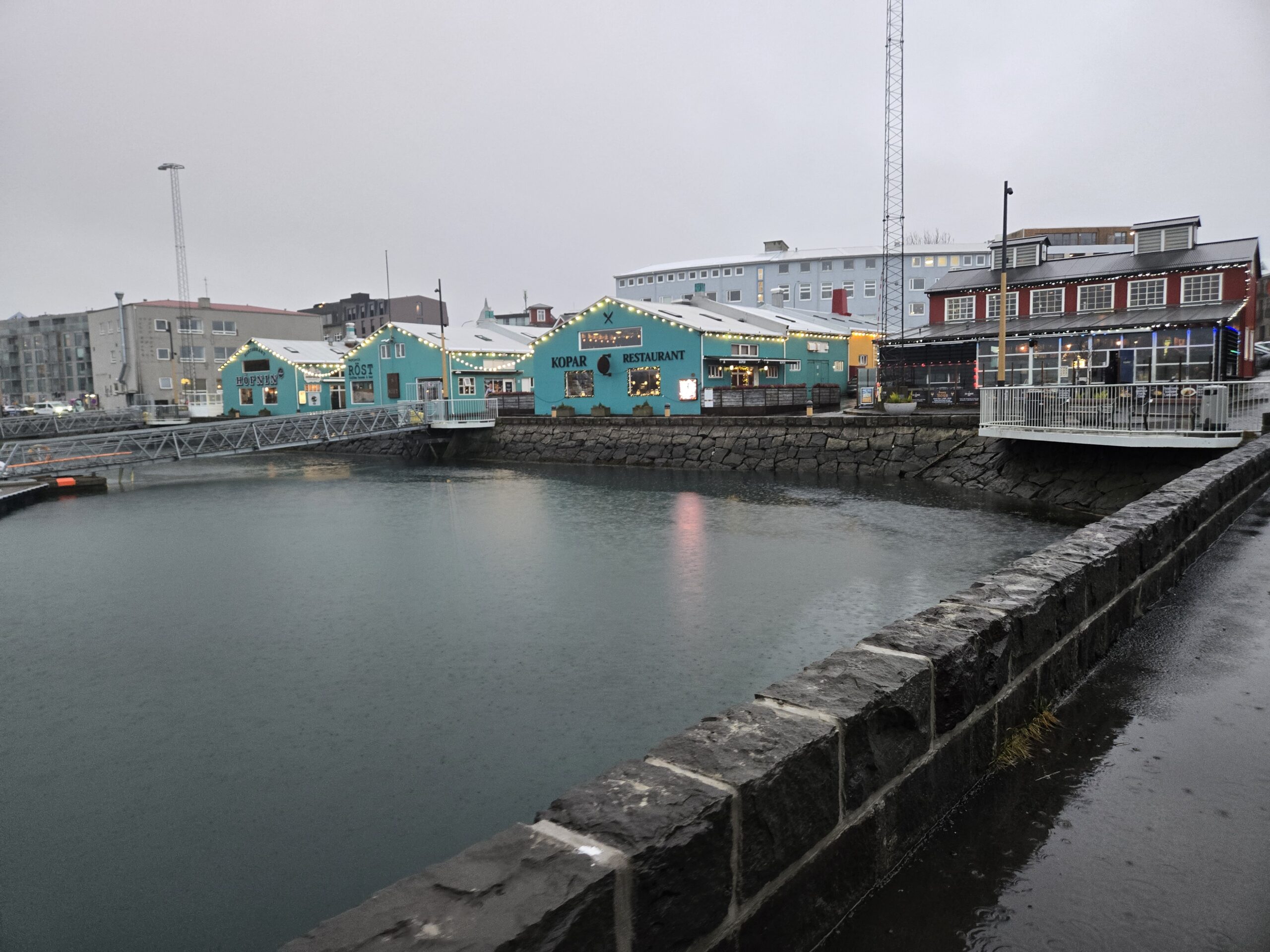
If you're staying in central Reykjavík and don't want to travel very far, I'd consider starting around the Old Harbour.
The waterfront provides open views over the water, making it a practical option when the skies are clear and the aurora is active.
There will still be light pollution from the harbour and nearby streets, so it won't necessarily be the best location for a faint display.
However, stronger Northern Lights can sometimes be visible from central Reykjavík, and the harbour is convenient if you're staying nearby.
During our November visit, we spent time at the Old Harbour because we were booked onto the Amelia Rose whale-watching yacht.
It was also within walking distance of our accommodation at CityHub Reykjavik, so it would have been a practical place for us to try later that evening.
Unfortunately, the forecast never improved enough for that to be worthwhile.
2. Sun Voyager and the Reykjavík Waterfront
Another location I'd consider is the waterfront around the Sun Voyager sculpture, known locally as Sólfar.
It's relatively easy to reach from central Reykjavík and offers open views across the bay towards the mountains.
If the Northern Lights are particularly active, you may be lucky enough to see them above the water.
However, there are still streetlights nearby, so I'd look for a suitable position away from the brightest lighting.
For anyone staying in the city without a hire car, I think it's a sensible place to start because you don't need to arrange transport to somewhere remote.
3. Grótta Lighthouse, Seltjarnarnes
Grótta Lighthouse is one of the most popular locations for Northern Lights viewing around Reykjavík.
It's located on the Seltjarnarnes peninsula, approximately 15 minutes by car from the city centre, depending on traffic and your starting point.
The main advantage is that you're further away from some of Reykjavík's brightest lights, with wide views over the Atlantic Ocean.
It's particularly popular with photographers because of the coastal setting and the lighthouse itself.
However, I would be very careful around the coastline after dark, particularly during winter.
The causeway leading to the lighthouse is affected by the tides, and access may also be restricted to protect wildlife.
I'd stay on safe, publicly accessible ground rather than attempting to cross the causeway simply to get a photograph.
If you're visiting without a car, I'd also arrange your return transport before travelling there, especially if you're planning to stay out late.
4. Öskjuhlíð Hill Near Perlan
Öskjuhlíð Hill, where you'll find the Perlan museum, is another location worth researching.
Its elevated position can provide open views, and some areas away from the brightest city lights are popular for aurora watching.
However, there are wooded paths around the hill, and I wouldn't recommend wandering into unfamiliar areas after dark, particularly when the ground is icy.
I'd choose an accessible viewpoint, make sure I knew how to get back safely and avoid heading into the trees simply to find a darker location.
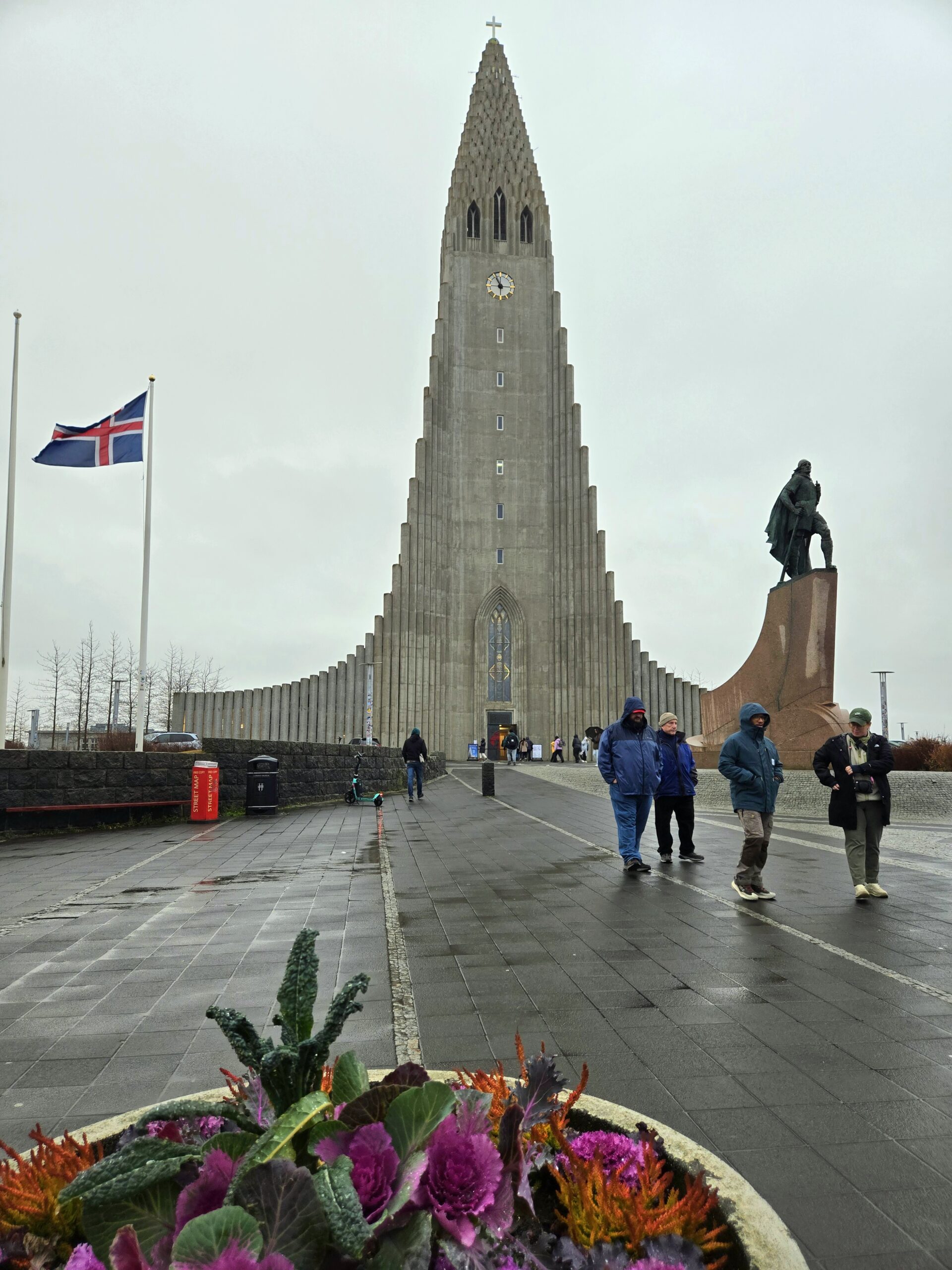
5. Hallgrímskirkja Church
Hallgrímskirkja is one of Reykjavík's most recognisable landmarks, and photographs of the Northern Lights above the church can look absolutely spectacular.
However, I wouldn't necessarily choose it as my first location for watching faint aurora activity.
The church is in the city centre, with surrounding buildings, streetlights and artificial lighting that can make the sky appear brighter.
If the aurora is strong enough, it may still be visible, and the church can provide a beautiful foreground for photographs.
I'd researched camera settings for photographing the Northern Lights above Hallgrímskirkja before our November visit, but the weather prevented us from trying them.
I've included those settings further down this guide for anyone using a Samsung Galaxy S24 or similar phone.
Where Else Can You See the Northern Lights in Iceland?
Although Reykjavík is convenient, you don't need to stay in the capital to see the Northern Lights.
In fact, many rural areas of Iceland have much less light pollution, potentially making it easier to see faint displays when the weather is clear.
The Northern Lights can be visible across the country, so I'd concentrate on where the cloud forecast is favourable rather than assuming one region will always be better than another.
Thingvellir National Park and the Golden Circle
Þingvellir National Park is a popular destination for aurora watching because of its open landscapes and location away from Reykjavík's main city lights.
However, I'd be cautious about driving there independently at night during winter if you're not comfortable with Icelandic road conditions.
Snow, ice, strong winds and changing weather can make an otherwise straightforward daytime journey much more challenging.
If you're not confident driving, I'd consider an organised tour instead.
South Iceland and Vík
If you're travelling around the South Coast, areas away from the larger settlements can offer very dark skies.
However, I'd always check weather conditions, road access and safe places to stop before setting out.
I'd never recommend parking on the roadside or walking onto unfamiliar beaches after dark simply to get a better view.
North Iceland
North Iceland, including the areas around Akureyri and Lake Mývatn, is another region where visitors often hope to see the Northern Lights.
There are many rural places with relatively little light pollution, although the weather can still affect visibility.
For me, the most important thing would be choosing a location with a clear forecast and safe access rather than travelling a long distance purely because somewhere has a reputation for being good for the aurora.
Before any winter journey, I'd recommend checking Safetravel Iceland and the latest road conditions at umferdin.is.
How I'd Try to See the Northern Lights in Reykjavík Without a Tour
If I returned to Iceland for another short break, this is how I'd approach Northern Lights viewing independently.
Step 1: Check the Forecast in the Afternoon
I'd start by checking my aurora app to see whether any activity is expected later in the evening.
I'd then look at the Icelandic Meteorological Office cloud map to see whether Reykjavík has any clear spells forecast.
Step 2: Choose a Safe Viewing Location
If the forecast suggested clear skies over Reykjavík, I'd choose somewhere easily accessible, such as the waterfront or Old Harbour.
If I had suitable transport and conditions were safe, I'd also consider Grótta Lighthouse.
Step 3: Avoid Bright Streetlights
I'd try to stand somewhere with open views and avoid looking directly towards brightly illuminated buildings.
I'd also give my eyes some time to adjust to the darkness rather than constantly looking at a bright phone screen.
Step 4: Keep Checking for Changes
The Northern Lights can develop quickly, so I'd continue monitoring the app and checking the sky.
I'd also try taking occasional photographs, because a phone camera can sometimes pick up faint colour that isn't immediately obvious to the naked eye.
Step 5: Know When to Call It a Night
I'd never stay out in dangerous weather simply because an app was showing promising activity.
If the conditions were too cloudy, windy or wet, I'd return to the hotel and try again another evening if possible.
This is one reason staying several nights in Iceland can be an advantage when the Northern Lights are a priority.
Are Northern Lights Tours in Reykjavík Worth It?
Although you can see the Northern Lights in Iceland for free, there are definitely advantages to booking an organised tour.
The biggest benefit is having someone else monitor the weather and choose a suitable viewing location.
For example, if Reykjavík is cloudy but another area outside the city has clearer skies, a guided bus tour may be able to travel towards better conditions.
That can be particularly useful if you're staying in Reykjavík without a hire car or don't feel comfortable driving in Iceland at night.
However, tours cannot guarantee sightings, and I wouldn't book one expecting that paying for an excursion automatically means you'll see the aurora.
Some tours offer another attempt if you don't see the lights, but it's important to understand the booking conditions because that isn't necessarily the same as receiving a refund.
Northern Lights Boat Tour vs Bus Tour
| Tour Type | Advantages | Things to Consider |
|---|---|---|
| Northern Lights Boat Cruise | Open views over the water and less city light pollution | Dependent on sea conditions and cannot travel inland to escape cloud |
| Northern Lights Bus Tour | Can travel towards darker locations and clearer weather | Longer excursion, often with several stops and time outdoors |
| Independent Viewing | Free and flexible, particularly if staying centrally | You're responsible for forecasts, transport and choosing a safe location |
Personally, I think both organised options have advantages. It depends on whether you want the flexibility of travelling inland or the experience of being out on the water.
Sea Trips Reykjavík Northern Lights Boat Cruise
One Northern Lights excursion I'd happily consider is the evening sightseeing cruise operated by Sea Trips Reykjavík.
We actually travelled with this company during our November 2026 visit, although it was for whale watching rather than a Northern Lights cruise.
We booked the Amelia Rose yacht, and despite the rain and rougher seas offshore, we had a fantastic experience.
We were lucky enough to see minke whales and two humpback whales, and I was really impressed with the yacht and crew.
After our whale-watching trip, we were considering having something to eat and then returning for their evening Northern Lights cruise.
Unfortunately, when we enquired, we were told that the Northern Lights trip wasn't running because of the weather.
Given how wet, windy and cloudy Reykjavík was that evening, it wasn't particularly surprising.
However, having already experienced their whale-watching tour, I'd definitely consider booking their Northern Lights cruise if I returned and the conditions looked promising.
The advertised Northern Lights cruise lasts approximately two hours and heads away from the brighter city lights to look for the aurora over the water.
The trip departs from Reykjavík's Old Harbour, making it convenient for anyone staying centrally.
There are outdoor viewing areas, along with the opportunity to spend time inside, although I'd still recommend dressing warmly.
Of course, weather conditions can prevent the cruise operating, as we discovered during our own visit.
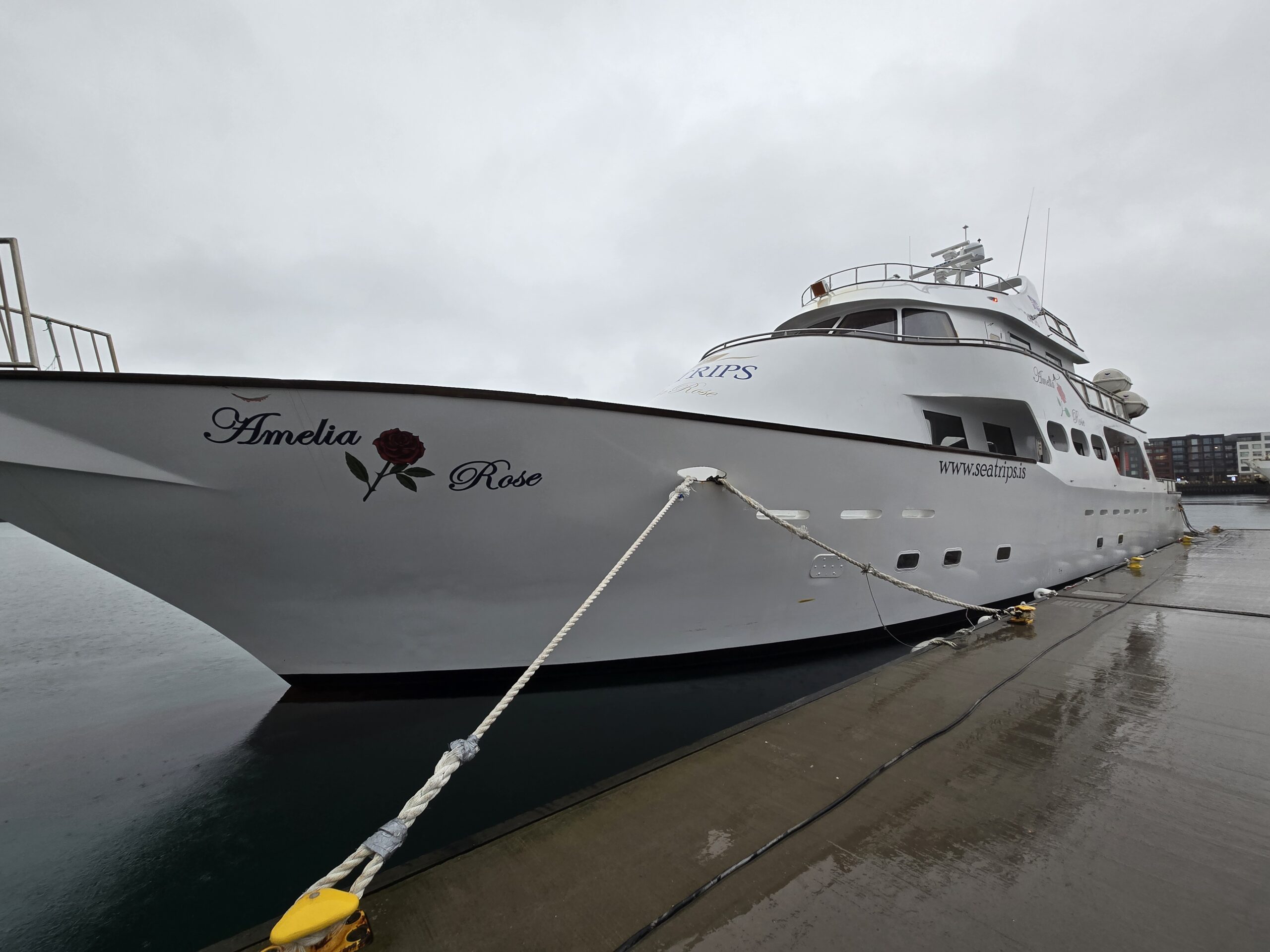
You can read our Sea Trips Reykjavík Whale-Watching Review if you'd like to see what our experience with the operator was like.
Check Sea Trips Reykjavík Northern Lights Cruise Availability
This is a bookable tour we considered, not one we've personally taken. Check the departure point, availability, weather policy and any repeat-trip conditions before booking.
A Budget-Friendly Northern Lights Bus Tour from Reykjavík
If you're looking for a more affordable organised excursion, I'd also consider a Northern Lights bus tour.
One popular option is the Northern Lights Bus Tour from Reykjavík with Hot Cocoa.
It's advertised as lasting approximately four hours and travels away from the brighter city lights in search of clearer skies and suitable aurora conditions.
The main advantage of a bus tour is that the guide can choose different viewing locations based on the forecasts, rather than remaining in one place.
That's particularly useful if Reykjavík is cloudy but somewhere further away has better conditions.
The tour also includes a guide, transport, photography stops and hot chocolate.
At the time of writing, the listing offers a free repeat attempt if you don't see the Northern Lights, subject to the operator's conditions.
However, that doesn't mean you automatically receive a refund if the aurora doesn't appear.
I'd particularly recommend checking the repeat-trip arrangements if you're only visiting Iceland for one or two nights, because you might not have time to use a second attempt.
Although I haven't personally taken this particular tour, it looks like a practical option for anyone who wants to leave the city without hiring a car or paying for a private excursion.
Check Northern Lights Bus Tour Prices and Availability
This bus tour is a researched recommendation rather than a firsthand review. Prices, inclusions, departure points and rebooking conditions may change.
Would I Choose the Boat or Bus Tour?
If the forecast was clear around Reykjavík and the sea conditions looked favourable, I'd be very tempted by the Sea Trips cruise because we already had such a positive experience with the company.
However, if the cloud forecast showed clearer conditions away from the city, I'd probably lean towards a bus tour instead.
The ability to travel to different areas could be a real advantage on a cloudy evening, particularly for someone visiting Iceland for just a short break.
I'd also compare the total price, duration, departure point and repeat-tour policy before making a decision.
What Happens If a Northern Lights Tour Is Cancelled Because of the Weather?
Something I'd definitely consider before booking is what happens if the weather is too poor for the tour to operate.
This is exactly what happened when we asked about the Sea Trips Northern Lights cruise during our November trip.
The company told us it wasn't running that evening due to the weather, so there wasn't an opportunity to go.
It's important to distinguish between a tour being cancelled by the operator and a tour operating normally but not seeing the Northern Lights.
Those situations can have different refund and rebooking conditions.
Some operators offer a full refund or the chance to choose another date when they cancel a departure, while others offer a repeat viewing opportunity when the tour runs but the aurora doesn't appear.
I'd always read the terms before booking, particularly if you're planning an Extreme Day Trip or overnight break where you won't have several evenings available.
For us, the weather simply wasn't suitable, and I'd much rather an operator make a sensible decision than take people out in unsafe or unpleasant conditions.
How to Photograph the Northern Lights with a Samsung Galaxy S24
One thing I really wanted to prepare before our November trip was how to photograph the Northern Lights using my phone.
I use a Samsung Galaxy S24, so I put together a cheat sheet with starting settings for different levels of aurora activity.
Unfortunately, the cloud prevented me testing these settings on a Northern Lights display from Reykjavík itself, but they're useful starting points for anyone who wants to experiment with Samsung's Pro camera mode.
The exact exposure you'll need depends on how bright the aurora is, whether it's moving quickly, how much artificial light is nearby and how stable you can keep the phone.
I'd recommend taking several photographs with slightly different settings rather than assuming one combination will work perfectly.
Samsung Galaxy S24: Starting Settings for Northern Lights
| Camera Setting | Starting Point |
|---|---|
| Camera mode | Pro |
| Resolution | 12M |
| Lens | W / 1× |
| ISO | 1600 |
| Shutter speed | 4 seconds |
| Focus | Manual, near infinity |
| White balance | 3500K |
| Timer | 2 seconds |
| Flash | Off |
These are starting settings rather than a guarantee of a good photograph. You'll probably need to make adjustments depending on the conditions.
I'd also strongly recommend using a tripod or resting the phone somewhere completely stable, because even a small amount of movement can cause blur during a four-second exposure.
Photographing Bright, Fast-Moving Northern Lights
If the aurora is very bright and moving quickly, I'd start with a shorter shutter speed.
ISO: 800–1600
Shutter: Approximately 2 seconds
White balance: Around 3500K
A shorter exposure can help keep the moving curtains of light looking more defined rather than turning them into a blurred green glow.
If they're moving especially quickly, you may need to shorten the exposure further.
Photographing Moderate Northern Lights
For a visible green glow or gently moving curtains, I'd start with the default settings from my cheat sheet.
ISO: 1600
Shutter: Approximately 4 seconds
White balance: Around 3500K
I'd take a photograph, check the result and then adjust the settings if the image was too bright, too dark or blurry.
Photographing Faint Northern Lights
Sometimes the aurora can appear relatively faint, and a camera may pick up more colour than you can immediately see with your eyes.
For a faint display, I'd consider increasing the ISO.
ISO: Around 3200
Shutter: Approximately 4 seconds
White balance: Around 3500K
Higher ISO settings can brighten the photograph, but they can also introduce more grain or noise.
That's why I'd experiment with different combinations rather than automatically using the highest possible ISO.
What If Hallgrímskirkja Looks Too Bright in the Photograph?
If you're trying to photograph the Northern Lights above Hallgrímskirkja, the church lighting can make exposure tricky.
You might find that the church looks extremely bright while the sky appears much darker.
I'd try reducing the shutter speed from four seconds to two seconds first.
If the building still looked overexposed, I'd reduce the ISO from 1600 to 800, or even 400 if necessary.
However, that may also make faint Northern Lights harder to capture, so you'll need to find a compromise.
I'd take several photographs at different exposures and choose the result that balances the church and sky most effectively.
What If Your Northern Lights Photograph Is Too Dark?
If your photograph is too dark, I'd start by checking that the phone is completely stable.
You can then increase the exposure time, for example from two seconds to four seconds, or raise the ISO if needed.
However, longer exposures may blur rapidly moving aurora curtains, so I'd avoid increasing the shutter speed unnecessarily.
What If Your Northern Lights Photos Are Blurry?
Blur is one of the biggest problems when photographing the Northern Lights on a phone.
I'd recommend using a tripod or securely supporting the phone, enabling a two-second timer and avoiding digital zoom.
I'd also check that manual focus is set correctly for distant objects rather than assuming the furthest setting is always perfectly sharp.
If the buildings or landscape look sharp but the aurora appears smeared, the lights may simply be moving too quickly for your exposure.
In that case, I'd shorten the shutter speed and adjust the ISO as necessary.
Remember: Brighter or faster-moving Northern Lights generally need a shorter exposure. Fainter displays may need a longer exposure or higher ISO, but that can introduce blur and grain.
Can You See the Northern Lights From a Plane Leaving Iceland?
Yes, and this is something we've been incredibly lucky with on our trips to Iceland.
During both our March 2025 and November 2026 visits, we spotted the Northern Lights from our flight home to the UK.
In November, the cloud had prevented us seeing the aurora from Reykjavík, but once we were above the cloud on the flight home, we were finally rewarded with a beautiful display.
It's one of the reasons I always recommend looking out of the aircraft window on evening flights from Iceland during Northern Lights season.
However, seeing the aurora from a plane is never guaranteed. It depends on the flight route, time of day, cloud, aurora activity and where the display is positioned relative to the aircraft.
Which Side of the Plane Is Best for Northern Lights When Flying from Iceland to the UK?
Based on our own experiences, I'd consider booking a left-side window seat when flying from Iceland back to the UK at night.
On our November return flight, we were seated on the left, and I was able to photograph the Northern Lights through the aircraft window.
However, I'd never describe the left side as a guaranteed choice.
Flight paths can change, and the aurora may appear in a completely different position depending on the conditions.
If you're travelling to Iceland or flying onwards to another destination, the best side of the aircraft may be different.
I'd simply treat a left-side window seat on a UK-bound flight as something worth considering based on our experience.
Samsung Galaxy S24 Settings for Northern Lights From a Plane
Photographing the Northern Lights from an aircraft is quite different from taking photographs on the ground.
The plane is moving, and even small vibrations can cause blur when using longer exposures.
I'd start by trying Samsung's Night mode, then experiment with Pro mode if the results are too blurry.
Option 1: Try Night Mode First
Open the Samsung Camera app, choose More, then select Night mode.
Use the main 1× camera, switch the flash off and take several photographs.
I'd check the results immediately because Night mode may use a longer exposure, which can cause blur from the aircraft's movement.
Option 2: Try Pro Mode
If Night mode isn't producing sharp photographs, these are the starting settings I'd prepared for photographing the Northern Lights from a plane.
| Camera Setting | Starting Point |
|---|---|
| Resolution | 12M |
| Lens | W / 1× |
| ISO | 3200 |
| Shutter | 1/2 second |
| Focus | Manual, near infinity |
| White balance | 3500K |
| Flash | Off |
I'd then adjust those settings depending on how bright and fast-moving the aurora was.
Bright Northern Lights From a Plane
ISO: Approximately 800–1600
Shutter: Around 1/4 to 1/2 second
Shorter exposures may help reduce blur when the aurora is bright enough.
Moderate Northern Lights From a Plane
ISO: Around 3200
Shutter: Approximately 1/2 to 1 second
I'd take several photographs and check whether the aircraft's movement was affecting the image.
Faint Northern Lights From a Plane
ISO: Around 3200, or higher if your phone allows it and the result remains usable.
Shutter: Approximately 1–2 seconds only if the aircraft is steady enough.
Longer exposures may help capture faint light, but they're much more likely to blur through an aircraft window.
I'd always prioritise a reasonably sharp photograph over a brighter image that's completely blurred.
How to Avoid Reflections in the Aircraft Window
One thing that can make a big difference is reducing reflections from the cabin.
I'd start by cleaning the phone's camera lens and switching off the flash.
I'd also lower my phone screen brightness and turn off the overhead reading light if possible.
When taking the photograph, I'd hold the camera close to the aircraft window without pressing it against the glass, because contact with the window can transfer vibrations.
A dark jumper or scarf held around the phone can help block reflections from nearby cabin lights, provided it doesn't cover the camera or interfere with anything around your seat.
Finally, I'd take lots of photographs using slightly different settings.
Some might be blurry or too dark, but you only need a few good ones to capture a fantastic memory.
How to Film the Northern Lights on a Samsung Galaxy S24
If you're lucky enough to see a particularly bright Northern Lights display, you might also want to record a video.
However, filming the aurora can be more challenging than photographing it, especially when the lights are faint.
I'd recommend taking your photographs first, then experimenting with video once you've captured a few images you're happy with.
Option 1: Night Hyperlapse
For a moving aurora display from a stable position on the ground, I'd consider trying Samsung's Hyperlapse mode.
Open the Camera app, select More and look for Hyperlapse.
Depending on your software version and available camera options, you may see dedicated night recording speeds, including 15× or 45×.
I'd start with Night 15× if it's available on your phone.
Use a tripod or another secure support, because the phone needs to remain completely still throughout the recording.
I'd try recording for approximately five to ten minutes and see how the results look.
| Hyperlapse Speed | Approximate Result From 10 Minutes |
|---|---|
| 15× | 40-second video |
| 45× | 13-second video |
These are approximate playback lengths based on the selected speed. Available settings and results depend on the phone and software.
Night Hyperlapse may struggle with very faint Northern Lights, so I'd take still photographs first rather than relying entirely on video.
Option 2: Standard Video or Pro Video
If the Northern Lights are particularly bright and moving quickly, I'd also try recording a short clip using normal Video mode.
For more control, Samsung's Pro Video mode allows manual adjustments on supported devices.
These are the starting settings I'd consider:
| Video Setting | Starting Point |
|---|---|
| Resolution | FHD 1080p |
| Frame rate | 30fps |
| Lens | W / 1× |
| Shutter | 1/30 second |
| ISO | 3200 or higher if available |
| Focus | Manual, towards infinity |
| White balance | 3500K |
I'd treat these as experimental settings rather than a guarantee, because capturing usable video of faint aurora can be difficult even with a good phone camera.
Can You Film Northern Lights From a Plane?
If you're trying to record the Northern Lights through an aircraft window, I wouldn't use Hyperlapse as my first choice.
The aircraft is constantly moving, and vibrations can make longer recordings difficult to keep sharp.
Instead, I'd start with normal Video mode if the lights were bright enough, then experiment with Pro Video if more control was needed.
For fainter Northern Lights, I'd concentrate on taking photographs rather than trying to record a video that might end up too dark or blurry.
What Should You Wear to Watch the Northern Lights in Iceland?
If you're planning to spend time outside watching the Northern Lights, I'd definitely recommend dressing warmly.
Even when Reykjavík doesn't feel particularly cold during the day, standing still beside the coast or in an exposed rural location can make you feel much colder.
I'd wear thermal layers, a warm jumper, a waterproof and windproof coat, gloves, a hat and sturdy footwear with good grip.
Warm socks are particularly important because you may be standing around for quite a while waiting for the aurora to appear.
If you're booking a boat tour, I'd pay extra attention to wind protection because conditions can feel colder on the water.
For bus tours, I'd still dress for spending time outdoors during stops rather than assuming you'll remain on the coach throughout the evening.
I'd also take a fully charged phone and a portable power bank if you have one, because cold temperatures and repeated camera use can drain batteries more quickly.
Our What to Pack for Iceland in Winter guide
Is It Safe to Look for Northern Lights Independently?
It can be, but I'd always take the weather and location seriously.
I wouldn't recommend driving into remote areas in winter simply because an app suggested a better chance of seeing the Northern Lights somewhere away from Reykjavík.
Icelandic roads can become icy or snow-covered, and conditions can change quickly.
I'd also avoid standing close to exposed coastlines, walking onto slippery rocks or exploring unfamiliar trails in darkness.
For anyone staying centrally without a car, I'd rather choose an accessible location or pay for an organised tour than take unnecessary risks.
Northern Lights in Iceland FAQs
Can you see the Northern Lights in Reykjavík?
Yes. The Northern Lights can be visible from Reykjavík when the sky is clear and aurora activity is favourable. However, light pollution from buildings and streetlights can make faint displays harder to see, so locations with open views and less lighting are usually better.
Can you see the Northern Lights in Reykjavík without a tour?
Yes. You can try watching from Reykjavík's waterfront, Old Harbour or quieter locations such as Grótta Lighthouse. I'd check the aurora activity and cloud forecasts first, then choose somewhere safe with less light pollution.
What is the best month to see the Northern Lights in Iceland?
The main viewing season runs from September until April, with October to March offering long hours of darkness. There's no guaranteed best month because cloud cover and aurora activity vary throughout the season.
Can you see the Northern Lights in Iceland in November?
Yes, November has plenty of darkness for aurora viewing. However, the weather can be wet, windy and cloudy. During our November 2026 visit, the activity forecast was promising but cloud prevented us seeing the lights from Reykjavík.
Can you see the Northern Lights in Iceland in December?
Yes. December has long hours of darkness, which can create good opportunities for Northern Lights viewing. However, conditions still depend on aurora activity, clear skies and the weather. Snow, ice and winter storms can also affect travel plans.
Can you see the Northern Lights in Iceland in January or February?
Yes. Both months are within the main Northern Lights season and offer plenty of darkness. I'd check the cloud forecast during your visit rather than assuming the aurora will be visible simply because you're travelling in winter.
Can you see the Northern Lights in Reykjavík tonight?
Possibly, but no forecast can guarantee a sighting. I'd check the Icelandic Meteorological Office aurora and cloud forecast alongside an aurora activity app before deciding whether to head out.
What is the best Northern Lights forecast for Iceland?
I'd recommend the official Icelandic Meteorological Office forecast, which combines predicted aurora activity with a cloud-cover map. I also use an aurora forecasting app for shorter-term activity updates and notifications.
What do the green areas mean on Iceland's aurora forecast map?
Green areas indicate cloud cover, while white areas indicate clearer skies. I'd look for areas with less cloud rather than assuming green means stronger Northern Lights activity.
Can you see the Northern Lights in Iceland for free?
Yes. There is no charge to see the Northern Lights independently. You may still have transport costs if you travel somewhere outside Reykjavík, but you don't need to book a tour simply to watch the aurora.
Where is the best place to see the Northern Lights in Reykjavík?
Popular locations include Grótta Lighthouse, Öskjuhlíð Hill, the Old Harbour and the waterfront near Sun Voyager. The best choice depends on the cloud forecast, aurora activity, light pollution and how safely you can reach the location.
Can you see the Northern Lights over Hallgrímskirkja?
Yes, during sufficiently strong displays and clear conditions. However, the surrounding city lights can make faint aurora difficult to see or photograph. You may need to adjust your camera exposure to avoid overexposing the illuminated church.
Are Northern Lights boat tours in Iceland worth it?
They can be a lovely experience if the sea conditions and aurora forecast are suitable. We considered a Sea Trips Reykjavík Northern Lights cruise after enjoying their whale-watching tour, but the evening cruise wasn't operating due to the weather during our visit.
Are Northern Lights bus tours better than boat tours?
Bus tours have the advantage of being able to travel to different locations in search of clearer skies and less light pollution. Boat cruises offer open views over the water but are dependent on sea conditions and cannot travel inland to avoid cloud.
What happens if you don't see the Northern Lights on a tour?
It depends on the operator. Some offer a free repeat tour if the aurora doesn't appear, but this isn't necessarily the same as receiving a refund. Check the exact booking conditions, especially if you're only staying in Iceland for one night.
Can Northern Lights tours be cancelled because of bad weather?
Yes. Our November experience is a good example. We considered taking a Northern Lights cruise with Sea Trips Reykjavík after whale watching, but the operator told us the evening trip wasn't running because of the weather.
Can you photograph the Northern Lights with a Samsung Galaxy S24?
Yes. I'd start with Night mode or experiment with Pro mode using the main 1× camera, manual focus near infinity and a stable support. My prepared starting settings for ground photography were ISO 1600, a four-second exposure and a white balance around 3500K, adjusting them depending on the brightness and movement of the aurora.
Can you see the Northern Lights from a plane leaving Iceland?
Yes. We've been lucky enough to see the Northern Lights from our flights home to the UK on both Iceland visits. Based on our experience, I'd consider a left-side window seat when flying to the UK at night, although the best view depends on the route and aurora conditions.
Do the Northern Lights look as bright in real life as photographs?
Not always. Phone cameras can use longer exposures and processing to capture colours that appear much brighter than what you see with your eyes. Fainter aurora may look like a pale or greyish glow, while stronger displays can show vivid colours and movement.
Is Iceland a good place to see the Northern Lights?
Yes. Iceland's location makes it a popular Northern Lights destination, particularly between September and April. However, sightings depend on suitable aurora activity and clear skies, so spending several nights in the country can improve your opportunities compared with a single-night visit.
More Iceland Travel Guides
We've now visited Iceland twice and have been expanding our Build a Break guides with original photographs, firsthand reviews and practical information for planning independent trips from the UK.
Best Time to Visit Iceland
Our Best Time to Visit Iceland guide
How to Visit Iceland on a Budget
If you're trying to reduce the cost of your trip, read our How to Visit Iceland on a Budget guide, with 17 practical ways to save money on flights, accommodation, food, transfers and activities.
Is Iceland Expensive?
Our Is Iceland Expensive? Actual Costs and Budget Breakdown shares what we spent on our March Extreme Day Trip and November overnight break, including flights, accommodation, meals and premium activities.
Where to Stay in Reykjavík
Our Where to Stay in Reykjavik guide
Our CityHub Reykjavík Review
We stayed at CityHub Reykjavik during our November trip, paying £113 for a Twin Hub for two people. It was within walking distance of many central attractions and the Old Harbour.
Our Reykjavík Whale-Watching Experience
We booked Sea Trips Reykjavík's Amelia Rose yacht during our November visit and saw minke and humpback whales. Read our Reykjavík Whale-Watching Review to see why we'd happily consider another excursion with the company.
Extreme Day Trip to Iceland
Our Iceland Extreme Day Trip from Manchester explains how we visited Reykjavík and Sky Lagoon in a single day for approximately £250 per person, including flights, transfers, activities and food.
What to Pack for Iceland in Winter
For practical clothing advice, read our Iceland Winter Packing List, including waterproof clothing, thermals, footwear and what we take when travelling with an underseat bag.
Would I Travel to Iceland Again to See the Northern Lights?
Definitely, although I'd go with realistic expectations and wouldn't plan an entire short break around a guaranteed sighting.
We've been fortunate enough to see the Northern Lights from our flights home on both Iceland visits, but our November trip was a good reminder of how much the weather can affect your chances on the ground.
Although there was promising aurora activity during our stay, the cloud prevented us enjoying a display from Reykjavík.
We'd even considered going on a Northern Lights boat cruise with the same company we'd used for whale watching, but the weather meant the trip wasn't operating.
However, I still think Iceland is a wonderful destination for trying to see the Northern Lights, particularly if you can stay for several nights and keep your plans flexible.
I'd download an aurora forecasting app before travelling, use the official cloud-cover forecast each evening and choose somewhere safe with open views if the conditions looked promising.
If Reykjavík was cloudy but somewhere further away had clearer skies, I'd consider booking an organised bus tour rather than hiring a car purely for an evening trip.
And I'd definitely keep looking out of the plane window on the flight home, particularly if travelling back to the UK at night.
After all, that's where we've had our luck so far!