Eurocamp Italy 2026: Best Campsites, Reviews & Full Park List
🇮🇹 Eurocamp Holidays in Italy: The Ultimate Guide for 2026
Campsite holidays in Italy are genuinely our favourite type of family holiday - and after six years of travelling with Eurocamp, including Venice, Rome, Lake Garda and Tuscany, it’s safe to say we’re obsessed.
With fantastic pools, great weather, and easy access to iconic cities, Eurocamp ticks every box for us (and that’s saying something when you’re trying to please four kids of different ages!).
Parks across Italy offer culture, sunshine, amazing food, and brilliant value. Plus, often cheaper than a UK holiday even when you add flights and transfers.
In this updated 2026 guide, you’ll find:
✔ What a Eurocamp holiday is really like
✔ How to choose the perfect Italian Eurocamp park
✔ Our reviews of the parks we’ve stayed at
✔ A full list of every single Eurocamp campsite in Italy
✔ A new section answering “Does Eurocamp operate in Sardinia?” (a common Google search!)
✔ Tips for airports, transport and planning
Just a quick note before we begin, some posts on this blog contain affiliate links. This means we may earn a small commission if you make a purchase through these links, at no extra cost to you. We only recommend products we genuinely love or believe will be helpful in your trip planning journey. Thanks for supporting our work and happy planning!
Visiting the Trevvi Fountain in Rome
What Is a Eurocamp Holiday?
Eurocamp holidays are self-catered stays in well-equipped European holiday parks.
Expect: Spacious mobile homes, safari tents, or lodges
Outdoor living: pools, nature, terraces, al fresco dining
Fun for all ages: playgrounds, splash parks, sports & activities
Freedom to explore local towns, beaches, and cities
Brilliant value, especially for families
For us, Eurocamp in Italy means:
✔ swimming in the pools
✔ exploring major cities like Rome and Venice
✔ eating al fresco on our deck
✔ making memories in the sunshine
Eating al fresco is our favourite thing to do at Eurocamp
Italy’s trains make exploring super easy - perfect from Rome, Tuscany and Lake Garda. If you're planning on doing Eurocamp without a car, check the sites which have good transport links.
Venice in a Gondola when we stayed at Marina Di Venezia
🏕 Full List of Every Eurocamp Park in Italy 2026
Use this list to compare destinations quickly and see which region suits your trip.
We've added links to some of these, where we have managed to find them available to book elsewhere. This way, you can compare prices with staying direct with the sites.
Baia Blu La Tortuga – Aglientu (Northern Sardinia)
4 Mori Family Village (Muravera)
Capo d’Orso (Le Saline)
Eurocamp Sites in Italy We’ve Stayed At
1. Eurocamp Italy Venice: Marina di Venezia
Location Highlights: Located near the iconic city of Venice, this park is perfect for families who want to combine beach relaxation with cultural exploration.
On-Site Features: A massive water park, multiple restaurants, and a stunning Adriatic coastline.
Size: One of the largest Eurocamp sites in Italy, bustling with activities and amenities.
Nearby Attractions: Spend a day exploring Venice’s canals, St. Mark’s Basilica, and Doge’s Palace.
Ideal For: Beach lovers and those seeking easy access to Venice’s treasures.
2. Eurocamp Italy Rome: Camping Village Fabulous
Location Highlights: Just outside Rome, this park is ideal for exploring the Eternal City while enjoying the peace of a well-equipped holiday site.
On-Site Features: Large pools, a splash park, and plenty of shaded relaxation areas.
Size: Medium-sized with a tranquil atmosphere, despite its proximity to Rome.
Nearby Attractions: Visit the Colosseum, Trevi Fountain, and Vatican City, all a short journey away.
Ideal For: History buffs and families who want a mix of sightseeing and downtime.
We loved this site and it's location so much, we've visited twice.
Location Highlights: Situated on the southern shores of Lake Garda, this smaller, intimate park offers breath taking views and a peaceful atmosphere.
On-Site Features: A swimming pool, direct lake access, restaurant, convenience store and family-friendly entertainment.
Size: One of the smallest Eurocamp parks, providing a cosy, family-friendly vibe.
Nearby Attractions: Explore Peschiera del Garda, Gardaland theme park, and the romantic city of Verona. Alternatively, take the train to Venice or Milan.
Location Highlights: Nestled in the heart of Tuscany, this park offers stunning views and proximity to Florence, Siena, and other cultural gems.
On-Site Features: Multiple pools, a wellness centre, and even an on-site wine cellar for tastings.
Size: A large hillside park with extensive facilities and plenty of space to explore.
Nearby Attractions: Wander through medieval villages, enjoy authentic Tuscan cuisine, and marvel at Florence’s artistic heritage.
Ideal For: Couples and families seeking a mix of relaxation, culture, and culinary delights.
For our review of Hu Norcenni and how to reach this park without a car, click here
Search for Flights to Italy
✈️ Travel Logistics: Airports & Transport
When planning your Eurocamp holiday in Italy, consider the travel logistics:
Distance from Airports: Many parks are conveniently located near major airports like Venice Marco Polo or Rome Fiumicino.
Driving Distance from Ports: If arriving by ferry, calculate the driving time to your chosen park.
Public Transport Accessibility: Check for bus, train, or ferry connections to nearby towns and attractions.
Most of the camps we've included in this guide are easy to reach without driving.
Airports which Serve Each Region:
Venice Marco Polo → Venice coast parks
Verona / Milan Bergamo → Lake Garda
Rome Fiumicino → Rome camps
Pisa or Florence → Tuscany
Italy’s public transport makes exploring simple and budget-friendly - perfect for non-drivers. Don't forget to check our guide on doing Eurocamp without a Carwhich includes lots of valuable information if flying.
❓ Eurocamp Italy FAQs
When Is the Best Time to Visit Eurocamp in Italy?
The best time to visit Eurocamp parks in Italy is May to September, when the weather is warm, attractions are open, and most campsites run their full entertainment and pool schedules.
Pool opening times matter, especially for families, and Italy tend to vary by region:
Northern Italy (Lake Garda, Venice coast):
Pools often open mid-May and close early to mid-September. Temperatures are a little cooler here, so parks tend to run slightly shorter seasons.
Central & Southern Italy (Tuscany, Rome, Sardinia, Puglia):
Pools typically open late April/early May and stay open until late September, sometimes even into early October depending on weather.
Because the pool complex is the biggest part of the holiday for most kids, always check individual pool opening and closing dates before booking. Each park sets its own schedule, and it can vary year by year.
Do You Need a Car for Eurocamp Italy?
Not necessarily. Italy is one of the easiest countries in Europe to do Eurocamp without a car.
Many parks are:
Close to airports
Near train stations or bus routes
Easy to reach by public transport, especially around Rome, Venice, Tuscany and Lake Garda
All 4 parcs we’ve visited in Italy, we’ve flown to.
From parks like Butterfly Camping, Fabulous and Marina di Venezia, you can explore entire regions using trains, buses, ferries and shuttle services.
A car can be useful in more rural areas (like parts of Tuscany or Sardinia), but it’s absolutely not essential for many of the most popular Italian Eurocamps.
If you’re planning to go car-free, check out our full guide on Eurocamp without a carfor tips on transfers, trains and the easiest parks for non-drivers.
Is Eurocamp Cheaper Than a Hotel in Italy?
For most families, yes, Eurocamp is usually cheaper than a hotel, especially in peak season.
Why: You pay one price per accommodation, not per person. You can cook some meals, which reduces food costs.
Parking (if needed) is normally free.
You get more space - terrace, living area, kitchen, without paying for multiple rooms.
As a family of six, we’d typically need two hotel rooms, which instantly doubles the cost. At Eurocamp we only need a three-bedroom lodge, which is almost always cheaper and comes with more space, privacy and flexibility.
For smaller families too, Eurocamp often works out better value than a city hotel, especially near Venice, Rome or Lake Garda during summer.
Why Choose a Eurocamp Italy in 2026?
Eurocamp Italy offers the most perfect mix of:
✔ sunshine
✔ beaches
✔ culture
✔ amazing food
✔ brilliant family facilities
✔ great value
Whether you want to explore Rome, wander Venice’s canals, dip in Lake Garda, or relax under the Tuscan sun, there’s a Eurocamp site to match your travel style.
Make 2026 the year you experience the magic of a Eurocamp holiday in Italy!
How to Do Eurocamp Without a Car: The Ultimate Guide
Eurocamp type holidays have become a firm favourite with our family over the last 5 years.
When our children were small, they always loved visiting Center Parcs, but as adults, we preferred a city break and longed for warmer climates.
Eurocamp seemed to throw up the best solution- onsite activities for kids, fantastic pools and all based in a forest-like environment giving them extra freedom to explore.
For us adults, Eurocamp had the bonus of offering sites near major European Cities and some even having the added plus point of a beach and guaranteed sunshine.
And the best part? You absolutely can do Eurocamp without a car.
In fact, as a larger family living in the north of England, we prefer to fly. No long 7-hour slog to Dover. No ferry queues. No motorway meltdowns. Just a quick flight and public transport from the airport to the parc.
Flying has allowed us to travel door-to-door in around 7 hours to sites in Holland and Italy!
In this guide, we’ll answer all the questions people search for, including:
Which Eurocamps are near an airport?
What’s the best Eurocamp without a car?
Which Eurocamp can you fly to most easily?
Do Eurocamp arrange flights?
How do you pack for Eurocamp without a car?
I’ll also share the car-free Eurocamp parks we’ve personally visited across Italy and Holland, along with tips to make the whole experience smooth, stress-free and budget-friendly.
Just a quick note before we begin- some posts on this blog contain affiliate links. This means we may earn a small commission if you make a purchase through these links, at no extra cost to you. We only recommend products we genuinely love or believe will be helpful in your trip planning journey. Thanks for supporting our work and happy planning!
Rome
Exploring Venice by Public Transport
Pools in Rome
Can You Go to Eurocamp Without a Car?
Yes, you can! Many Eurocamp sites are conveniently located near airports or accessible via public transport. Of course, there's always the option to fly, then rent a car on arrival.
Every Eurocamp we’ve visited over the last five years has been:
✔ close to a major airport ✔ connected by reliable public transport ✔ easy to navigate without needing a hire car ✔ walkable or bike-friendly once on site
Search For the Cheapest Car Hire
Which Eurocamps Are Best to Visit Without a Car?
Below you'll Eurocamp sites we’ve visited without a car, plus others that rank as the best Eurocamps near an airport - ideal if you're searching for Eurocamps you can fly to or Eurocamp holidays with flights.
🇮🇹 Best Eurocamp Italy Sites (Car-Free)
Italy is one of the easiest countries to do Eurocamp without driving. Great transport, reliable shuttle buses, and airports close by.
1. Camping Village Fabulous (Rome)
Distance from airport: 12 miles from Fiumicino Why it’s one of the best Eurocamps without a car:
Bus stop outside the gates
Easy access to the Rome Metro
Perfect mix of pools, pine forest, beaches + sightseeing
This is the simplest Eurocamp in Italy with flights if you want to combine pool days and Roman history.
This site is often cheaper booked direct, which we have done before here
But that’s actually a bonus. Booking your own flights gives you control over:
price
times
luggage
airport choice
We usually save hundreds by booking Eurocamp accommodation + flights separately.
Looking for Eurocamp holidays with flights 2026?
Just book your parc, then use Skyscanner/Google Flights for deals.
🎒 What to Pack for Eurocamp Without a Car
Here’s our streamlined packing approach after years of car-free Eurocamp travel.
Everything below fits neatly into a 20kg suitcase, leaving room in other bags for clothing and personal items.
🛏 Bedding & towels
Eurocamp charges:
£22 single
£34 double
For a family of 6, this adds up fast.
Our solution: We bring old bedding & towels → use them on site → recycle or leave for other guests → fly home with extra suitcase space.
🍳 Kitchen essentials
Pack small versions of:
tea towels
bin bags
condiments (in 100ml travel bottles)
washing-up liquid
sponges
🧺 Laundry
Dr Beckmann Magic Leaves
Portable washing line + pegs
Collapsible bag for shopping
🧴 Toiletries
We order from Boots airside to save space in our cases.
📝 Tips for a Smooth Car-Free Eurocamp Trip
✔ Pre-book airport transfers ✔ Check local buses before you go ✔ Use bikes once on site ✔ Shop locally on site where possible ✔ Choose a parc walkable from town or transport
Why We Prefer Eurocamp Holidays Without a Car
For us, a holiday starts the moment we step inside the airport. No motorway stress. No breakdown drama. No long ferry crossing. Just a direct, easy journey.
We often find flights + luggage for all six of us for £500–£600 return which coming from the north, is far cheaper than fuel + tolls + ferries.
Ready to Plan Your Car-Free Eurocamp Adventure?
Ready to plan your next adventure? Explore your flight options and Eurocamp locations today!
Whether you’re heading to Rome, Venice, Lake Garda, Paris or The Netherlands, going car-free is completely doable — and often cheaper, easier and more relaxing.
Bernina Express: A Complete Guide for 2026
Ultimate Guide to the Bernina Express 2026
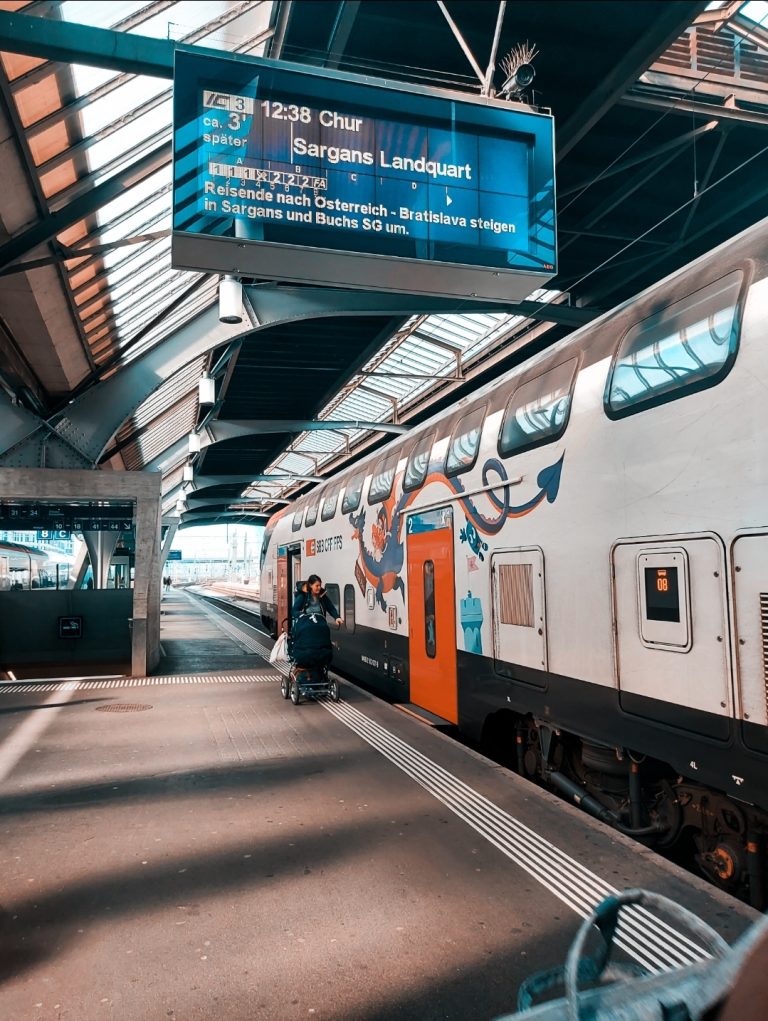
The Bernina Express is widely considered one of the most spectacular railway journeys in the world. Stretching from the alpine landscapes of Chur and St. Moritz in Switzerland to the charming Italian town of Tirano.
This panoramic route crosses glaciers, sparkling turquoise lakes, dramatic viaducts and sweeping valleys - all while giving you front-row seats to some of Europe’s most beautiful scenery. Best of all it's not expensive as you may think!
About the Author
Written by Sarah Kenny, travel creator and European rail specialist with a community of over 350,000 followers across Instagram, TikTok, Facebook and Pinterest.
Sarah’s viral Bernina Express videos have reached over 100 million views, helping travellers around the world plan their own Swiss adventures.
She also holds a Swiss Travel System Gold Diploma, certified by the Swiss Travel System Excellence Program - recognising her expertise in Switzerland’s rail network, panoramic routes, and scenic train travel.
In this Ultimate Guide, you’ll find everything you need to plan your trip: a detailed explanation of the route, the best time of year to travel, the difference between first and second class, how to book, how to ride with kids, itineraries from Switzerland and Italy, what to expect inside the train, and dozens of expert tips that will help you enjoy the journey.
If you are planning a trip for 2026, this guide covers all the newest updates, including ticket prices, seat reservations, winter services, December schedules, onward journeys to Milan, and tips for families, couples, photographers, and first-time visitors.
What Is the Bernina Express?
(Quick Overview for First-Timers)
The Bernina Express is a panoramic sightseeing train operated by the Rhaetian Railway (RhB). It travels along two UNESCO World Heritage railway routes, the Albula Line and the Bernina Line, connecting northern Switzerland with northern Italy.
Unlike many mountain trains, the Bernina Express requires no cogwheel sections, despite reaching a peak altitude of 2,253 metres at Ospizio Bernina. It climbs naturally thanks to an ingenious track design based on spiral tunnels, loops, viaducts, and carefully engineered gradients.
Just a quick note before we begin- some posts on this blog contain affiliate links. This means we may earn a small commission if you make a purchase through these links, at no extra cost to you. This help us to keep bringing you great content and ideas.
Why the Bernina Express Is So Special
Travellers love it because it offers:
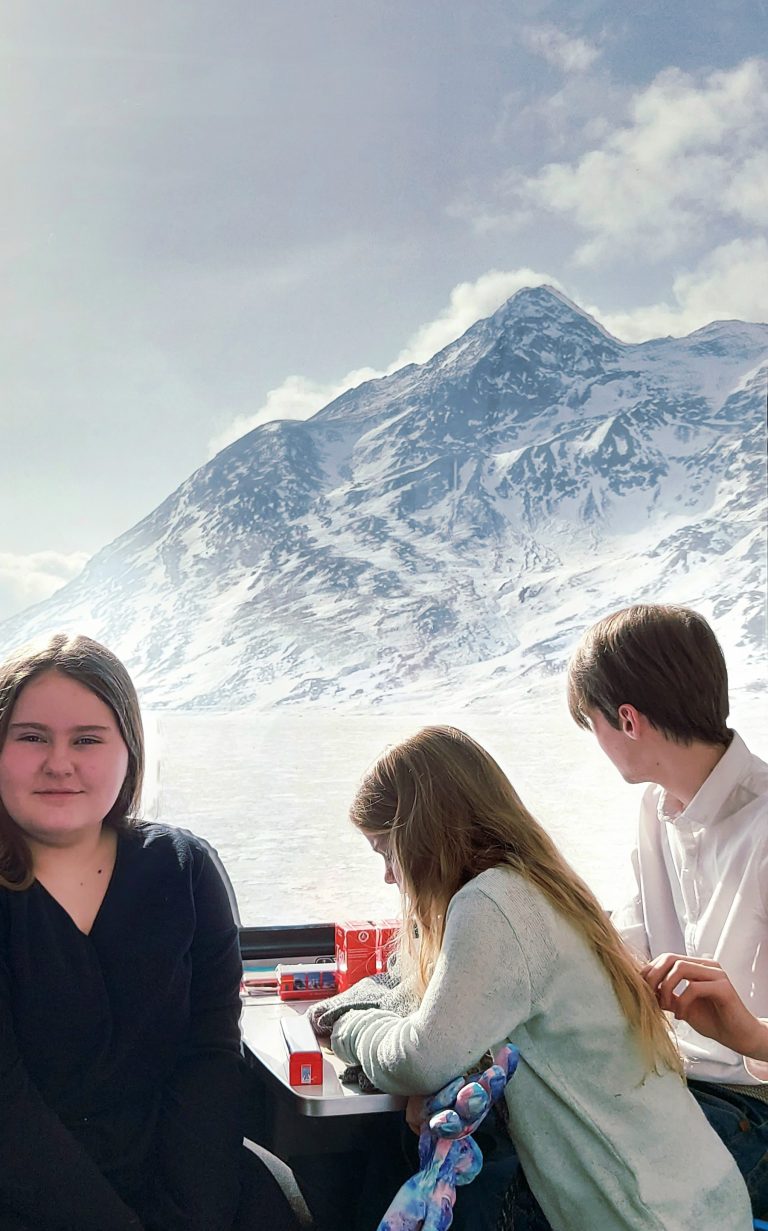
Floor-to-ceiling panoramic windows
UNESCO World Heritage scenery
Snow, glaciers, lakes, and mountains in one journey
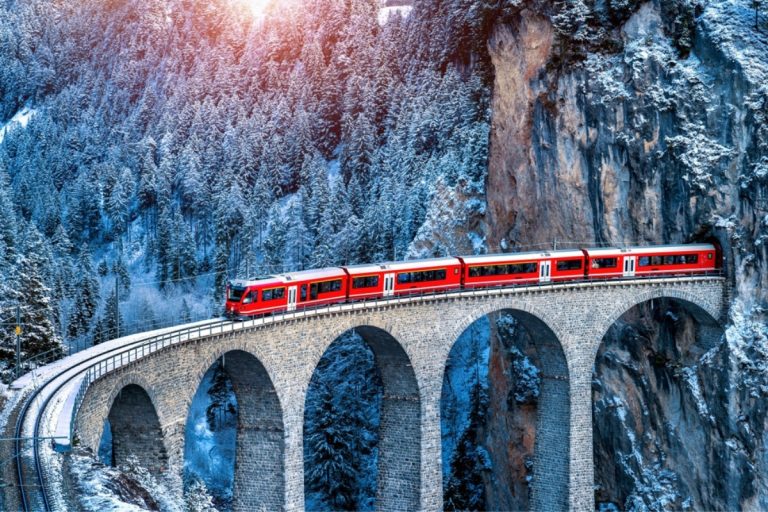
Historic viaducts, including the iconic Landwasser viaduct
Spectacular photography from your seat
A direct connection between Switzerland and Italy
Beautiful views at every moment
It is considered one of the top train journeys on Earth, ranking alongside the Glacier Express, the Jacobite in Scotland, and the Trans-Alpine in New Zealand.
Bernina Express Journey Time
Chur → Tirano: approx. 4 hours 13 minutes
St. Moritz → Tirano: approx. 2 hours 20 minutes
Both routes are stunning. The Chur route is longer and includes the Albula line, which many experts consider one of the most impressive parts of the journey.
Where the Bernina Express Starts and Ends
The Bernina Express runs between:
Switzerland → Italy
Chur, Switzerland
St. Moritz, Switzerland
to
Tirano, Italy
Direction Options
You can travel north → south or south → north, depending on your itinerary.
Which Starting Point Should You Choose?
✔ Start in Chur if you want everything
Chur to Tirano includes the dramatic Albula Valley, the Landwasser Viaduct, the engineering spiral tunnels, and iconic viewpoints such as Filisur. This is the full UNESCO section.
✔ Start in St. Moritz if you want a shorter journey
The two-hour journey from St. Moritz to Tirano still includes the Bernina Pass, Alp Grüm, Lake Bianco, and the Brusio Circular Viaduct, all highlights, but skips the Albula section.
✔ For families:
Chur → Tirano tends to be more entertaining for kids because the big scenery happens earlier and more frequently.
Which Direction Has the Best Views?
Both directions are excellent, but:
Chur → Tirano: sit on the RIGHT side
Tirano → Chur: sit on the LEFT side
This gives the best views of the Landwasser Viaduct, the Albula Valley, and Lake Bianco.
The Bernina Express Route: Complete Breakdown + Route Map
Below is a detailed explanation of the full route, starting in Chur and ending in Tirano.
Chur
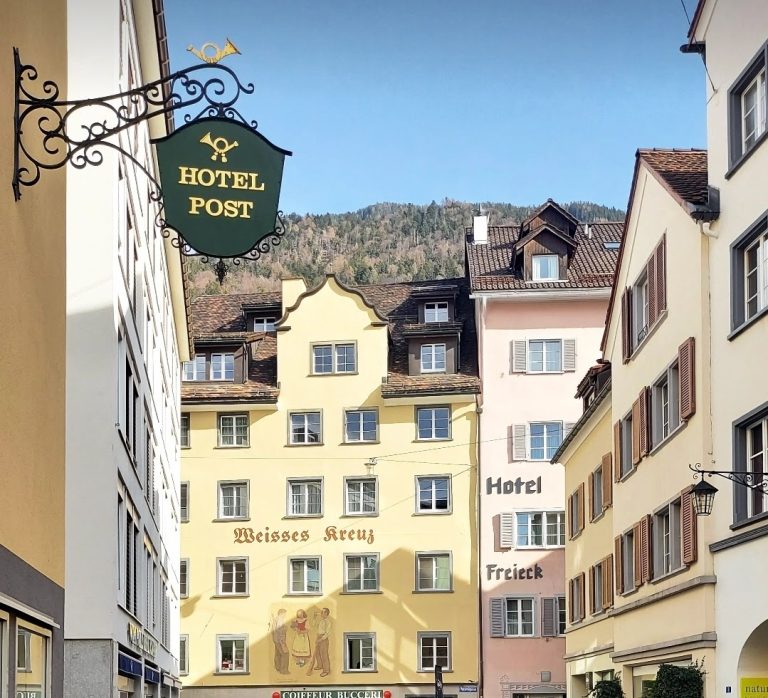
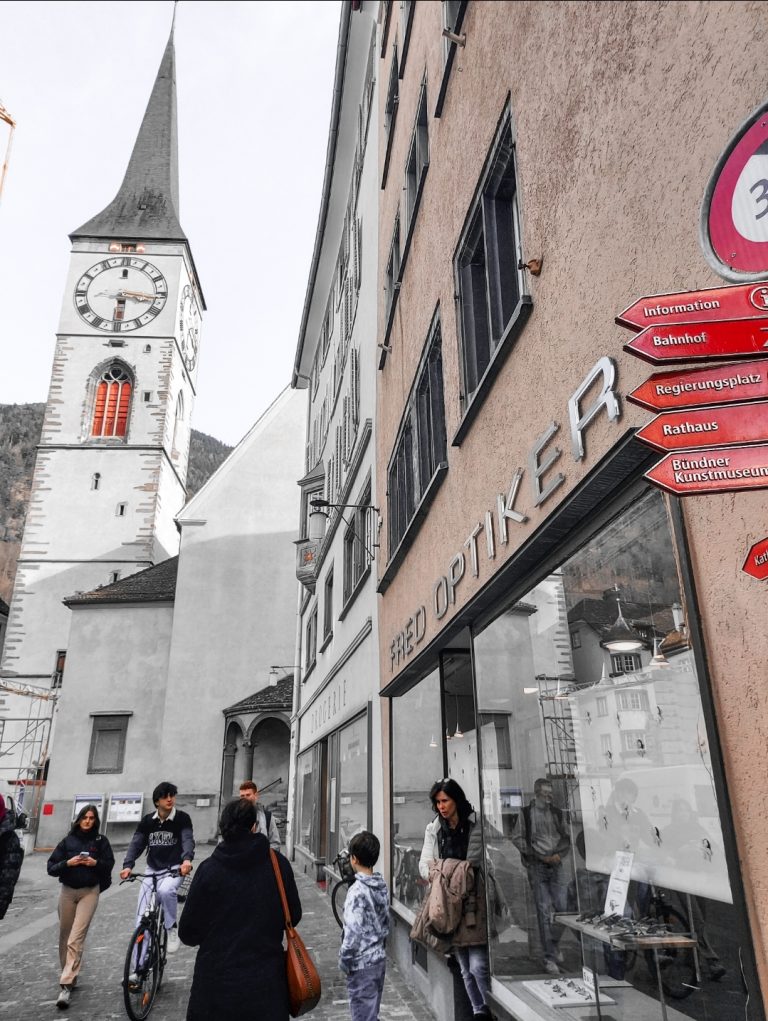
Switzerland’s oldest city, known for its medieval streets, lively cafés, and proximity to hiking routes. Chur is easily accessible via Zurich.
Albula Valley
As the train climbs into the Albula region, you pass through forests, alpine villages, and narrow mountain valleys carved by rivers.
Landwasser Viaduct
The iconic six-arched stone viaduct appears suddenly as the train curves into view. After crossing it, the train disappears directly into a cliffside tunnel. This is one of the most photographed railway structures in the world.
Filisur
A traditional Graubünden village with wooden chalets and direct views of the viaduct.
Bergün & Preda Spiral Sections
A masterpiece of railway engineering. The train climbs using a series of spiral tunnels and looping turns, all without a cogwheel mechanism
Pontresina
Famous for its wildlife, pine forests, and views of the Piz Bernina mountain.
Bernina Pass
As the train climbs past the treeline, the scenery becomes dramatic and open. Snow is common here even in May.
Ospizio Bernina (2,253 m)
The highest point of the journey. Expect a mix of tundra, alpine lakes, snowfields, and huge dramatic skies.
Lake Bianco
A milky turquoise glacial lake surrounded by rock and ice. On sunny days, the reflection is breathtaking.
Alp Grüm
A favourite stop for photographers. It overlooks the Palü glacier and the Poschiavo Valley.
Poschiavo
The landscape turns Mediterranean, with vineyards, colourful houses, and palm trees.
Brusio Circular Viaduct
A full circular stone viaduct that allows the train to descend smoothly into the Italian valley. One of the most unique sections of the journey.
Tirano
A small Italian town with a beautiful basilica, gelato shops, pizzerias, and the River Adda flowing nearby.
The Bernina Express operates all year, and each season offers something different.
Winter (December – February)
Winter is absolutely magical.
Heavy snow around the Bernina Pass
Frozen lakes
Christmas lights in towns
Clear views due to crisp air
Fewer crowds than summer
Bernina Express in December
If you want guaranteed snow and a festive feel, December is the perfect month. You may also catch Christmas markets in Chur, Zurich, St. Moritz, and Tirano.
Spring (March – May)
A mix of snow and meltwater.
Valleys turning green
Waterfalls everywhere
Crisp mountain tops
Shoulder-season pricing
Summer (June – August)
Summer has postcard-perfect visibility and incredibly bright colours.
The Bernina Express is one of Europe’s best family-friendly scenic train rides. Children love the changing landscapes, tunnels, bridges, and snowfields.
Why It’s Great for Families
Spacious seating
Huge windows
Toilets in every carriage
Easy access for prams
Kids under 6 travel free
Children 6–16 receive large discounts
Smooth, quiet ride
We've personally taken our 4 children aboard the Bernina Express from Chur to Switzerland. You can read about our full itinerary which took us from Zurich to Milan here.
Best Direction for Kids
Chur → Tirano is ideal because the scenery escalates faster and keeps children engaged.
Tips for Parents
Bring snacks - there’s a limited service on board
Wear layers - the train can get hot
Download shows offline for slow sections.
Let kids stand and look out the window - safe and allowed.
Plan a pizza stop in Tirano (kids love this reward!).
Don’t forget to bring a hat and gloves for when you reach Ospizio Bernina (2,253 m). The train stops for around 15 minutes at the highest point and during the winter months there’s snow on the ground to play with.
First Class vs Second Class: Which Should You Choose?
A common question is whether first class is worth the upgrade.
Second Class on the Bernina Express
Second class is surprisingly spacious and has wide panoramic windows. Most families choose it because it offers excellent value. Personally, this the carriage we choose to ride in.
First Class on the Bernina Express
The key benefits of first class are:
Fewer people
More quiet
Extra-wide seating
Slightly bigger windows
More room for bags
Are the Views Different?
No, the views are the same.
Both classes sit in the same panoramic coaches. You won’t miss scenery by choosing second class.
Which Side is Best to Sit on the Bernina Express?
Chur → Tirano: right-hand side
Tirano → Chur: left-hand side
Choose a window seat if possible.
Bernina Express Prices, Reservations, Swiss Travel Pass & How to Book
To ride the Bernina Express, you need two things:
A ticket
A mandatory seat reservation
Ticket Prices for the Bernina Express 2026
Typical ticket prices for the Bernina Express in 2026
CHF 25-65 (depending on start and end station) for 2nd Class. CHF 42.60-113 for 1st Class
Children under 6: free
Children 6-16: 50% off
Seat Reservation Prices for the Bernina Express 2026
Reservations cost:
CHF 28–36
Higher in peak summer season
Lower in winter
The seat reservation price for the short route of St.Moritz - Tirano/Tirano-St.Moritz is CHF 28 all year round.
The longer route between Chur and Tirano varies from CHF 32 to CHF 36, depending on the time of year.
Guided Tours on the Bernina Express
There are many companies offering tours from Milan, to the Bernina Express. Many refer to these as 'red train' tours. This is not the same as the panoramic carriages available on the Bernina. These are tours on board a regional train, travelling along the same route, which is cheaper.
One tour, we recommend and many of our readers have booked in the past is this one. They offer luxury return coaching from Milan to St Moritz/Tirano and seats in a 2nd class panoramic carriage. These tours are great value for money, especially as basing yourself in Milan can be far cheaper than Chur.
If you book via the Get Your Guide app, you can also save 5% with the code BUILDABREAK5
Do You Need a Reservation?
Yes, seat reservations are mandatory on all Bernina Express trains in the panoramic carriages.
There are standard carriages which are attached to the Bernina Express. Seats in these do not need to be reserved.
Booking Options
RhB website
SBB app
Trainline (international travellers)
At stations in Switzerland
How Early Should You Book?
Summer: 4–8 weeks in advance
Winter: 1–2 weeks is usually fine
Can You Use the Swiss Travel Pass?
Yes, the Swiss Travel Pass fully covers the ticket, but you must still pay for seat reservations. Check out our guide to see if purchasing a Swiss Pass is worth it.
Bernina Express vs the Regional Bernina Train
Not everyone knows this, but a regular regional train runs on the same tracks as the Bernina Express.
Regional Train Advantages
Cheaper as no seat reservation fee, however the ticket price is the same as 2nd class on the Bernina Express (so around CHF 36 cheaper).
Windows open - perfect for photography
You can hop on/hop off
No reservations needed
Less crowded
Bernina Express Advantages
Panoramic windows
Clean, modern coaches
Slower speeds for better views
Commentary (on some trains)
Which is Better?
If you want the full “iconic” experience: choose the Bernina Express. If you want photos without reflections: choose the regional train.
The main arguments revolve around cost and photography. However, in each Bernina Carriage there is a window on the doors that opens which allows you to take glare-free photos. For us, the cost difference was not significant enough, to not experience a luxury train on this bucketlist route.
Many travellers combine both - take the Bernina Express in one direction and the regional train back.
To explore more on the 'red train' vs the Bernina Express click here
Accessibility, Luggage, Dogs & Bikes
Wheelchair Access
There are accessible coaches on many services. Book assistance ahead if needed.
Luggage Rules
No formal limits
Suitcases fit under seats or on overhead shelves
Large suitcases fit behind the last row of seats
Dogs
Dogs are allowed with a paid dog ticket and must travel on a lead.
Bikes
Bicycles are not allowed on the Bernina Express, only the regional trains.
Onward Travel After the Bernina Express (to Milan, Lake Como & Zurich)
Tirano to Milan
The onward journey to Milan is extremely easy.
Winter: direct regional trains
Summer: Bernina Express bus + train
Total travel time: 2–2.5 hours
Tirano to Lake Como
Train to Varenna
Ferry onward to Bellagio, Menaggio, or Como
Tirano → Rome / Venice / Florence
Take the train to Milan and switch to a high-speed Frecciarossa service.
Closest Airport to the Bernina Express
Zurich Airport — best for starting in Chur
Milan Linate Airport — closest to Tirano
Milan Malpensa Airport — best for long-haul
Milan Bergamo — cheapest budget flights
Bernina Express Sample Itineraries
One-Day Bernina Express Trip From Milan
Train Milan → Tirano (2.5 hours)
Bernina Express to St. Moritz
Explore St. Moritz
Return via regional train → Tirano → Milan
Weekend Trip: Chur → Bernina Express → Lake Como
Arrive Zurich → Chur
Bernina Express to Tirano
Train to Varenna (Lake Como)
Explore Lake Como
Return to Milan or Zurich
Bernina Express Christmas Weekend (December Only)
Zurich → Chur Christmas markets
Snowy Bernina Express ride
Pizza + gelato in Tirano
Train to Milan for lights & shopping
Top 20 Bernina Express Tips
These are the small details that make a big difference.
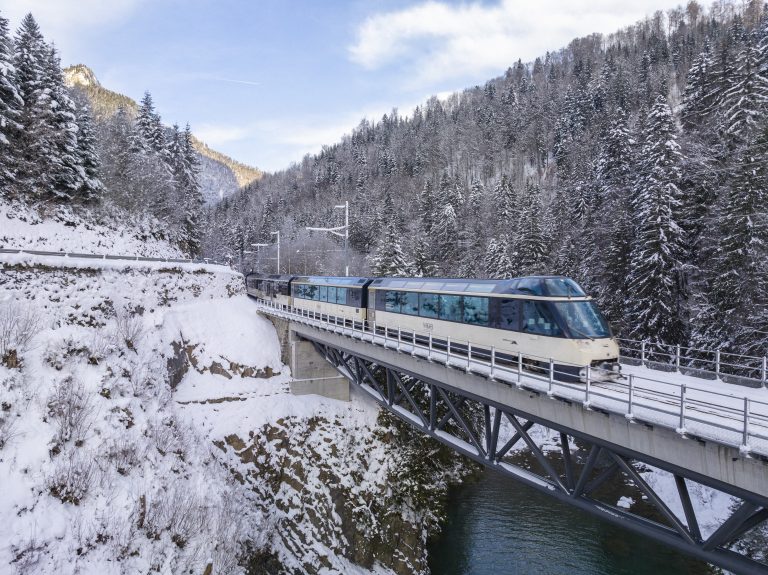
The GoldenPass Belle-Époque is one of Switzerland’s most charming train journeys.
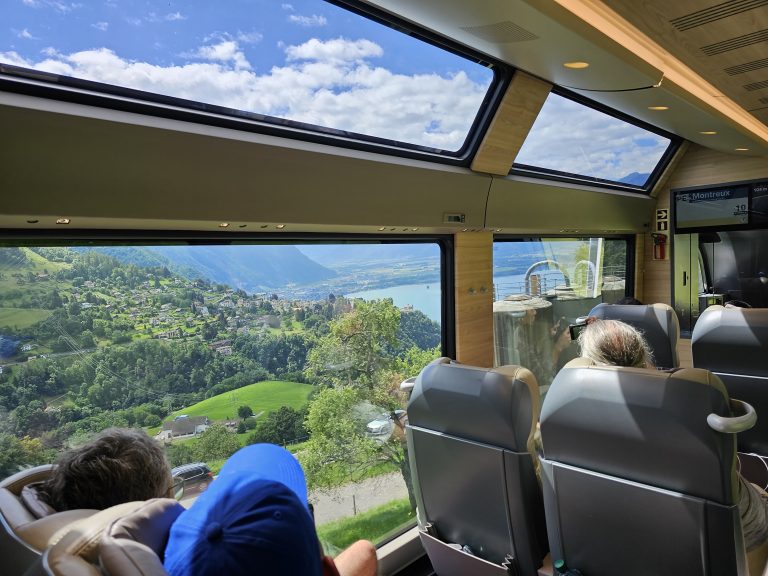
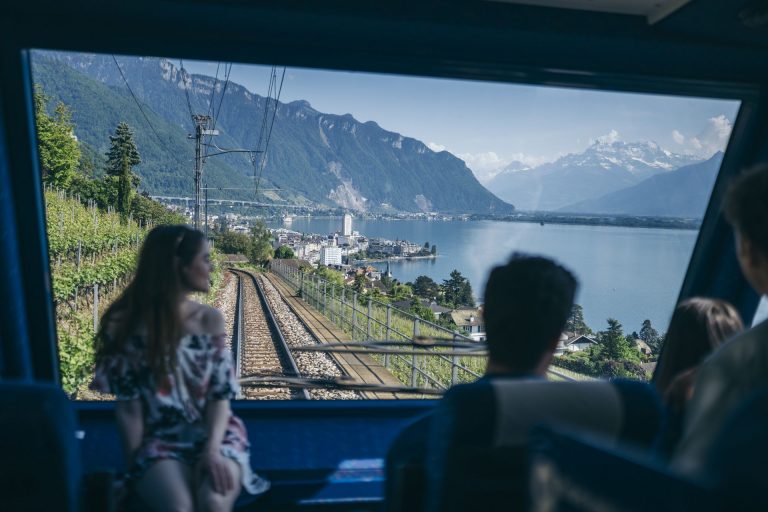
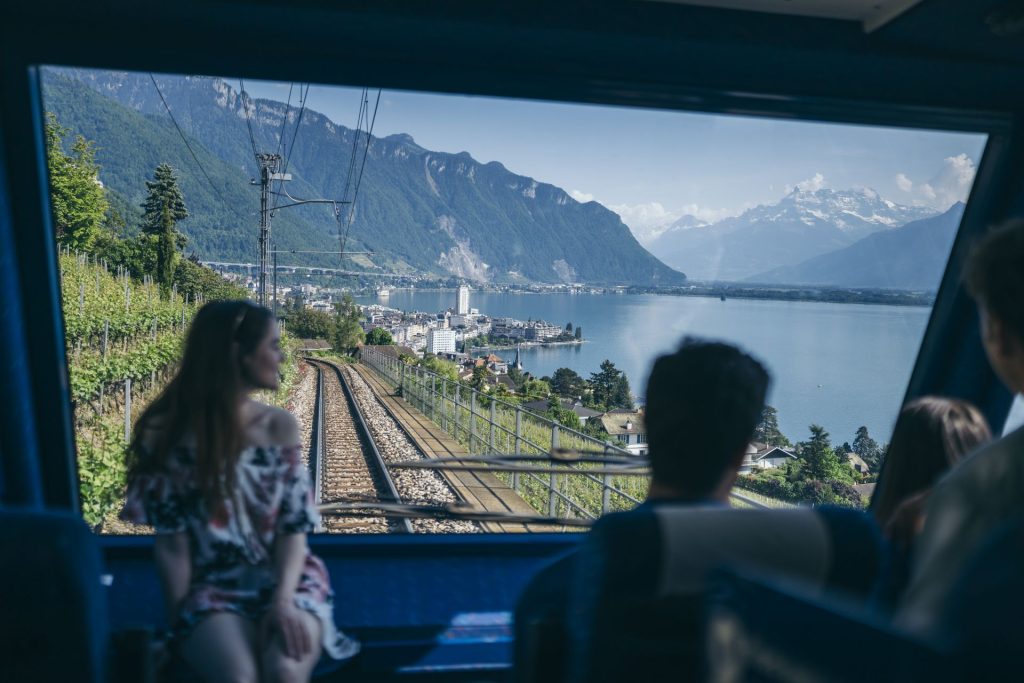
Step aboard and you’ll be transported back to the elegance of the late 19th century, all while enjoying the stunning landscapes of Lake Geneva, the Bernese Oberland, and the picturesque Pays-d’Enhaut region.
Where Does the Golden Pass Belle-Epoque Start and End?
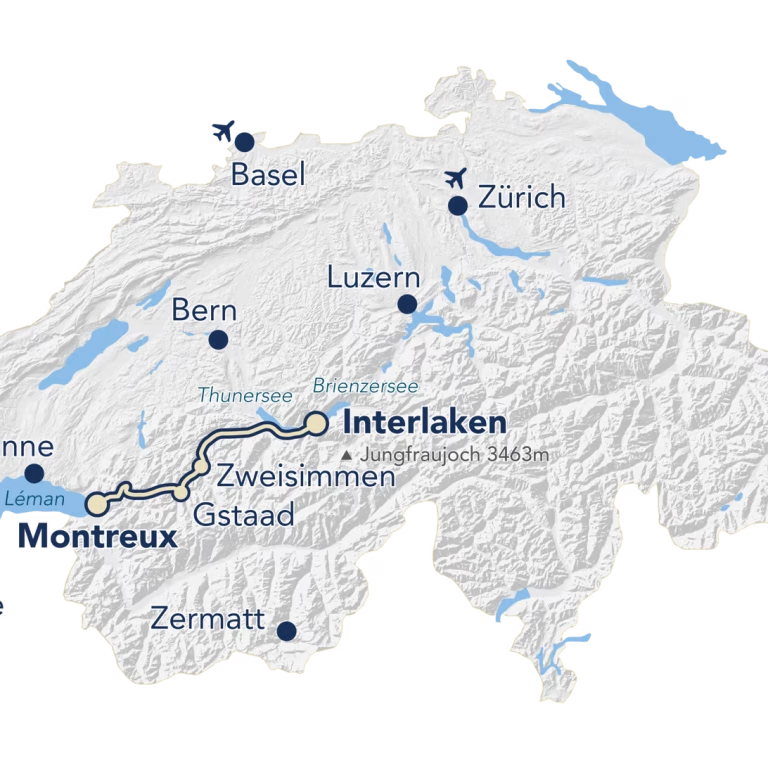
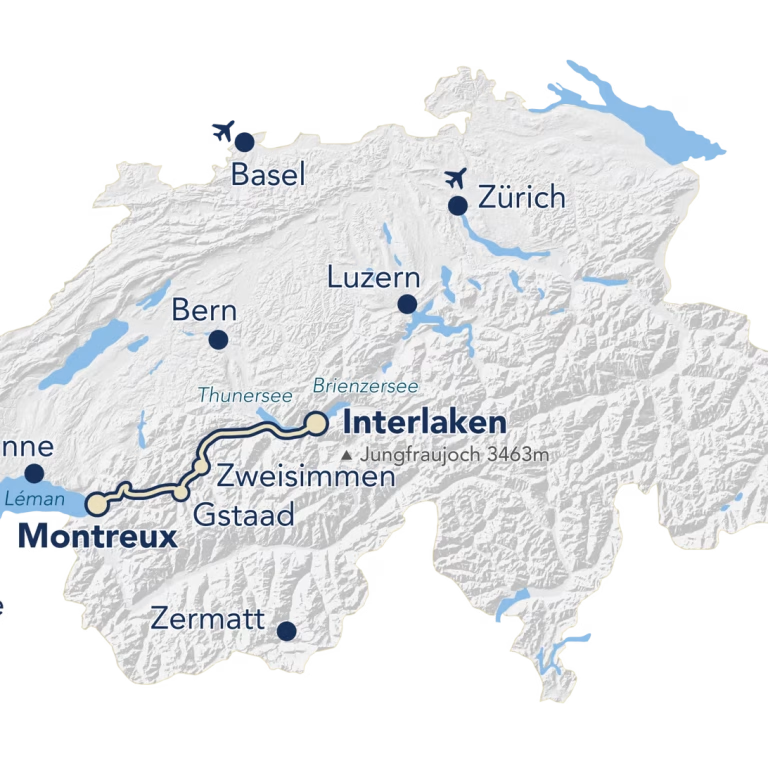
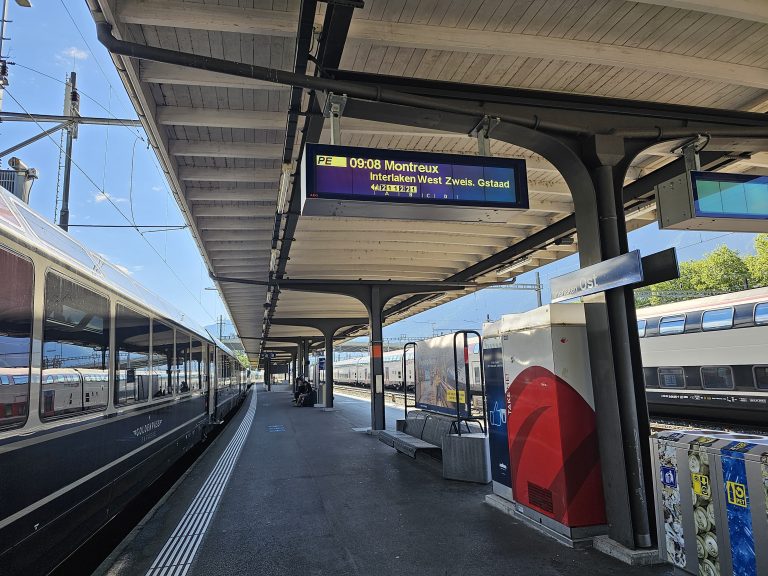
The GoldenPass Belle-Époque runs between Montreux and Zweisimmen, a distance of approximately 70 km. You can travel in either direction:
Montreux → Zweisimmen: Start at Montreux, take in the views of Lake Geneva, and ride through charming Swiss towns.
Zweisimmen → Montreux: Start in the countryside, pass through the Pays-d’Enhaut, and descend towards the glimmering lake.
This route gives you a chance to explore Gstaad and the surrounding region from the comfort of a vintage train carriage.
How Long is the Belle-Epqoque Train Journey?
The Belle-Epoque journey is approximately 70km in distance.
The full journey takes approximately 2 hours and 10 minutes. While the distance isn’t long, the ride is designed for slow, scenic travel, perfect for photography, sightseeing, or simply relaxing with a drink.
What Times Does the Golden Pass Belle-Epoque Train Run?
There are two Belle-Époque trains per day, running daily except on a few specific dates (e.g., holidays or maintenance days). The typical timetable is:
From Montreux: 09:50 & 14:50
From Zweisimmen: 12:02 & 17:02
Seats are limited, so reservations are strongly recommended.
Do you have to Reserve a Seat?
No, however seats are limited, and there is only two Belle-Epoque train journey's per day, so it is strongly recommended.
Nearest Airport for the Belle Epoque Train Montreux to Zweisimmen
For international travellers, Geneva Airportis the most convenient. From there, Montreux is about 1 hour 30 minutes by train, with easy connections to the Belle-Époque route.
Reservations aren’t mandatory but are highly recommended, especially during peak season.
Food and Drinks on Board The Belle-Epqoue
The Belle-Époque carriage serves:
Hot drinks (coffee, tea)
Alcoholic beverages (wine, champagne)
Soft drinks and snacks
Payment is by card only, but you’re welcome to bring your own food. For a special treat, try the Belle-Époque champagne.
Best Side to Sit on the Belle-Epoque Train
For the best views of Lake Geneva, sit on the left side traveling Montreux → Zweisimmen. To enjoy mountain scenery and rolling hills, the right side is ideal.
Tip: Reserve your seat in advance if possible, as some carriages fill quickly, especially in 1st class.
Morning (09:50 from Montreux): Soft light and fewer passengers make for a quieter, scenic ride.
Afternoon (14:50 from Montreux): Perfect for catching golden-hour views over the Alps.
Seasonal note: The Belle-Epoque runs year-round, but spring and early autumn offer vibrant landscapes without winter crowds.
Accessibility on the Belle-Epoque Train
The Belle-Epoque train is partially accessible:
Wheelchair access: Carriages have ramps, but space is limited; call ahead to reserve.
Toilets: Onboard restrooms are available, though not all are wheelchair-adapted.
Assistance: MOB staff can provide support for boarding and luggage if requested in advance.
Can you use the Swiss Pass on the Belle-Epoque?
The GoldenPass Belle-Époque is included in the Swiss Travel Pass. With the pass, you only pay for the seat reservation, giving you unlimited travel on the GoldenPass line.
For our guide on weighing up whether the expense of a Swiss Pass is worth it click here.
Luggage and Pets on the Belle-Epoque
Luggage:
Adequate storage is available on board.
Dogs:
Pets are allowed, but each requires a separate ticket.
This experience is a perfect way to combine scenic travel with Swiss culinary culture.
Things to do in Zweisimmen
Zweisimmen is a great stop for outdoor enthusiasts:
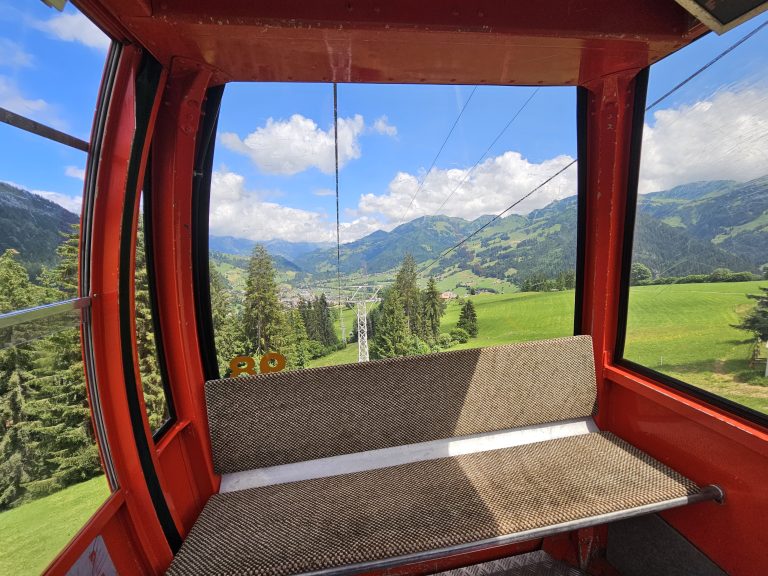
Rinderberg Mountain: Take the cable car to 2079m, enjoy panoramic views, and have lunch at the mountaintop restaurant (round trip: 49 CHF).
Short walks and nature trails are accessible just minutes from the station.
I took the 9.50am train from Montreux to Zweisimmen, then had 2.5hrs in Zweisimmen itself. Before catching the 2.29pm GoldenPass Express trainto Interlaken.
Why the Belle-Époque Train is Worth It
The Belle-Époque journey is more than just a train ride:
it’s an experience. Here’s why:
Scenic Views: Lake Geneva, Bernese Oberland mountains, and charming villages.
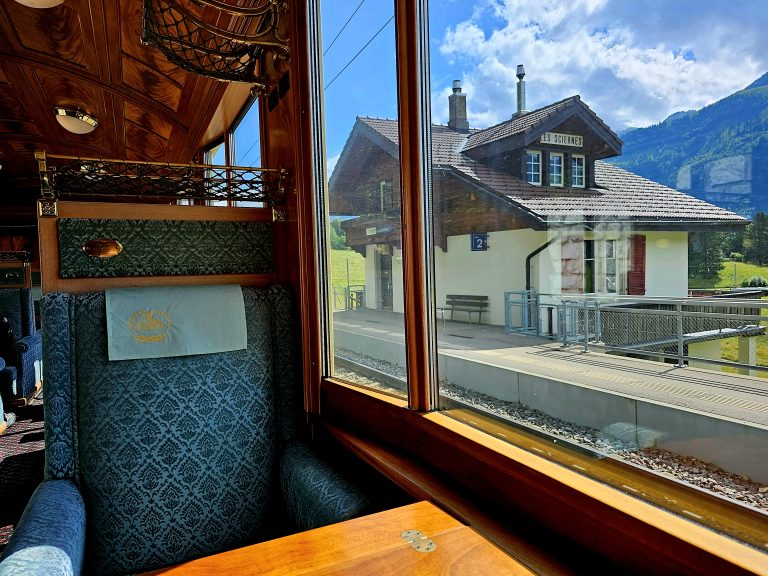
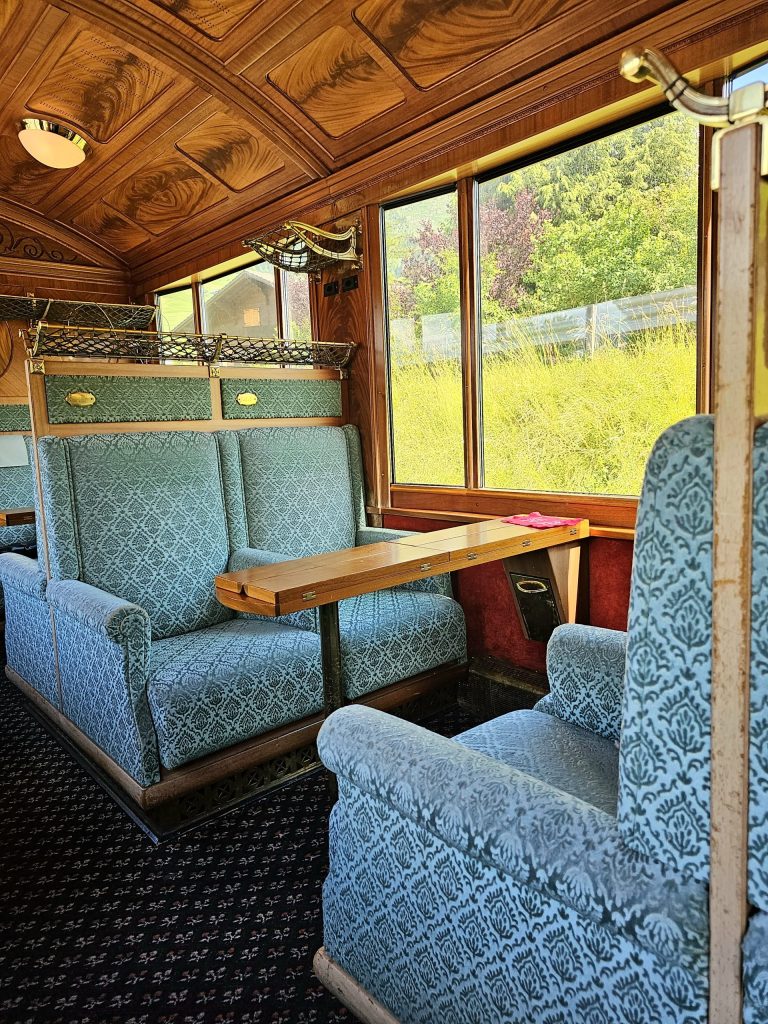
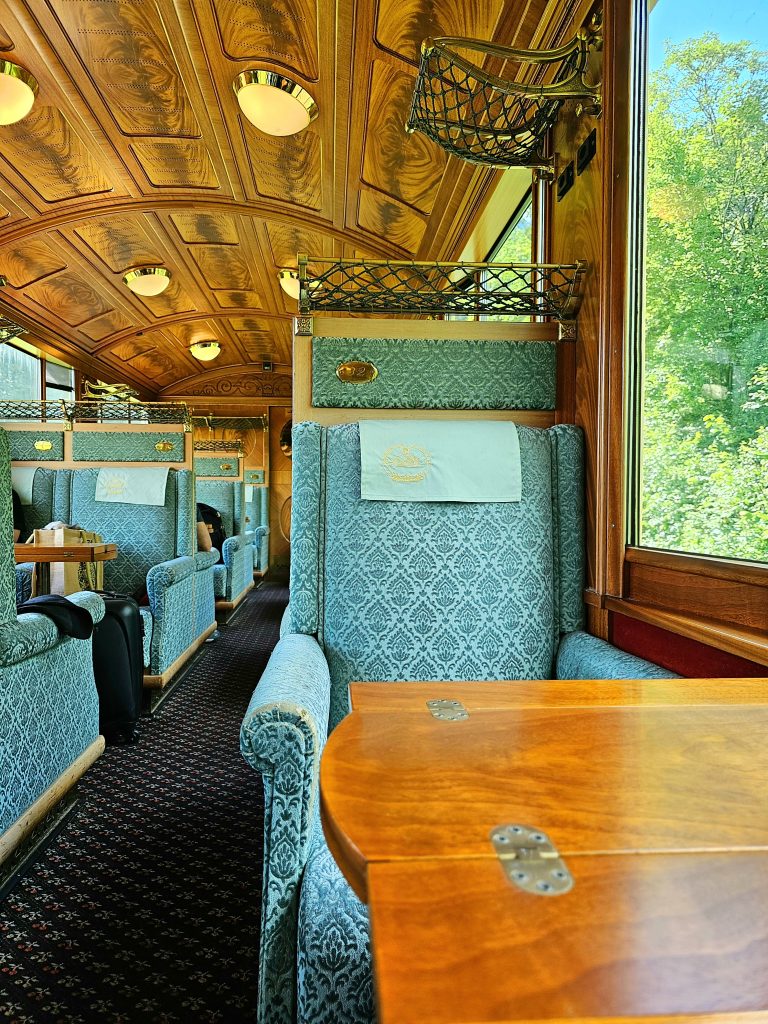
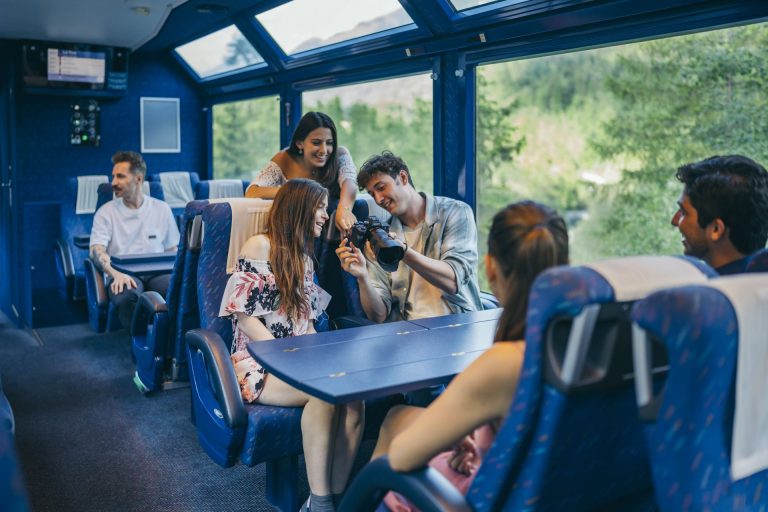
Historical Ambience: Dark wood paneling, brass fixtures, and turquoise armchairs recreate the Romance of the Belle-Époque era.
Luxury Experience: Exceptional onboard service, fine drinks, and attention to detail.
Instagram-Worthy: Every carriage, window, and landscape is a photo opportunity.
Affordable Elegance: While pricier than regular trains, the experience is unmatched for its value.
Limited Routes: Only runs specific days, making it a unique and memorable journey.
Differences Between Belle-Epoque and Other GoldenPass Trains
The Belle-Epoque train stands out on the GoldenPass line because it combines historic charm, luxury interiors, and a slower, more scenic pace. It truly is a Swiss scenic train!
Unlike the Panoramic train, which focuses on uninterrupted window views, or the GoldenPass Express, which travels the longer Montreux–Interlaken route, the Belle-Epoque prioritises ambience and nostalgia.
Key differences:
Interior Design: Belle-Epoque features wood-paneled carriages, turquoise armchairs, and brass fittings, evoking the elegance of the early 20th century.
Route: It runs Montreux ↔ Zweisimmen, shorter than the Express, but ideal for those who want a relaxed journey with Gstaad and Gruyère views.
Onboard Experience: Limited catering, but premium drinks and the option to bring your own food add flexibility.
FAQ – GoldenPass Belle-Époque Train
Q: Can I take the train without a Swiss Travel Pass? A: Yes, you can buy a standard ticket for 1st or 2nd class and pay the seat reservation fee.
Q: Are reservations compulsory? A: Not strictly, but recommended to secure your preferred seats.
Q: Can I take luggage on board? A: Yes, ample storage is provided.
Q: Can I bring my dog? A: Yes, with a separate ticket.
Q: How do I book tickets? A: Through the official MOB GoldenPass website, or via your Swiss Travel Pass seat reservation portal.
My Experience on the Belle-Epoque Train
On my Belle-Epoque journey, I boarded at Montreux on a drizzly July morning. The wood-paneled carriages immediately felt luxurious, and the views of the Swiss countryside were stunning even without floor-to-ceiling windows. I savoured a glass of wine in the 1st class carriage while admiring the Gstaad mountains in the distance.
Spending a few hours on this train confirmed to me why it’s considered Switzerland’s most romantic rail journey. The Belle-Epoque is a combination of comfort, history, and scenery you won’t get on other trains.
Planning Your Trip
Best time to travel: Spring to early autumn for the best scenery. Winter is magical but colder.
Combine with other stops: Gstaad, Zweisimmen, and Rinderberg are ideal for short excursions.
Photography tip: Window seats on either side provide stunning lake and mountain views.
Keep Reading
Bernina Express 2nd Class vs Regional Train: Which Is Better From Chur to Tirano?
Riding the Bernina railway from Chur, Switzerland, to Tirano, Italy, is one of Europe’s most scenic train journeys. But one question we always get asked, "is it worth extra to ride the Bernina Expressas opposed to the regional red train?"
Both trains travel along the same stunning UNESCO World Heritage route through the Alps, crossing dramatic viaducts, tunnels, and high mountain passes. However there are some major differences.
In this post, we’ll break down the differences between 2nd class Bernina Express carriages and the regional/local trains, including costs, comfort, photography, and flexibility, so you can decide which option is right for you.
What Is the Bernina Express (2nd Class)?
The Bernina Express is a tourist-focused panoramic train designed for travellers seeking a smooth, scenic experience. Here’s what 2nd class offers:
Panoramic views: Large windows give uninterrupted views of alpine peaks, glaciers, and viaducts.
Roll-down windows at the doors: You can still get glare-free photographs, something which people always champion as a winning factor of taking the red train over the Bernina Express - it's not true that this isn't possible.
Seat reservations required: A supplement applies even in 2nd class. In 2025, a Chur → Tirano reservation costs around CHF 36.
Base fare: 2nd class fare is roughly CHF 66, making the total about CHF 102 for the full route (£95/$128)
Fewer stops: The Express bypasses some smaller stations, keeping the journey continuous and immersive.
Limited frequency: Only a few departures run daily, so advance planning is essential.
Refreshments & Commemorative Tin: Drinks and snacks are available to purchase. Included in the cost you also receive a drink of cold tea and a commemorative Bernina Express tin with Lindt chocolates in.
Staff On Board: Who come in to the carriage and point at places of interest and prepare you for the upcoming sights, so you can get your camera ready. There's also a commentary playing to inform you about what you are viewing.
Larger Seat Pitches: The Bernina Express has larger and more comfortable seat pitches, which for a journey of 4hrs 20 mins, is definitely worth factoring in.
Bernina Express Panoramic Carriage
Overall, the Bernina Express is ideal if you want a structured, premium scenic experience without worrying about train changes.
The regional or “Red” trains are the local services used by residents, but they also follow much of the same Bernina route.
Key features:
Frequency & flexibility: Trains run hourly or near-hourly, offering greater flexibility than the limited Express schedule.
No reservation required: You can hop on without paying a supplement. Full fare from Chur to Tirano is around CHF 66, same as the Express base fare (£62/$83)
Stops & transfers: Regional trains stop at all stations and may require one or more train changes to complete the full route.
Photography-friendly: Some carriages have openable windows, which are excellent for glare-free shots.
Lower crowd pressure: Often less busy, allowing you to move between sides of the carriage or get different perspectives.
'The Red Train' Carriage
Regional trains are perfect if you value flexibility, lower cost, or want to explore intermediate stops, but they may feel less “special” than the Express.
Key Differences at a Glance
Feature
Bernina Express 2nd Class
Regional / Red Train
View / Windows
Panoramic with roll-down doors for glare-free photography
Standard; windows openable for photos
Seat reservation
Mandatory (CHF 36 supplement)
Not required
Total cost (Chur → Tirano)
~CHF 102
~CHF 66
Stops / journey flow
Limited stops, continuous ride
Stops at all stations; may require changes
Frequency
Few departures per day
Hourly or near-hourly
Photography
Roll-down windows reduce glare
Openable windows, flexible photo opportunities
Ambience
Tourist / scenic experience
Local / basic but still scenic
Bernina Express 2nd Class – Pros & Cons
Pros:
Smooth, uninterrupted scenic experience
Panoramic windows and roll-down doors for glare-free photography
Reserved seating guarantees your spot
Ideal for travellers who want a premium, hassle-free journey
Bernina Express
Cons:
Higher overall cost due to reservation supplement
Limited daily departures
Cannot hop off at intermediate stations without pre-planning
Regional Train – Pros & Cons
Pros:
More flexible departure times
Cheaper: no reservation supplement
Openable windows for easy photography
Can stop at intermediate villages or transfer for short excursions
Cons:
Might require train changes to complete full route
More stops make the journey longer and slightly less immersive
Standard interiors may feel less scenic than the Express
The Red Regional Train
Photography: Which Train Gives Better Views?
While the Bernina Express is marketed as a panoramic scenic train, many travellers overlook the glare issue from sealed 1st class windows. In contrast, 2nd class carriages have roll-down windows at the doors, which allow glare-free photographs - a big bonus if capturing the mountains and viaducts is a priority.
Regional trains can also be excellent for photos, particularly on carriages where windows open or on less crowded trains where you can move around freely.
Cost & Travel Style Comparison
Bernina Express 2nd class: CHF 66 base fare + CHF 36 reservation = ~CHF 102
Regional train: CHF 66, no supplement
The Express is a premium experience at a modest extra cost, while the regional train offers budget-friendly flexibility.
So, Which Should You Choose?
Choose the Bernina Express if you want a smooth, immersive scenic ride, guaranteed seating, and panoramic windows for photography. Perfect for those on a fixed schedule or who value comfort and continuity.
Choose the regional train if you want flexible timing, cheaper fares, and the ability to stop along the way. Great for travellers who don’t mind a slightly longer journey or hopping trains to explore villages.
Please note: The Bernina Express does stop for 20 minutes at the peak, to allow you to get out and stretch your legs, along with the chance to take some amazing photos.
The Summit- Bernina Express
Pro tip: Some travellers ride the Bernina Express in one direction and return via regional trains to enjoy both experiences.
Both trains travel the same breathtaking route from Chur to Tirano, so you really can’t go wrong. Your choice depends on budget, schedule, and how you want to experience the journey.
For us personally, the price difference isn't significant enough to opt for the regional train over the Bernina Express. For most people, a trip on this route, is one they'll never do again, so is worth paying the extra 36 CHF (£34/$45).
[wpforms id="6186" title="true"]
Our Guides
Is Duinrell Worth it? Our Review of Amsterdam with Kids
As a family of six, over recent years we've become big fans of European Campsite holidays.
Not only are they great value, but they are often near cities, and provide endless entertainment for kids and teens.
As parents we enjoy sitting out on the deck at night with a wine, knowing the kids are safe, and having a great time too.
Many of the sites are possible to reach without driving, which is a major plus point for us. We live in the north of England and flights are often more cost effective than driving.
Just a quick note before we begin- this blog contains affiliate links. This means we may earn a small commission if you make a purchase through these. This helps us to continue finding you the best deals and guides.
Is Duinrell Worth It?
If you’re planning a family trip to the Netherlands, you’ve probably come across Duinrell Holiday Park. But one question keeps popping up- is Duinrell worth it? Short answer: yes. But let me show you exactly why.
This guide to Duinrell Holiday Park covers everything you need to know before you go. From the epic indoor and outdoor pools to the onsite theme park and charming local town, here’s my honest Duinrell review. But first we'll start with some practical details.
Where is Duinrell?
Duinrell is located in Wassenaar, a small town near The Hague in the Netherlands. The site is around a 40 minute drive from Amsterdam.
How to Get to Duinrell
Duinrell by Car
From the UK, you can take the overnight ferry from Harwich or Newcastle to the Hook of Holland. There are regularly offers from around £69pp and this includes your cabin for the night, and space on board for your car.
From the ferry port, Duinrell is just a 40 minute drive (35km).
Duinrell by Plane
Alternatively for those wishing to visit Duinrell without a car, you can fly to Amsterdam Schiphol airport and then take a taxi, or private transfer to Duinrell.
Duinrell is a 25 min drive from the airport (34km). A bolt taxi will cost you around €88 each way.
We would recommend taking taxi rather than public transport, especially with luggage. There's quite a few changes via bus and train to reach Duinrell from the airport.
If you do want to take public transport to the site, then take a train to Leiden, then hop on a short local bus (Bus 43 or 44) that drops you right at Duinrell’s entrance.
Duinrell Tikibad Waterpark
One of Duinrell’s biggest draws is the Tikibad waterpark- the largest indoor waterpark in the Benelux area. It’s packed with 21 slides slides, a lazy river, a wave pool, and splash zones for little ones. The indoor pool is a lifesaver on rainy days or when you just want to chill in warm water.
There’s also a fab outdoor pool, open in the warmer months, with a beach-style layout, sunbeds, and shallow splash areas. You could easily spend entire days here, especially if your kids are water babies. The outdoor pool is only open to park guests.
On our trip we preferred the outdoor pools, as the weather was fabulous and it seemed a shame being stuck inside (plus they were cheaper).
It's worth noting that all children under 120cm must wear swim aids, whether they can swim or not. Children over 120cm must hold a swimming certificate or be able to demonstrate they can confidently swim. The lifeguards will check, and you will be sent back to reception to purchase suitable arm bands or a vest if needed.
Access to Tikibad depends on how you book. If you book direct with Duinrell, you get free pool access. If you book through Eurocamp, you’ll need to pay a discounted fee to swim, so remember to work this in to your holiday budget.
The cost of swimming for camping guests is currently €8.50pp for the inside pools and €5 for the outdoor. If you're staying a week, and have children who want to swim daily, this can add up,. Remember to compare Eurocamp vs Duinrell direct prices before deciding who to book with.
For us, having to pay to access the pools seemed unusual in comparison to other campsites we've visited, where swimming is always included. However, the Tikibad is on another level to other sites, so it seemed justified.
Free Theme Park Access for All Guests
Another huge bonus of staying here? The theme park is right inside the holiday park, and all guests get free access- even those staying with Eurocamp.
The park has over 40 attractions, including roller coasters, water rides, and gentle options for younger children. It’s not as polished as Disney or Efteling, but it has a real charm, and there’s something brilliant about being able to walk back to your caravan for lunch or a nap and head back in later.
The theme park is literally next to the accommodation, so no having to leave the site to get to it. We were lucky in that our caravan was right next to the entrance.
For families with kids of mixed ages, the flexibility is a dream. No queues to get in, no stress over getting your money’s worth- you’re already in and can ride an unlimited amount of time!
We made so much use of this, and let me tell you, when it was really hot we quite often nipped out to ride the log flume just to cool down!
Duinrell is the perfect Eurocamp for teens as well as smaller kids, as there are thrill rides and pools with amazing slides, that will appeal to older ones.
Static Caravan Style Accommodation with Self-Catering Decks
Accommodation is mostly static caravan style, although there are lodges and glamping options too. You’ll find well-equipped kitchens, living areas, comfy bedrooms, and plenty of storage.
What we really loved were the decked terraces with BBQ provided- perfect for winding down with a drink once the kids are in bed. They give you that peaceful holiday moment where you can enjoy being outside, without needing a babysitter or staying cooped up indoors.
It’s relaxed, family-focused, and gives you all the flexibility of self-catering. You can eat when you want, cook what your kids actually like, and avoid expensive meals out every night.
Town Within Walking Distance – And That Ice Cream Shop!
Just a 10 minute walk from Duinrell is Wassenaar, a lovely Dutch town with everything you need. There are bakeries, supermarkets, bike shops, pancake houses and some cute boutiques.
There is also an award-winning ice cream shop that’s popular with locals and visitors alike- every night the queue is literally down the street! There’s nothing better than a post-dinner stroll into town for an ice cream and a wander around.
It’s safe, quiet, and family-friendly—great for those moments when you want a break from the busy park.
Where to Eat at Duinrell
Eating on site at Duinrell is convenient but limited. Most takeaway options are fast food-style- think burgers, sausages, and chips. There’s a small supermarker onsite for basics, but we found it easier (and cheaper) to walk into Wassenaar, where you’ll find larger supermarkets with everything you need for self-catering.
The town also has plenty of restaurants and takeaways. We grabbed a Chinese takeaway on our last night and honestly wished we’d discovered it sooner- the food was great and a welcome break from the limited choices in the park.
If you’re staying for more than a couple of nights, I’d definitely recommend heading into town for meals or stocking up at the bigger stores.
What Else is There to Do at Duinrell?
Duinrell is a bit different to other holiday parks we’ve visited. There’s no traditional entertainment team or kids’ club programme, so organised activities are more limited.
You won’t find the usual schedule of crafts, or daytime games run by staff. That said, the theme park and Tikibad more than make up for it—there’s so much to do that we didn’t feel like we were missing out.
Kids can still enjoy bike and go-kart hire, brilliant play parks, a sports bar with bowling, and a mini disco in the evenings, but it’s definitely more of a do-your-own-thing kind of place.
Exploring Duinrell Without a Car
You can walk into Wassenaar, rent bikes to explore the nearby dunes and beaches, or use the Dutch public transport system to get further afield.
The Netherlands is super bike-friendly, with flat paths and good signage. Most places also accept contactless cards on transport, so you don’t need to faff about with tickets and coins.
There are even beach shuttles in the summer months. We loved the freedom of not driving- it made the trip feel more relaxed.
Fancy a city day? Amsterdam is around an hour away. Take the local bus from Duinrell to Leiden Centraal, then hop on a direct train to Amsterdam Centraal Station.
Trains run frequently and are clean, fast, and easy. You can explore the canals, museums, or do a spot of shopping before heading back in time for dinner on your caravan deck. No need for parking or traffic jams.
Amsterdam is packed with family-friendly fun. Take a canal cruise for a relaxed way to see the city, or let the kids run wild at Vondelpark’s playgrounds.
Visit NEMO Science Museum for hands-on experiments or the ARTIS Zoo to see animals up close. The city’s small size makes it easy to explore, with plenty of pancake houses and street snacks to keep everyone happy along the way.
Explore More of Our Reviews & Guides
Join Our Mailing List
How to Spend a Weekend in Chamonix & Geneva if You Don't Ski
When most people think of Chamonix, they picture pristine ski slopes, snowboarders carving down the mountains, and a winter wonderland for adrenaline seekers.
But what if you’re visiting outside of ski season - or simply don’t ski?
Is Chamonix worth visiting if you don’t ski? Absolutely! As someone who struggles to stay upright on grass, skiing is not on my list of things to try. However, I absolutely love the dramatic snowy scenery and winter feel. Chamonix felt like the perfect place with lots to do for non-skiers.
Let me take you through our unforgettable day trip from Geneva to Chamonix this February, where we discovered just how much this charming Alpine town has to offer.
Just a quick note before we begin- some posts on this blog contain affiliate links. This means we may earn a small commission if you make a purchase through these links, at no extra cost to you. We only recommend products we genuinely love or believe will be helpful in your trip planning journey. Thanks for supporting our work and happy planning!
How to Get to Chamonix from Geneva
Geneva is the perfect place to base yourself if your looking for a trip to Chamonix.
Geneva Airport (GVA) is just 90 minutes by road to Chamonix, making Geneva the ideal gateway to the French Alps.
Geneva Airport is very well-served with international flights, and you can get a train from Geneva airport into Geneva city centre in just 5 minutes, with trains departing every 5-15 minutes.
We chose to stay 2 nights in Geneva, then to book an escorted tour to Chamonix for the day with activities included here
Alternatively, you can book a Flixbus from Geneva and book the activities yourself. Be sure to book well in advance though, as they do sell out and only have a limited number available each day.
Travel by Panomoramic Coach from Switzerland to France
Our day trip to Chamonix started bright and early at 8:30 am, with a coach pick-up from Geneva Bus Station, conveniently located just a 5-minute walk from our accommodation at Hotel D Geneva.
The journey takes around 90 minutes, crossing the Swiss-French border before arriving in Chamonix by 9:45 am- don't forget to bring your passport!
We travelled in a luxury coach with a panoramic roof which meant we were treated to breath-taking views of the surrounding Alps along the way.
Aiguille du Midi – See Italy, France and Switzerland All at Once
The highlight of our trip - and an absolute must-do in Chamonix, was the ascent to Aiguille du Midi. Even if you don’t ski, this is one of the top things to do in Chamonix.
The journey up involved two cable cars that delivered us to a staggering 3,842 metres, where you can see Italy, France, and Switzerland all from one viewpoint. The tickets were included in our tour price.
Once at the top, we braved the 'Step into the Void', a glass box that juts out over a sheer drop. It’s not for the faint-hearted, but the thrill made it more than worth it.
A word of advice: altitude sickness can be a real issue at this height, with oxygen levels at just 60%. Be sure to bring plenty of water and maybe even some chocolate to keep your energy up, as we saw several people struggling with dizziness and headaches.
After spending time at the very top, we decided to descend back down a level, to enjoy lunch at a more comfortable altitude.
Here we enjoyed incredible crystal clear views, along with a panini and a wine.
Montenvers Railway
At 2pm, we re-grouped and made the short walk to Mer de Glace railway station.
This charming red mountain train winds its way through the Alps, delivering stunning views before arriving at Mer de Glace, the largest glacier in France.
The 3 mile uphill journey takes around 20 minutes- be sure to sit on the left hand side of the train on the way up, and the right hand side on the way down, for the most dramatic scenery.
Again, the cost of the train was included in our tour price.
Mer de Glace Glacier
After exiting the train, we then joined a gondola which would take us down to the glacier and ice tunnel.
The glacier is the longest and largest in France at 7.5 km long and 200 metres (660 ft) deep
Tickets for the gondola and ice cave were included in the tour price.
We then took the return gondola and mountain train back to the station and met our coach to depart back to Geneva around 5pm, getting us back to the hotel around 6.30pm.
Is Chamonix Worth Visiting if You Don’t Ski?
Absolutely! Whether you’re into hiking, sightseeing, or just soaking up stunning mountain views, Chamonix offers something for everyone. It’s the perfect destination for non-skiers, families, and adventurers alike.
On our trip, we should have had some free time in Chamonix included, unfortunately, it was very busy, long queues meant that wasn't possible. But the town itself is beautiful and there's also an alpine coaster we would have loved to have tried, if time had permitted.
Where to Stay in Geneva – Our Stay at Hotel D Geneva
For our base in Geneva, we couldn’t have picked a better spot than Hotel D Geneva. Located just a 5-minute walk from Geneva train station, it’s perfectly placed for both exploring the city and catching transport to Chamonix and beyond.
One of the best perks? Before check-in, the hotel emailed us a free local transport pass, meaning we got from Geneva Airport to the hotel in under 20 minutes – completely free. This pass also gave us unlimited access to Geneva’s buses, trams, and even the little yellow boats that shuttle across Lake Geneva.
From the moment we arrived, the staff couldn’t do enough for us. Our room was modern, immaculately clean, and generously sized, with a huge bathroom and a firm, comfortable bed that guaranteed a fantastic night’s sleep.
The location really sells Hotel D. It’s within easy walking distance of Geneva’s Old Town, Lake Geneva, and a wide variety of international restaurants, with the staff happy to share their personal recommendations.
And while the hotel doesn’t have its own restaurant, the breakfast is absolutely worth adding to your stay — the scrambled eggs were the best I’ve ever had! (I’m still trying to get the recipe).
We’d highly recommend Hotel D Geneva if you’re looking for the perfect base for Geneva and day trips to Chamonix or further afield.
Whether you’re seeking epic mountain views, adventurous experiences, or cosmopolitan charm, this weekend trip to Geneva and Chamonix delivered it all. With so many incredible things to do in Chamonix beyond skiing, it’s a fantastic destination for year-round adventure. And with Hotel D Geneva as our perfect city base, we truly had the best of both worlds.
If you’ve ever dreamed of standing beneath Mont Blanc, stepping into a glass box high above the Alps, or walking inside a glacier, it’s time to add Geneva and Chamonix to your travel list.
Is Purchasing a Swiss Pass Worth It? An Easy Guide
If you're planning to explore Switzerland, the Swiss Travel Pass could be your ultimate ticket to convenience and savings. But is it worth the cost?
Let’s explore the benefits, pitfalls, and whether it suits your travel plans.
Just a quick note before we begin- some posts on this blog contain affiliate links. This means I may earn a small commission if you make a purchase through these links, at no extra cost to you. I only recommend products I genuinely love or believe will be helpful in your trip planning journey. Thanks for supporting my work and happy planning!
What is a Swiss Pass?
The Swiss Travel Pass is an all-in-one ticket for unlimited travel on Switzerland’s extensive public transport network. It covers trains, buses, and boats, along with entry to many attractions.
Swiss Pass Benefits
Unlimited travel across Switzerland’s train, bus, and boat networks.
Free or discounted access to over 500 museums and attractions.
Scenic trains like the Glacier Express and Bernina Express (seat reservations required).
Includes mountain excursions like Rigi and Stanserhorn.
How Does the Swiss Pass Work?
The pass is valid for consecutive travel days (3, 4, 8, or 15). Simply show it on your journeys- no additional tickets are needed.
How Much Does a Swiss Travel Pass Cost?
3-day pass: CHF 232 (approx. £200).
4-day pass: CHF 281 (approx. £240).
8-day pass: CHF 418 (approx. £360).
Prices vary for first and second class.
Popular Attractions Covered by the Swiss Pass
GoldenPass Express: Travel through stunning alpine scenery from Montreux to Interlaken.
Glacier Express: Journey between Zermatt and St. Moritz on the “slowest express train in the world.”
Bernina Express: A UNESCO World Heritage route connecting Switzerland and Italy.
Jungfraujoch – Top of Europe: The pass gives a discount (25%) on this iconic mountain excursion.
Rigi and Stanserhorn: Fully covered with the Swiss Pass.
Examples of Swiss Pass Savings
Without the Swiss Pass, costs for a few key attractions add up quickly:
Glacier Express (Zermatt to St. Moritz): CHF 152 (£130).
Jungfraujoch return: CHF 210 (£180).
Museums: CHF 15-25 each (£13-22).
A 3-day Swiss Pass costing CHF 232 (£200) could save you over £100 on these alone.
The Bernina Express
What is Not Covered by the Swiss Pass?
Seat reservations on scenic trains (e.g., Glacier Express, Bernina Express).
Some mountain cable cars (e.g., Matterhorn Glacier Paradise).
Private transport services.
Are Buses Free with the Swiss Pass?
Yes, most public buses are included, allowing seamless travel between towns and cities.
Disadvantages of the Swiss Pass
High upfront cost: Not ideal for slow travellers or those staying in one region.
Seat reservations not included for premium trains.
Not all mountain excursions are fully covered.
Is a Swiss Pass Worth It for 3 Days?
For short stays, the pass can be cost-effective if you pack in scenic train rides and high-value attractions.
The best advice is to research all the transport and attraction options you wish to take. Then write down the timings of these and the standard prices (without using the Swiss Pass). Add them together and see if there is a saving to be made by purchasing the Swiss Pass.
Scroll to the end to see our handy comparison chart for you to print and complete.
Swiss Half Fare Card: Pay half price on most trains, buses, and cable cars. Great for longer stays. Again, as before plan your itinerary with the standard prices and see if there is a saving to be made by using Swiss Half Card.
Regional Passes: Focus on specific areas like the Jungfrau or Bernese Oberland.
Final Verdict: Is the Swiss Pass Worth It?
The Swiss Travel Pass is worth it if you plan to explore multiple regions, enjoy scenic trains, and visit attractions. However, for a slower pace or single-region trips, consider alternatives.
We have designed a handy print out for you to record the trips you wish to take, along with the price of each option, so you can make an accurate comparison and find the best fit for your travels.
Italy Train Travel: Best City Break Combos for 2025
Italy offers a huge range of vibrant cities, stunning landscapes, and incredible food. Travelling between its cities by train is one of the best ways to experience the country’s charm. It’s efficient, affordable, and allows you to enjoy breath-taking views along the way.
If you’re wondering, “What cities can you combine in Italy?” or “What is the best way to travel to multiple cities in Italy?” this guide is for you!
Below, we explore how to combine must-visit destinations, on one unforgettable Italian city break in 2024.
Just a quick note before we begin- some posts on this blog contain affiliate links. This means I may earn a small commission if you make a purchase through these links, at no extra cost to you. I only recommend products I genuinely love or believe will be helpful in your trip planning journey. Thanks for supporting my work and happy planning!
Combining Florence and Pisa
Florence, the birthplace of the Renaissance, and Pisa, famous for its iconic Leaning Tower, are just under an hour apart by train.
Start your day in Florence, exploring the Duomo, Uffizi Gallery, and Ponte Vecchio. Then, hop on a regional train to Pisa, where you can snap photos at the Leaning Tower, explore Piazza dei Miracoli, and stroll along the River Arno.
How to get from Florence to Pisa:
Route: Florence (Firenze Santa Maria Novella) to Pisa (Pisa Centrale)
Milan’s fashion and architecture blend beautifully with Lake Como’s tranquil charm.
Start your morning exploring Milan’s famous Duomo, designer shops, and art galleries. Then, board a train to Varenna, one of Lake Como’s most picturesque towns.
Spend the afternoon strolling along the lake, visiting charming villas, or taking a ferry to Bellagio for stunning views.
How to get from Milan to Lake Como:
Route: Milan (Milano Centrale) to Varenna-Esino (Lake Como)
Combine Florence’s art with Bologna’s culinary delights in just over half an hour.
Florence and Bologna are an unbeatable duo for your next Italian adventure.
In Florence, soak in the Renaissance masterpieces at the Uffizi Gallery and marvel at the Duomo. Then, take a short train ride to Bologna, the culinary capital of Italy.
Indulge in authentic pasta dishes like tagliatelle al ragù and explore the historic streets and iconic Two Towers.
How to get from Florence to Bologna:
Route:Florence (Firenze Santa Maria Novella) to Bologna (Bologna Centrale)
Combining Pisa and Cinque Terre offers the perfect mix of culture and coastal beauty.
Start your holiday in Pisa, marvelling at the iconic Leaning Tower and exploring the historic Piazza dei Miracoli.
Then, take a short train ride to Monterosso, the largest of Cinque Terre’s picturesque villages.
Spend your days hiking the coastal trails, relaxing on the beaches, and soaking in the charm of the colourful cliffside towns. This duo provides a delightful blend of Italian heritage and seaside relaxation.
How to get from Pisa to Cinque Terre:
Route: Pisa (Pisa Centrale) to Monterosso (Cinque Terre)
Naples and Sorrento offer an ideal mix of bustling city life and coastal tranquillity.
Start your holiday in Naples, exploring its historic streets, ancient ruins, and world-famous pizza. Then, take a scenic train ride to Sorrento, where you can relax by the sea, visit charming piazzas, and enjoy breathtaking views of the Amalfi Coast.
Perfect for history buffs and beach lovers alike, this pairing offers the best of both worlds in Southern Italy.
Rome’s ancient ruins complement Naples’ vibrant energy and pizza culture.
Rome and Naples create an unforgettable holiday combination, blending ancient wonders with vibrant energy.
Start in Rome, exploring iconic landmarks like the Colosseum, Vatican City, and Trevi Fountain. Then, take a high-speed train to Naples, Italy’s culinary capital and gateway to Pompeii and Mount Vesuvius.
Perfect for history and food enthusiasts, this route showcases Italy's rich diversity.
How to get from Rome to Naples:
Route: Rome (Roma Termini) to Naples (Napoli Centrale)
Pair Venice’s canals with Verona’s Shakespearean romance.
Venice and Verona are the perfect combo for a romantic and cultural holiday.
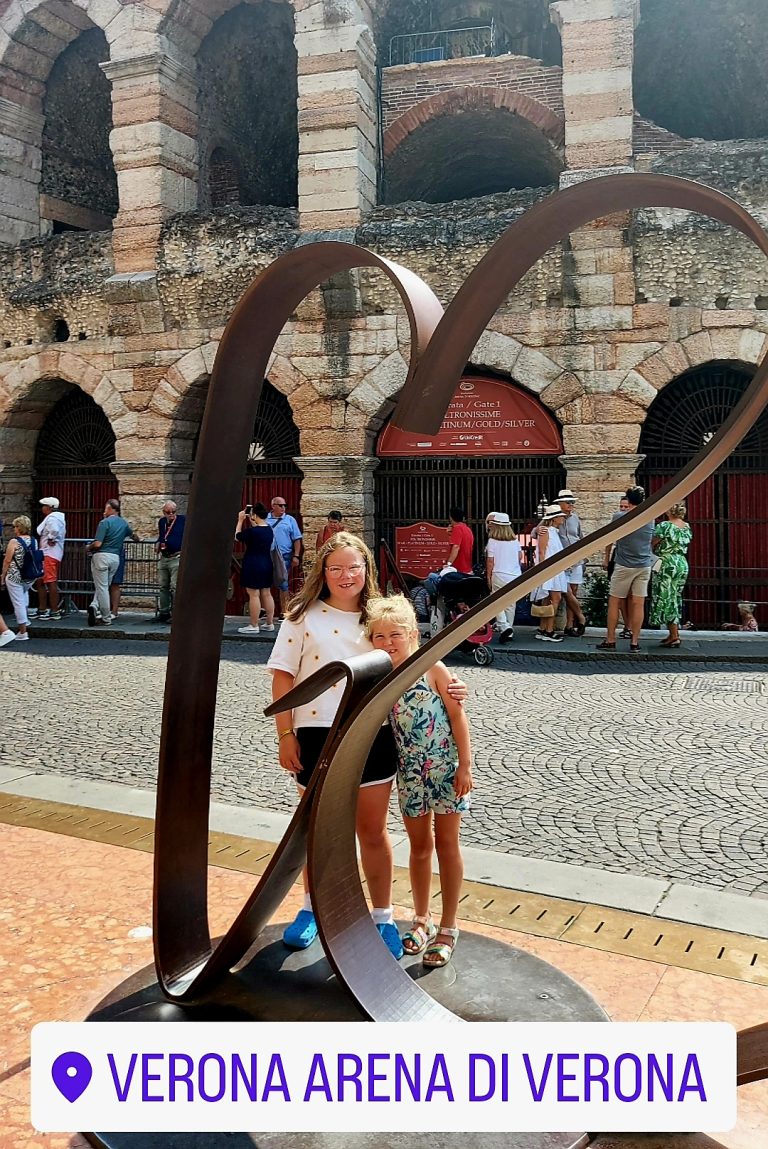
Begin in Venice, wandering through its enchanting canals, iconic St. Mark’s Square, and Rialto Bridge. Then, take a short train ride to Verona, the city of Shakespeare’s Romeo and Juliet. Explore Juliet’s balcony, Verona’s ancient Roman Arena, and picturesque piazzas.
This combination is ideal for those seeking history, beauty, and timeless romance in two of Italy’s most captivating cities.
How to get from Venice to Verona:
Route: Venice (Venezia Santa Lucia) to Verona (Verona Porta Nuova)
Combine Milan’s style with Lake Garda’s stunning lakeside views.
Milan and Lake Garda make a fantastic pairing for a holiday that combines urban sophistication with natural beauty.
Start your trip in Milan, Italy’s fashion and design capital, exploring the Duomo, Galleria Vittorio Emanuele II, and world-class museums.
Then, take a quick train to Lake Garda’s Peschiera del Garda, where you can unwind by the water, enjoy lakeside dining, and visit charming towns like Sirmione.
It’s the perfect blend of city chic and lakeside relaxation.
How to get from Milan to Lake Garda
Route: Milan (Milano Centrale) to Peschiera del Garda (Lake Garda)
A short ride connects the serene Lake Garda to Verona’s historic charm.
Begin at Lake Garda, enjoying its serene waters, scenic walks, and charming lakeside villages. Then, take a quick train ride to Verona, where you can immerse yourself in Roman history at the Arena and visit Juliet’s famous balcony.
This easy combination is ideal for travellers seeking a peaceful retreat paired with cultural exploration.
How to get from Lake Garda to Verona
Route: Peschiera del Garda to Verona (Verona Porta Nuova)
Plan Your Itinerary: Use an Italy map to visualise your route and avoid backtracking.
Book Italy Train Tickets Early: Save money by booking in advance, especially for high-speed trains.
Check Train Types: Regional trains are cheaper but slower, while high-speed trains are faster and more comfortable.
Consider Train Travel Costs: Calculate costs in euros or dollars to stay within budget.
Why Choose Train Travel in Italy?
Italy’s train system is one of the most efficient ways to explore multiple cities. Trains are fast, frequent, and take you straight to city centres. Whether you’re exploring the top 5 cities in Italy to visit or creating your own Italy train travel itinerary, the possibilities are endless.
Plan your Italian city break in 2024 with ease and experience the beauty of train travel in Italy!
Join Our Mailing List
Switzerland: 5 Bucket List Train Journeys you NEED to do!
Ifyou’re dreaming of an unforgettable trip through the Swiss Alps, there’s no better way to explore Switzerland than by train.
Picture yourself gliding through snow-capped mountains, passing shimmering lakes, and winding through charming villages, all from the comfort of your seat!
Switzerland’s train journeys are more than just a way to get from point A to B - they’re a key part of the adventure. Whether you’re a nature lover, a history buff, or just looking for a unique travel experience, these five train rides will take your breath away.
From the luxurious Glacier Express to the dramatic Bernina Express, each journey promises jaw-dropping scenery and unforgettable memories.
1. GoldenPass Belle Epoque: A Journey Back in Time
The GoldenPass Belle Epoque transports travellers on a vintage luxury train from Montreux to Zweisimmen, offering a unique journey through Swiss vineyards and alpine landscapes.
Known for its old-world charm, the train features Belle Epoque carriages with velvet seats and wooden finishes, evoking the elegance of early 20thcentury travel.
GoldenPass Belle Epoque Route: Montreux – Zweisimmen
Highlights of the Belle Epoque:
Panoramic views of Lake Geneva.
The scenic Simmental valley.
An authentic vintage travel experience.
Why is the Belle Epoque a bucket list journey:
This train combines luxury with some of the most scenic views in Switzerland, making it perfect for history buffs and nature lovers alike.
Yes, the Belle-Epoque is included in the Swiss Travel Pass, allowing you to explore this route without purchasing additional tickets. You just need to pay to reserve your seats whether in first or second class.
For more information on timetables, pricing, routes and how to book, check out our in-depth blog on the Golden Pass Belle-Epoque train.
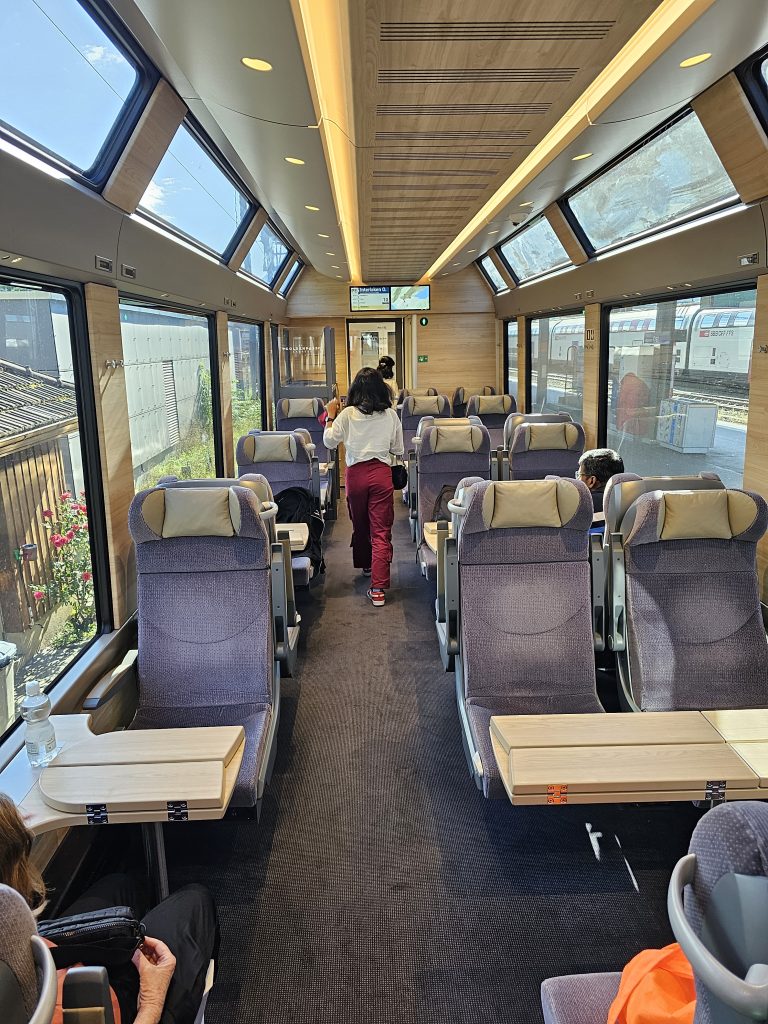
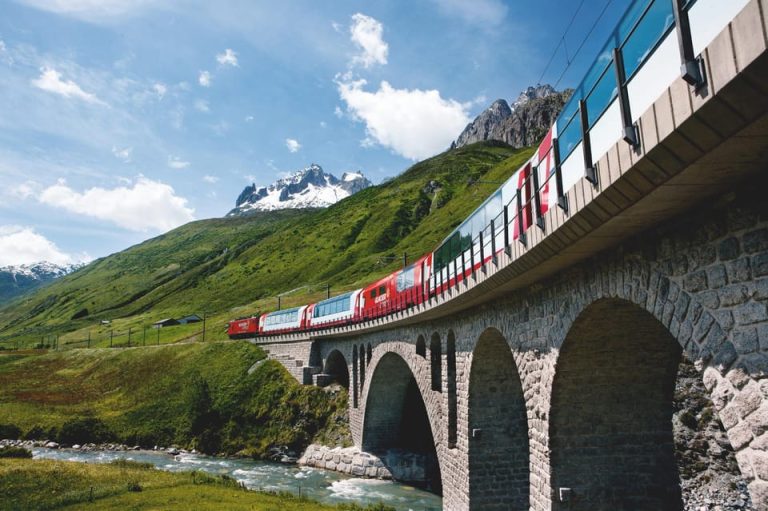
The GoldenPass Express offers one of the most scenic train rides in Switzerland, connecting Montreux with Interlaken via Zweisimmen. This journey is ideal for travellers who want to experience both lakes and mountain vistas in comfort.
The train features panoramic windows, allowing you to marvel at Switzerland’s varied landscapes, from the shores of Lake Geneva to the towering peaks of the Bernese Oberland.
A smooth transition from French-speaking to German-speaking regions.
The newest train in this guide
Why is the GoldenPass Express a bucket list journey:
The GoldenPass Express combines lake and mountain scenery in one memorable ride, making it a must for those wanting to see the best of Switzerland’s diverse landscapes.
Is the GoldenPass Express included in the Swiss Pass?
Yes, the GoldenPass Express is included in the Swiss Travel Pass, allowing you to explore this route without purchasing additional tickets. You just need to pay to reserve your seats whether in first or second class.
For more information on timetables, pricing, routes and how to book, check out our in-depth blog on the Golden Pass Express train.
3. Bernina Express: A UNESCO World Heritage Ride
The Bernina Express is often hailed as one of the most scenic train journeys in the world. Running from Chur in Switzerland to Tirano in Italy, the Bernina Express route offers a four-hour adventure through dramatic landscapes, including glaciers, viaducts, and tunnels.
The train reaches an altitude of over 2,253 meters (7,391 feet) at the Ospizio Bernina, making it one of the highest railways in the Alps.
The Bernina Express Route: Chur – Tirano
Highlights of the Bernina Express:
The stunning Landwasser Viaduct.
Views of the Morteratsch Glacier.
The crossing from Swiss to Italian landscapes.
Why the Bernina Express is a bucket list journey:
With its UNESCO World Heritage status and stunning alpine views, the Bernina Express offers a perfect blend of Swiss engineering and natural beauty.
Is the Bernina Express included in the Swiss Pass?
Yes, the Bernina Express is included in the Swiss Travel Pass, allowing you to explore this route without purchasing additional tickets. You just need to pay to reserve your seats whether in first or second class.
For more information on timetables, pricing, routes and how to book, check out our in-depth blog on the Bernina Express train.
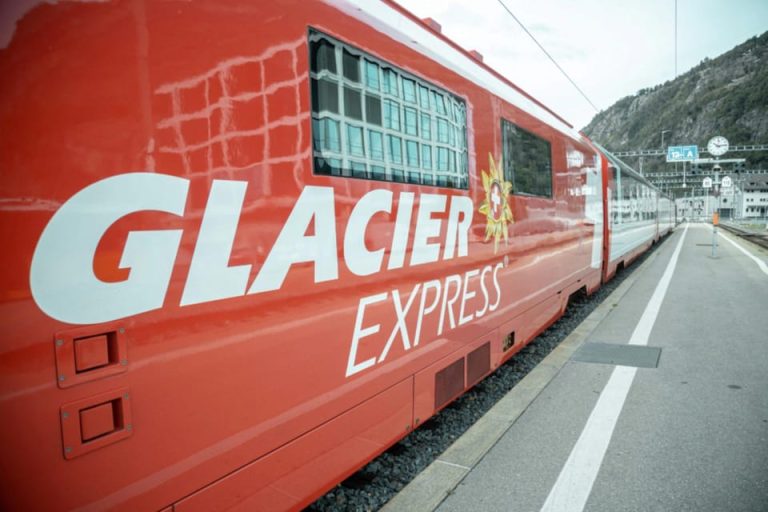
4. Glacier Express: The Slowest Express Train in the World
The Glacier Express is a legendary journey through the heart of the Swiss Alps, connecting Zermatt and St. Moritz in a seven-and-a-half-hour ride. Often dubbed the “slowest express train in the world,” this route gives you plenty of time to take in Switzerland’s stunning landscapes, from deep gorges to snow-covered peaks.
The Glacier Express Route:
Zermatt – St. Moritz
Highlights of the Glacier Express:
The Glacier Express route includes the Oberalp Pass, the highest point at 2,033 meters (6,670 feet).
Panoramic windows offering uninterrupted views of the Alps.
Why the Glacier Express is a bucket list journey:
The Glacier Express is the ultimate luxury train offering a scenic journey through remote landscapes. The Glacier Express in winter is a magical experience, with snow-covered landscapes and frozen waterfalls.
Switzerland train Glacier Express tickets prices:
A second-class ticket for the Glacier Express 2nd Class costs approximately CHF 152, while a first-class ticket is around CHF 268. Reservations are mandatory and cost an additional CHF 39 to CHF 49 depending on the season.
Can you your Swiss Pass on the Glacier Express?
Yes, the Swiss Pass covers the ticket price, however, you will still need to pay for a separate reservation fee for the seat.
Is the Glacier Express it better than the Bernina Express?
While both the Glacier Express and Bernina Express offer stunning views, the Bernina Express is considered more dramatic due to its higher altitude and varied landscapes. The Glacier Express is slower and more luxurious, making it a more leisurely experience.
5. Jungfrau Top of Europe: The Highest Railway Station
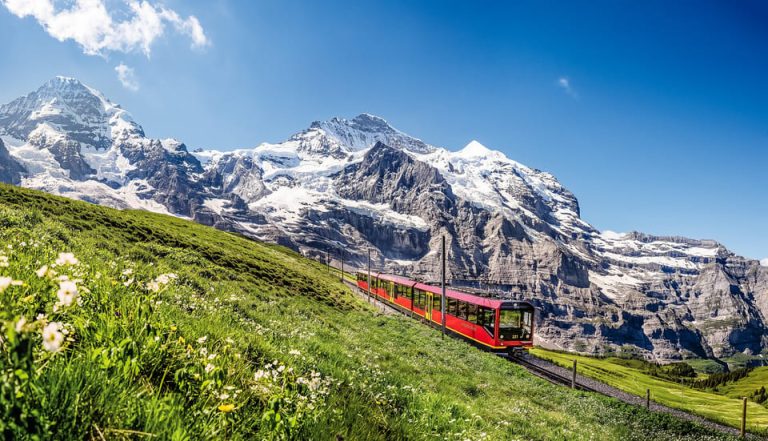
The Jungfraujoch Railway takes you to the highest railway station in Europe, at an altitude of 3,454 meters (11,332 feet). Starting from Kleine Scheidegg, this journey offers breathtaking views of the Eiger, Mönch, and Jungfrau peaks, culminating in a visit to the Aletsch Glacier, the longest glacier in the Alps.
Jungfraujoch Route:
Kleine Scheidegg – Jungfraujoch
How long is the Jungfraujoch train journey?
The train takes about two hours to reach the top, passing through tunnels inside the mountains and offering stops at scenic viewpoints along the way.
How much time do you need at Jungfraujoch?
Plan for at least two to three hours at the summit to explore the glacier, ice palace, and observation platforms.
Winter Jungfraujoch experience:
Visiting in winter offers spectacular snow-covered vistas, and activities like snow tubing and ice hiking are available.
Is Jungfraujoch included in the Swiss Pass?
While the Swiss Travel Pass covers part of the journey, the final section from Grindelwald or Lauterbrunnen to Jungfraujoch requires an additional fee, usually at a discounted rate.
Switzerland’s trains can be expensive, but they offer a world class experience with stunning views. The cost varies depending on the route and class of travel. Using a Swiss Travel Pass or booking Switzerland train tickets in advance can help reduce costs.
In comparison to trains in the UK, we travelled on the Bernina Express for over 4 hours, taking in incredible views through panoramic windows and it still only cost £77 per person.
Again, the Belle-Epoque train is just £52 for the full journey of Montreux to Zweisimmen in a luxury vintage train. You are not just paying for the distance, but the experience itself, in my opinion.
How to pay for trains in Switzerland?
You can purchase train tickets online, at ticket machines, or at train stations. The Swiss Travel Pass offers unlimited travel on the Swiss rail network, making it an economical option for tourists. Personally, we quite often use the Trainline app, then purchase the seat reservation with the relevant railway.
Switzerland’s train journeys are like no other, giving you a front-row seat to some of the most stunning landscapes on the planet.
Whether you’re taking in the timeless charm of the GoldenPass Belle Epoque, climbing to the “Top of Europe” on the Jungfrau Railway, or enjoying the ultimate winter wonderland aboard the Glacier Express, there’s a train ride here for everyone!
Join Our Mailing List
Sustainable Budget Travel Tips: Save Money & The Planet
Sustainable travel has become a hot topic in recent years due to the growing awareness of climate change and the environmental impact of mass tourism.
As more travellers seek ways to reduce their carbon footprints, the demand for eco-friendly alternatives has surged.
People are increasingly conscious of how their travel choices affect the planet, from transportation and accommodations to food and waste.
Budget Travel & sustainable Travel
Simultaneously, the rise of budget travel is shaping the way eco-conscious travellers approach their trips. They are finding that it is possible to explore the world on a shoestring, while still making sustainable choices.
This intersection of sustainability and budget travel is driving a new wave of responsible tourism, making it a trending topic for people looking to travel mindfully, without overspending.
How Do You Plan A Sustainable Trip?
The growing concern of over-tourism and its effects on local ecosystems also contributes to the urgency of the topic, prompting travellers to find ways to leave a positive impact wherever they go.
Travelling sustainably doesn't have to be expensive. In fact, with a bit of planning, you can explore the world on a budget while minimising your environmental impact.
Here’s a guide to help you achieve eco-friendly travel without breaking the bank, using practical and lesser-known tips.
Our Top Tips on Planning a Sustainable Holiday on a Budget
1. Use Public Transport or Walk Instead of Renting a Car
One of the most effective ways to travel sustainably and on a budget is by using local public transportation. Buses, trams, and trains are not only cheaper than renting a car but also significantly reduce your carbon footprint.
Check out our section on budget-friendly public transport options in Europe- where we cover bus transport between two countries for under £25. You'll find this here
We also have numerous blogs on train travel in Switzerland and Italy here
Walking or cycling around smaller towns or cities can also be a great way to explore, all while saving on transportation costs. Look for free city maps or use navigation apps that show walking trails or cycling routes.
2. Stay in Eco-Friendly Accommodation Without the Price Tag
Many travellers assume that sustainable accommodations come at a premium, but there are plenty of affordable options if you know where to look.
Hostels, budget hotels, and even campsites now offer eco-friendly alternatives. These might include energy-efficient practices, water conservation, or solar-powered utilities.
Search accommodation here and make use of the 'filters' to select the type of stay you're looking for
3. Pack Light and Avoid Fast Fashion
Packing light isn’t just good for your wallet; it’s also good for the planet. Airlines emit more CO2 when carrying heavier loads and packing efficiently can cut down on both your checked baggage fees and environmental impact. Sustainable travel often goes hand-in-hand with minimalism.
Consider looking up sustainable packing tips on how to minimise the amount luggage you're taking.
Additionally, when you travel, avoid buying fast fashion. Instead, invest in long-lasting, versatile travel clothing from sustainable clothing brands.
4. Eat Local and Support Sustainable Eateries
Eating locally isn’t just a great way to experience the culture- it’s also one of the best sustainable travel tips. By eating locally, you avoid the carbon emissions associated with importing food, and often save money by choosing budget-friendly local dishes.
Look for farmers' markets or street food vendors that prioritise sustainable practices.
Pro tip: Bring a reusable water bottle with you and fill it up at safe, free water stations or your accommodation to save money and reduce plastic waste.
5. Choose Slow Travel for Deeper and More Sustainable Experiences
Fast travel- hopping from one destination to another, can be costly and environmentally damaging. Instead, embrace slow travel, which focuses on spending more time in fewer places. Not only does this reduce your carbon footprint, but it also gives you a richer, more immersive experience.
Staying in one place longer reduces transportation costs and energy consumption, making it a win-win for your wallet and the environment.
6. Volunteer or Participate in Eco-Tourism Projects
One of the most rewarding ways to travel sustainably on a budget is through eco-tourism or volunteer projects. These opportunities often offer free or discounted accommodations and meals in exchange for helping with environmental or community-focused projects.
Websites like Workaway and WWOOF connect travellers with hosts seeking help with sustainable farming, conservation efforts, or community building.
7. Offset Your Carbon Footprint
Even the most eco-friendly traveller can leave a carbon footprint. Consider using some of your savings from budget travel to invest in carbon offset programs.
These programs allow you to donate to projects that reduce carbon emissions globally.
Many airlines and travel websites offer an option to add carbon offset purchases when booking your flights, allowing you to offset your carbon footprint when travelling cheaply.
how to travel sustainably on a budget- Final Thoughts
Sustainable budget travel is not only possible but can enhance your travel experiences by making them more meaningful and eco-friendly.
By choosing local transportation, staying in affordable eco-friendly accommodation, and being mindful of your packing and food choices, you can see the world while doing your part to protect it.
Interlaken: The Ultimate 6 Day Itinerary for Rail Fans
Exploring Montreux, Interlaken, Grindelwald, Lauterbrunnen and Lake Brienz!
This 6-day itinerary centered around Interlaken, not only lets you experience the breath taking scenery of the Swiss Alps but also introduces you to the stunning Lauterbrunnen waterfalls, serene Lake Brienz, charm of Grindelwald and culture of Montreux.
The Perfect Itinerary in Switzerland for a Rail Fan
It features adrenaline fuelled activities, incredible views and of course scenic luxury trains, funicular railways plus a journey to the highest rail station in Europe.
Enjoy train travel in one of Switzerland's most beautiful regions!
The GoldenPass Express
For this itinerary I have used Geneva as the arrival and departure airport (the one I personally used), purely because it is close to Montreux, where the GoldenPass line operates from.
You can also fly in to Bern (should international flights allow) or Zurich and adjust your itinerary accordingly.
The Belle-Epoque
The itinerary is intended to be a guide, you can adjust the activities to suit your needs and also the duration of the your trip.
What we've included is very full on, and for those wishing to take the trip at a slower pace, I'd recommend adding a day or two, or simply choosing your favourites from my suggestions.
So let's get started with my ideal itinerary for Interlaken as a rail fan!
Day 1: Arrival in to Geneva, Time in Montreux & Taking the GoldenPass Express to Interlaken
Morning:
Arrive in to Geneva Airport early morning. Take the Airport train to Montreux which takes approximately 1hr 15 minutes.
Lac Lemen
Late Morning:
Explore Lac Lemen (Montreux's Lake). Visit the Freddie Mercury Statue and see the other unique works of art dotted around the footpath.
Grab a bite to eat whilst walking back to Montreux train station, ready to catch the Golden Pass Express for the 2.43pm departure from Montreux to Interlaken.
Food available to pre-order
Alternatively, pre-book an 'Apreto Plate' to enjoy on board.
Check in to your hotel and then head out for an evening meal in Interlaken Centre.
Day 2: Explore Interlaken, Harder Klum & Lauterbrunnen Waterfalls
Morning:
After breakfast explore the picturesque town of Interlaken. Stroll through Höhematte Park, taking in the views of the Jungfrau peaks and watch those brave enough to paraglide off the mountains- why not add a tandem trip yourself!
Take a funicular ride up to Harder Kulm for lunch. Revel in a stunning views of the Alps while enjoying Swiss specialties at the mountaintop restaurant.
Get the train from Interlaken Ost (100m from the funicular station) to Lauterbrunnen (20 minutes away).
Famous for its stunning waterfalls, Lauterbrunnen is a must-visit destination in the Jungfrau region.
Get photographs with one of the towns spectacular waterfalls- there are 72 in this small town with some as high as 400m!
Lauterbrunnen
Dinner:
Enjoy dinner in one of the towns many restaurants offering traditional Swiss fondue or raclette to warm up after your busy day.
Day 3: Day Trip to Grindelwald- Grindelwald First & Glacier Canyon
Morning:
After breakfast, visit one of Interlaken's many Co-op's to pack a picnic- I recommend the one opposite Interlaken Ost station, as it's the largest with hot and cold food items ready made, to take away.
Take a train to Grindelwald from Interlaken Ost (35 mins), a beautiful village surrounded by towering mountains.
Go straight to Grindelwald First- the earlier the better as it gets very busy by mid morning.
Do the 'First Cliff Walk' for spectacular views and hike to Bachalpsee Lake for stunning panoramic views and to enjoy your picnic lunch.
Bachalpsee Lake
Then choose your method of getting back down- First Flyer, First Glider, Mountain Cart, Trottibike, hike or simply cable car.
Tip-Book tickets in advance as the activities do sell out quickly.
Grindelwald First Cliff Walk
Afternoon:
In the Afternoon, take the bus from Grindelwald centre to Grindelwald Glacier Canyon and visit an impressive masterpiece formed by nature millions of years ago.
Grindelwald Glacier Canyon
Test your balance on the 170 square metre spiderweb and take a unique walk through the exposed rock galleries and tunnels.
Return to Interlaken for dinner. By this point you're going to be pretty tired with a very full on itinerary so far. Get dinner and we suggest an early night as there's much more to come!
Day 4: Relaxing Day on Lake Brienz and Riding the Brienz Rothorn Steam Train
Morning:
After breakfast, head to Interlaken Ost and board a scenic boat trip on Lake Brienz. Enjoy the stunning views of mountains and quaint lakeside villages during your journey.
Head straight to the 'Brunngasse', a street voted one of the most beautiful in Switzerland, located just minutes from the train and boat stops.
Visit the Brienz Rothorn steam train. Take a scenic ride on this historic train up to the summit. The ride offers awe-inspiring views and a unique glimpse into the area’s history. Enjoy lunch at the top of Rothorn Klum before descending back down.
Photo Copyright of Brienz Rothorn
Afternoon:
Take the train back from Brienz to Interlaken where you can relax and unwind after your adventure-filled day.
Day 5: Jungfraujoch Top of Europe- the highest station in Europe
Morning/Afternoon
See the world from Jungfraujoch, Europe’s highest-altitude railway station, 3,454 meters above sea level. After a scenic train ride to the top, enjoy the amenities and stunning views of the Alps.
To do the tour it takes you approximately 1 to 2 hours. There are also restaurants on the Top of Europe and even a Snow Fun Park in summer, so calculate 6 to 8 hours for the whole trip.
Once back in Interlaken late afternoon, take time to pack ready for tomorrow's departure, before heading out for your last dinner of the trip.
Get our 10 Page Switzerland Itinerary Planner Now!
Day 6: Scenic Return back to Geneva via the GoldenPass Belle-Epoque and GoldenPass Express
Morning:
Have a leisurely breakfast and check out of your hotel. Spend your last moments in Interlaken, perhaps by picking up some final souvenirs or enjoying a stroll along the Aare river.
Take the Golden Pass Express from Interlaken Ost to Gstaad
Italy Train Travel with Kids: The Ultimate 16 Day Adventure
As a family of 6 we decided to book our biggest adventure yet, exploring Italy by train over 16 days- Rome, Florence, Chianti, Pisa, Venice, Milan, Verona, and Lake Garda.
Trying to do this on a budget was a challenge, however the whole trip came in at £680 per person. This included return flights from the UK, Luggage, Private Airport Transfers, All Train Journeys (including 5 high speed trains in 1st class) and Accommodation for 15 nights.
Train travel in Italy with children is a great way to see the country. The trains are reliable and very comfortable, making it easy to relax while you travel.
You can go from one city to another by high speed train quickly and cheaply. The views from the train windows are beautiful, with rolling hills, vineyards, and charming towns.
Plus, taking the train can help you save money and avoid traffic! Some parts of Italy are notoriously stressful in terms of narrow roads and crazy drivers whereas a train allows you to sit back and enjoy the scenery.
For anyone looking to plan a similar trip we've broken down each element of our own trip so you can see how we planned it all out. In this blog, we will share with you the logistical side of booking a trip like this.
Building an Itinerary around Italy
From the UK you can travel to Europe purely by train. However, living in the north of England, this would have been far more expensive than flying. It would have also required an extra nights stay in London at either end of the trip, adding to the cost.
It is typically far cheaper for us to fly to mainland Europe and then start our travels there, so this is what we did.
In order to plan the route we would take, we first looked at flights. As we were trying to keep the trip as low cost as possible, it made sense to factor in which cities in Italy has the cheapest flights during August and then build in the stops in between. Flights are always the biggest cost variable for us a family of 6, as opposed to accommodation.
We used Skyscanner to see which cities in Italy had the cheapest outbound and return flights.
Skyscanner has the ability to search the whole of Italy for an entire month rather than having to pick a date and specific arrival city, making it a valuable tool when planning a trip of this nature.
We made a 'one- way' search from Manchester to Italy and then the same for Italy to Manchester.
If you're planning a trip like this we would recommend booking a different city to return from, than the one you arrive in. This allows you to plan a trip a fair distance away from the arrival airport without having to circle back and waste money on extra train fares just to get home.
Flights to Italy
The flights we finally settled on were flying in to Rome from Manchester and then flying home from Milan Bergamo.
For the outbound flight we paid a total of £510.22 (£85pp). For the return flight 16 days later from Milan Bergamo, the total was £500.73 (£84pp). Both flight prices included 2 x 20kg suitcases.
The flight total could have been much cheaper if we'd booked earlier in the year during the flight sales or had chosen a different month to travel. August is usually the most expensive month for flights to Italy. We only chose to start looking at a trip like this in June (around 6 weeks before departure).
We regularly pick up return flights to Italy between £28-£50pp, if you take a look at our other Italy blogs we have a few of these trips written up for reference.
The next step was then to determine where we would stay between Rome and Milan.
Total Flight Cost £1011 (£169pp)
Accommodation in Italy
For accommodation our main aim was to find something child friendly, that would provide us with a balance between a 'proper' Summer holiday and seeing the tourist sites of Italy.
The last thing we wanted was to drag the kids around Italy in very hot temperatures, seeing things they would probably have little interest in and be cooked up in hotel rooms for the remainder.
We decided to use campsites as a base. We had visited sites like these previously in Rome and Venice and they were fantastic for kids with great pools, slides and entertainment on site. Plus they have amenities like laundrettes, bars, restaurants and supermarkets.
Camping Village Fabulous
The accommodations available at these kind of campsites include space for campervans and tents, but they also have fully equipped static caravans with verandas which are great for allowing you to cook your own meals and sit out at night whilst the kids are in bed.
Camping Village Fabulous
At each site booked a 3 bed static caravan with large deck, the prices were as follows:
Go to the end of this post to see links for separate blog posts detailing our stay at each of these sites- it was too long to include all the information here.
Deciding Where to Visit
Now we had decided three places we were going to stay during our trip, we could then start to purchase train tickets and expand on the destinations we would include.
At this point we had Rome, Chianti Hills (Tuscany) and Peschiera Del Garda (Lake Garda) as our bases.
From Chianti we decided to include a day out by train to Rome and Florence (1-2hrs away). We had originally wanted to include Cinque Terre but as this area is not on the high speed train network it would have taken too long to travel there and back, in a day from Chianti. Other choices from Chianti include Lucca and Siena.
Pescheria Del Garda we found the most places to visit that were in easy reach. Venice, Verona and Milan are all within 20mins-1hr 30 of Peschiera Del Garda so we added these to our itinerary too. Other choices include Bologna and Parma, and a bit further afield, Lake Como.
Rome we decided to purely just 'do' Rome so we could have a relax and find our feet.
Interrail Pass vs Purchasing Individual Train Tickets
When planning our Italy itinerary, we carefully compared the options between booking an Interrail pass and purchasing individual tickets for each journey.
Ultimately, we decided to go with individual tickets as it became clear that for our specific routes and travel dates, buying tickets separately was going to be cheaper.
In terms of our party, for some trains (regional) we were classed as 4 adults and 2 children. For 1st class high speed trains we fell under the category of 3 adults and 3 children.
I have done a breakdown of the train journeys we took and what type of train/class we got, along with the journey times and prices.
For the longer journeys we splurged and purchased 1st class seats on the high speed trains. These were great as they gave us lots of room in air conditioned carriages with tables, power points and Wi-Fi. On some journeys we were also provided with free refreshments.
Free snacks and drinks provided in 1st class on Frecciarossa trains
As we booked 6 weeks beforehand, the 1st class tickets were a very similar price to the 2nd class on the day fares. It didn't seem a big extravagance and it made the journeys far more comfortable.
All in we purchased a total of 84 train tickets across 6 days, costing £678 (£113pp).
The interrail pass for travel just within Italy for 6 days with upgrades to first class where available is £965. In our case it was definitely cheaper to book the tickets individually.
In Italy, there are three different types of trains. Some are high speed (Le Freece and Italio), these are the most expensive, but also the quickest and usually the most comfortable. In some cases we managed to book high speed trains for cheaper than the slow counterparts as some had offers on when booking.
Then there's intercity trains which connect cities with fewer stops. Finally there are the regional trains. These tend to be slower, calling at more stops and they don't have reserved seating, but they also tend to be the cheapest option.
Some areas in Italy aren't as well connected such as Cinque Terre, so here you'll only find regional trains available.
When planning a trip like this, it is likely you will take a mix of all three of these trains to get around.
Should I Book Italy Train Tickets in Advance?
Yes! as mentioned earlier, we paid the same for 1st class high speed trains booked in advance, as what we would have paid on the day for a slower intercity train.
It is definitely worth booking your main journeys in advance, as these dates tend to be set in stone with your accommodation dates.
For more localised journeys such as Lake Garda to Verona, the price difference is small on the day, so if you would like to play days out by ear then leave these ones flexible.
How Early do you Need to get to the Train Station in Italy?
For bigger city stations I'd recommend a good 20 minutes beforehand. Some stations are more like airports and depending on which door you enter it can be quite a walk to the platforms. The last thing you want is to be panicking and rushing to find your platform.
Getting there in good time allows you to get your bearings, check the arrivals board and stand on the right part on the platform.
If you have a pre-booked seat in a specific carriage, there's nothing worse than having to rush aboard, then walk the length of a train to find where your sat with all your bags.
For regional stations 5-10 mins is more than adequate. Trains run on time in Italy so definitely be there beforehand.
Are Children Free on Trains in Italy?
In most cases children under 4yrs old travel free. Children up to 14 years may travel at a highly discounted fare when riding on high speed trains. For other trains the maximum child age is 11 years.
We found that my daughter who was 13yrs at the time was classed as a child fare on high speed trains, but an adult on the regional ones.
It's best to play around and price it up online, as it may therefore be cheaper to take a high speed train depending on your children's ages.
Get Our Italian Travel Planning Template!
Can I take Luggage on Trains in Italy?
With high speed trains there are luggage racks at the end of each carriage. On regional trains, there are no racks and its expected you keep your luggage with you.
In all cases please keep your most valuable items, money and passports on your person at all times.
Should I purchase tickets online or at the Station?
I would always recommend purchasing online before your trip. Not only can you save money but you're also guaranteeing your seat and some high speed trains can sell out.
If you are purchasing regional train tickets at the station, you need to remember to validate your ticket before boarding using one of the machines on the platform otherwise you could face a fine.
To purchase online we used a combination of Trenitalia (the Italian train website) and Trip.Com(Often a little easier to navigate).
The Trains we Booked
So let's look at the trains we booked, how much they cost and the journey times.
Day 3: Rome to Chianti (Tuscany) £23pp
Rome Tiburtina to Firenze S.M. Novella: 1st Class High Speed train, Journey Time: 1hr 30 mins, total cost £94 (£16pp)
Florence to Figline Valdarno, Regional train 2nd Class, Journey Time: 58 mins, total cost £38 (£7pp)
Chianti
Day 6: Day Trip to Florence and Pisa from Chianti £26pp
Figline Valdarno (Chianti) to Firenze S.M. Novella (Florence), Regional Train, 2nd Class, Journey time 58 mins, total cost £25 (£4pp)
Firenze S.M. Novella (Florence) to Pisa Centrale, Regional Train, 2nd Class, Journey time 52 mins £50 (£9pp)
Florence
Pisa Central to Firenze S.M. Novella (Florence), Regional Train, 2nd Class, Journey time 52 mins £50 (£9pp)
Firenze S.M. Novella (Florence) to Figline Valdarno (Chianti), Regional Train, 2nd Class, Journey time 58 mins, total cost £25 (£4pp)
Pisa
Day 8: Chianti (Tuscany) to Pescheria Del Garda (Lake Garda) £19pp
Figline Valdarno to Firenze S.M. Novella (Florence), Regional Train, 2nd Class, Journey time 58 mins, total cost £25 (£4pp)
Verona
Firenze S.M. Novella (Florence) to Pescheria Del Garda, High Speed, 1st Class, Journey time 1hr 58 mins, total cost £85 (£15pp)
Day 11: Day Trip to Verona from Lake Garda £6pp
Peschiera Del Garda to Verona Porta Nuova: Regional Train, 2nd class, Journey time:19 minutes £16 (£3pp)
Lake Garda
Verona Porta Nuova to Peschiera Del Garda: Regional Train, 2nd class, Journey time:19 minutes £16 (£3pp)
Day 13: Day Trip to Venice from Lake Garda £17pp
Pescheria Del Garda to Venice (Venezia Santa Lucia), High Speed Train (Frecciargento), journey time: 1hr 22 mins, total cost £48 (£8pp)
Venice
Venice to Pescheria Del Garda 2nd class train with a change in Verona, journey time: 1hr 45 mins, total cost £55 (£9pp)
Day 15: Day Trip to Milan from Lake Garda £22pp
Pescheria Del Garda to Milan (Milano Centrale), 1st Class Seats-High Speed Train (Frecciargento), journey time: 57 mins, total cost £62 (£11pp)
Milan (Milano Centrale) to Pescheria Del Garda, 1st Class Seats-High Speed Train (Frecciargento), journey time: 57 mins, total cost £62 (£11)
Airport Transfers
From Rome Ciampino Airport to Camping Village Fabulous we paid £64 for a private van for 6 people (£11pp)
Butterfly Camping in Pescheria del Garda to Milan Bergamo, we again booked a private transfer, this time costing £167 (£28pp)
The nearest airport to Pescheria Del Garda is Verona, however the flights were £600 more expensive than from Milan, so it made more sense to fly out of Milan Bergamo and pay a little more on the transfer.
Total cost for Private Airport Transfers £231 (£39pp)
Luggage
For luggage we tried to keep this as minimal as possible as lugging cases round Italy and on so many trains isn't my idea of fun. We stuck to two cases weighing 20kg and then a back pack for each person.
One case was purely for towels and bedding. In static accommodation in Italy, you're usually required to provide your own duvet cover and pillowcases or rent it from the site. The cost of this is around £20 per bed, which doesn't sound too bad. However, as we were changing accommodation three times over the trip, this would have been £300 extra.
We save up old bedding instead of throwing it away for these kind of trips. Then at the end we can dispose of it guilt free and have lots of spare room to bring any souvenirs back.
The three accommodations we booked all had laundry facilities, so this meant we didn't need to pack clothes to last us the full 16 days. We took around 7 day outfits, 2 evening ones, 2 swimming costume and 1-2 pairs of shoes per person on top of the ones we travelled in.
Luggage costs were included in the flight price above.
Our Tips for Travelling Italy by Train with Kids
Purchase tickets in advance to avoid queues at the stations.
If possible reserve seats in advance. For busy trains its always preferential to have a seat rather than having to stand with children
Have snacks and drinks ready for the journey; children can get hungry, especially during longer trips and some of the trains aren't air conditioned so it can get really hot. You also won't find buffet carts or trolleys on most regional trains either.
Engage kids with travel games to keep them entertained during the rides. You can find our top purchases for keeping children entertained whilst travelling here
Be mindful of train schedules to ensure smooth transitions from one destination to the next- remember little legs won't be able to move as fast as an adults, so allow plenty of time.
Plan some downtime between excursions to allow the kids to relax and recharge. Italy is very hot in the summer and children want time to just be kids too.
Find the guides for each of our accommodations below:
We would definitely recommend taking a trip like this with children. Trains in Italy are so easy to use and allow you to explore huge regions of the country in one visit For what cost us the same as 7 night package holiday in Spain, we got 15 nights and lots of fabulous memories.
Since this holiday we have grown in confidence and travelled between Switzerland and Italy by train and also between Turin to Garda. You can find the links to these trips below:
How to Travel to Lake Garda with Kids: Budget Edition
As a family of 6 we decided to book our biggest adventure yet, exploring Italy by train over 16 days- Rome, Florence, Chianti (Tuscany), Pisa, Venice, Milan, Verona, and Lake Garda.
For the northern leg of our trip (Venice, Verona, Milan and Lake Garda), we needed somewhere that was going to be close to a train station so that we could easily get to all these places.
Peschiera Del Garda
After researching, it seemed like the town of Peschiera Del Garda would be the best fit. The town has a station that has trains direct train connections to all the above places, with journey times ranging from 15 minutes to 1hr 50 mins. Plus, we could get a high speed train from Florence here.
There are a number of camp sites in the town, but the closest to the actual station was Camping Butterfly- a 15 minute walk.
We only booked 6 weeks before departure so choice was limited, and a few sites were already fully booked up. It didn't look as flash as it's counterparts in terms of activities and pools, but seemed to be sufficient for our needs.
Camping Butterfly is a relatively small site, with just 220 pitches, compared to our stay in Romethat had 800, and Tuscany which had 1500!
As it turned out, the site was perfect and exactly what we needed for the end of our trip. All the walking up hills in extreme heat in Tuscany was enough to finish anyone off. This site is all completely flat and everything is within a couple of minutes walk. I don't think we would have coped with another huge site.
Since this trip we have re-visited Camping Butterfly so it can't be too bad! You can read about our Easter trip and top tips on doing Italy on a budget here - on this trip we combined Turin, Milan, Lake Garda and Verona for under £100pp!
Types of Accommodation at Butterfly Camping, Peschiera Del Garda
The site has a variety of pitches, mobile homes and bungalows for rent.
The pitches are for families of up to 6 people, bringing their own tent, caravan or camper and include electric hook up and a parking space.
The site themselves offer four different types of mobile homes- Aida, Boheme, Boheme Deluxe and Boheme Deluxe S. All include a deck area.
They then also offer Bungalows (Butterfly S) although there isn't much information about these on their own site.
Bungalows
For our 7 night stay we hired a 3 bed static caravan which cost us £872 (number 33 on the map). We booked this through Canvas Holidays.
However on our return this year, we didn't book with a tour operator, but with the site themselves. Towels and bed linen were included in the price, which was a huge saving. This was number 49 on the map- a Boheme Deluxe.
Numbers 1-7 looked particularly nice vans with great decks- however, these do face the road in and so offer less privacy.
A Boheme Deluxe
We were happy with our accommodation on both occasions. On this visit, the van we booked seemed new and had 2 bathrooms and 2 parts to the decked area. The only drawback was that it was right next to the site parameter which was next to the main road and carpark which got noisy at the weekend with revving cars.
Number 33 at Butterfly Camping
The van we booked at Easter was an older and the deck could have done with a lick of paint to the deck, but it was in a much quieter location. Both accommodations allowed us to reach the shop, pool and park entrance in minutes.
How to Get from Verona Airport to Butterfly Camping
Verona Airport is located 21.5km from the site- a 25 minute drive. One option, be to hire a car from the airport, this would allow you to also visit other parts of Lake Garda during your stay too.
Another option would be to take the train. From Verona Airport, you'd need to take the Airlink bus (no.199) which connects the airport to Verona Porta Nouva train station.
There are then regular trains to Peschiera Del Garda which take around 14-20 minutes.
In the Summer, there are various buses from the airport to Peschiera Del Garda (no's 164, 482 & 483). Click herefor the timetables.
Alternatively you could take one of the fixed price taxi's from the airport to Verona Porta Nouva train station for just €26. We actually found it cheaper to do this on our 2nd visit, than take the bus with their being 6 of us.
Fixed Taxi Prices in Verona
Lastly there is the option of taking a private transfer. This should cost around £110 with our 15% discount which is automatically applied by clicking the link provided below.
Tip: Don't forgot to take in to account flight times when looking at options to get to the site. Check the closing time of the car hire counters at the airport and the time of the last train.
How We Got to and From Butterfly Camping
For anyone looking to replicate our trip route, from Hu Norcenni Girasole (Tuscany), we took the site taxi to Figline Valderno station.
We hopped on a regional train to Firenze Santa Maria Novella (Florence) taking around 30 minutes.
From here we took a direct high speed train to Peschiera Del Garda which took just under 2 hours.
High Speed Train from Florence to Lake Garda
You can read more about our route, costs and how to plan a trip round Italy inthis post.
From Peschiera Del Garda, we flew home from Milan Bergamo airport (93km from the site) as the flight cost, including the private transfer was coming in £££'s less than flying from Verona.
Driving from the UK to Peschiera Del Garda
From Calais the drive to the site is around 16hrs (1302km), although this can be split up with stays at others sites en-route in France or Switzerland for instance.
Other port options include Zeebrugge- 1145km , Caen - 1200km and the Hook of Holland - 1196km.
Things to Do on the Campsite
The site is very compact and most things happen in one area. The pool, bar, restaurant and park are all located next to each other, as can be seen on the map above.
Pools
There are two pools at Camping Butterfly, a large pool for older kids and adults, then a toddler pool with 2 slides.
For this site you are required to wear a swimming hat,. You can bring your own or purchase one at the onsite shop.
Swimming caps must be worn at this site
Pools are often advertised on suppliers sites as open from April 7th, however, we asked on our last visit and they told us from May, so it's worth asking if you're not looking to visit in high season.
It also states that sun loungers are payable, however, we were never asked for any money and to our knowledge they were free to use. This may have changed though between our visits.
Kids Clubs
There is no kids club on this site but there are things on of an evening to keep them entertained.
Family Entertainment
Entertainment on this site includes baby dance (mini disco) which is then followed by a quiz, games or sometimes an act.
The entertainment area is small, but is compatible with the amount of people staying there. We enjoyed the offerings and went nightly, but don't expect to be 'wowed' like you get at some of the bigger sites.
The Play Park
The site has a playground with trampolines and bouncy castles located next to the entertainment, which are open each evening (and sometimes in the day too).
Sports
On site you'll find volleyball, football and table tennis. There's bikes and electric scooters to hire. Then there's also a fishing lake, although this does require a permit.
Off-Site Activities
This is where the location of the site comes in to play. Locally, there is huge range of things to do for kids.
The site is just across from the Lake and here you can hire motorboats or pedalos or even take a trip on one of the ferries to other parts of Lake Garda.
Pedalo's at the shingled lake area just down from the site
We hired our own boat a couple of times during our trip which cost around €120 including fuel for 2 hours. Remember to bring your driving licence as ID/Competency if you would like to do this.
Just 3km from the site you'll find Gardaland- a huge theme park with thrill rides, Peppa Pig land, Sea Life Centre and a Legoland Water Park.
One of the big thrill rides at GardalandPeppa Pig Land at Gardaland
A little further afield at 5km, there's Movieland and Caneva World.
There are free buses from Peschiera Del Garda station to many of these attractions.
Other local activities include Golf (5 km), Driving range (5 km), Crazy golf (7 km), Horse riding (7 km), Climbing wall (10 km) and Karting (15 km) from site.
As mentioned earlier, Peschiera Del Garda has excellent transport links to many places in the north of Italy, so you'll be spoilt for choice.
Peschiera Del Garda- taken on the walk from the site in to town
The town centre itself is just a 10-15 walk from the site and has lots of local shops, bars and restaurants then a market once a week.
Where to Eat
Onsite Restaurant (Butterfly Bistro)
There is a formal sit down restaurant on site and we dined here on both stays. The menu is varied, staff friendly and the food good quality.
It's open at lunch and of an evening. I must admit we preferred to eat off site, simply because the restaurants in the town provided a beautiful view. However, we used it when there was heavy rain of an evening (which is often the case in Lake Garda) and didn't want to walk out.
The restaurant also offers a takeaway service for food to be eaten back at your accommodation. The site does offer a B&B and Half Board option from a set menu too.
On Site Mini Market
Onsite there's a small mini market. They offer fresh bread and pastries each morning and have the essentials for having a BBQ or meal on site. It is more expensive than other shops in the area, as is to be expected.
On our 7 day trip, we did visit the Penny Market twice to stock up. This is a large supermarket, a 15 minute walk from the site, but worth it if you want more choice and cheaper prices.
Eating Off Site
We ate in the town probably 4/7 nights as we were past caravan cooking by this stage in our trip. Our favourite restaurant in Peschiera Del Garda is Caffe Centrale- La Zattera, we've dined here four times on our trips and not once been disappointed.
It's a floating quay side pizzeria, surrounded by ducks and during sunset, the lighting and views are beautiful.
The dining is informal and you'll always see it packed with families.
I don't think we paid over £100 for all 6 of us and that included a main each, lots of drinks and a tip- not to mention the crazy amount of free breadsticks and bread rolls the kids ate and then also fed the ducks with.
Sunset from the restaurant
We often then followed this by dessert in the town. There's quite a few good gelato shops with a huge amount of flavours for just a few euros each- probably not authentic gelato due to the colours, however, delicious all the same.
Getting to Verona from Peschiera Del Garda
From the station you can take a train directly to Verona in under 15 minutes, costing around £4 each way for an adult.
Verona Porta Nouva station is around a 30 minute walk from the centre, so we decided to hop in a taxi to Juliette's House which cost us €10- taxi's in Verona are fixed priced.
Peschiera Del Garda Train Station
Things to do in Verona with Children
We absolutely loved Verona. We didn't actually do that much but wander round the city and take in the sites around Juliet's House and the arena, but it is is definitely a city we'll return to.
We did try at Easter but unfortunately the weather on the day was terrible and we ended up staying indoors.
In terms of a one day itinerary here are some things to consider:
Juliet's House (Casa di Giulietta)- Visit the famous balcony of Juliet's House. The kids will enjoy the story of Romeo and Juliet, and you can take fun photos in the courtyard.
Piazza delle Erbe- Stroll through this vibrant square filled with market stalls, cafes, and fountains. Grab some gelato to keep everyone refreshed!
Castelvecchio Museum- Explore this medieval castle with its impressive bridges and towers. The surrounding park is great for kids to run around and explore.
A stop off for a snack from the markets
Giardino Giusti (Giusti Gardens)- Visit these beautiful renaissance gardens. The kids can enjoy exploring the maze and climbing to the top for a stunning view of the city.
Piazza Bra & Arena di Verona- Head to Piazza Bra to see the iconic Roman amphitheatre. Check if there's a kid-friendly show or concert available. The atmosphere is lively, and there are many places to eat.
Getting to Venice from Peschiera Del Garda
From Peschiera Del Garda, you can reach Venice Santa Lucia (the main station) by high speed train in 1hr 50 mins. Direct trains with Italo cost around £25 each way for an adult (usually less if booked in advance).
Alternatively, trains with 1 change, take a little longer and cost approximately £12pp each way.
Things to do in Venice with Children
As a pre-requisite, we have previously done 7 days in Venice with our children on another campsite trip- that's for another blog.
So, for this visit we literally just wandered, took in the sites, visited a free museum we stumbled across and ate.
Previously we have done a gondola ride and visited the islands of Burano and Murano off Venice by water boat.
Here’s a one-day itinerary for exploring Venice with kids:
Visit St. Mark's Basilica - Head to St. Mark’s Square and explore the stunning St. Mark’s Basilica. Kids will love the mosaics and the intriguing history. Consider pre-booking tickets to avoid long lines here
Explore Doge's Palace- Right next to the basilica, Doge's Palace is full of impressive architecture and fascinating stories. The palace has a prison and secret passages that kids often find thrilling. Click herefor skip the line tickets.
Lunch at a Pizza Place- Enjoy a hearty pizza lunch at a family-friendly restaurant or if you prefer there are lots of street food windows selling it by the slice. Look for places with outdoor seating along the canals for a lovely view.
Take Gondola Ride- Take a relaxing gondola ride through the canals. This is a magical experience for kids and a great way to see Venice from the water. Click here for private gondola rides
Gondola Ride
Visit the Peggy Guggenheim Collection - Head to the Peggy Guggenheim Collection to see modern art. There’s also a lovely garden that kids can explore.
Stroll Through St. Mark’s Square- Take a leisurely stroll through St. Mark’s Square, enjoy the street performers, and soak in the atmosphere.
Getting to Milan from Peschiera Del Garda
From Peschiera Del Garda, you can take a high speed train to Milan in just under an hour. We bought tickets to travel here, but we decided to skip it in the end as the kids were tired and just wanted to spend the last few days round the pool- fair enough.
A trip we took 6 months later
We have since been back to Milan twice with the children on other trips, and in all honesty we are glad we made this decision, as there isn't a huge amount to do. It is very commercialised and honestly you could be in any European city when there.
On our visit in February, they had a big festival and the streets were lined with people throwing confetti and people dressed in traditional clothing- without this I think it would have been a bit dull for the children. However there is some highlights I've put below.
Things to do in Milan with Children
Visit the Duomo di Milano - Head to the iconic Milan Cathedral. Kids will enjoy climbing to the rooftop (if you choose to go) for stunning views of the city and a close look at the beautiful spires. Click here for tickets
Explore the Galleria Vittorio Emanuele II - Walk through the beautiful shopping gallery next to the Duomo. Let the kids marvel at the gorgeous architecture and maybe even try to spot the bull (a popular tradition is to spin on its mosaic for good luck).
Galleria Vittorio Emanuele II
Visit Sforza Castle - Visit Sforza Castle (Castello Sforzesco). Kids often enjoy exploring the castle grounds, and there's a large park nearby where they can run around. Inside the castle, there are several museums, including an art museum and a museum dedicated to musical instruments. The exhibits can be interesting and interactive for kids.
Visit the Leonardo da Vinci Museum of Science and Technology - Spend some time at this interactive museum where kids can learn about science, technology, and Leonardo da Vinci's inventions. It’s engaging and educational! Click Here for tickets
Shop at the Lego Store- There's a 2 storey Lego shop in Milan Centre with various large scale models, you can never go wrong killing a bit of time looking round here.
Eat in the Navigli District - Head to the Navigli District for dinner. The canals provide a picturesque setting, and there are many restaurants with kid-friendly options (or there's lots of McDonald's for those who are sick of pizza and pasta).
Other Places you can Explore from Peschiera Del Garda
Brescia is just a 20 min train ride away which offers a blend of historical sites and modern attractions, making it a worthwhile stop.
You could combine a trip with Milan with Lake Como- swop trains in Milan and take the trip to Varenna-Esino, which is just an hour further and only costs £7pp each way.
Varenna
Another possibility would be Bologna which is 1hr 20 from Peschiera Del Garda.
Along with everything you’d normally take on holiday, as a family we always make up a little package of things to get us started in case things aren’t provided and shops are closed when we arrive.
Kitchen
Usually we bring a few basics like a couple of tea towels, a scourer and a fill one of the mini toiletry bottles with washing up liquid. I’ll usually pop a few extra toilet rolls and matches in the case too.
I’ll bring a packet of anti bacterial floor wipes to give everything a freshen up- I prefer the floor type as they’re much bigger and stronger.
We save up sachets and bring salt, sugar, tomato ketchup and again using a toiletry 100ml bottle to bring some cooking oil.
Clothes Washing
For washing we take Dr Beckman’s magic leaves (see our shopping list) so we can hand wash clothing in the sink. These take up very little space and can be used in a washing machine too. Clothes airers are usually provided in the accommodation but we bring two of our own caravan washing lines too.
Lastly I usually put in a few bin bags as they are always needed and some citronella candles for the deck at night to ward away any mosquitos.
This may sound a lot of extra things to bring but it all fits nicely in 1 packing cube or zip lock bag.
Bedding
In terms of bedding, this isn’t always provided (check individual listings). This can be hired but you can also bring your own. We tend to save up old sets and then we can bin them if we haven’t room to bring them back. The cost of hiring is usually around €100 for 5 beds. On this occasion we were changing accommodation three times so we were definitely bring our own than pay €300.
Games
Lastly we usually bring a few small games such as Uno and Pass the Pigs.
Taco, Cat, Goat, Cheese, Pizza is another family favourite- bizarre sounding but very fun. You can find all these in the above shopping list
There really isn’t much more to pack though than a regular holiday. Caravans are well equipped and the store on site sells literally everything you could probably need.
How Does it Compare to other Holiday Sites in Italy?
Plus points
Small and compact, we felt much more confident in letting the children wander about here unsupervised
On that note too, there was no 20 minute walk to the pool or shops, everything was a maximum of 3 minutes away
Very central location, right on the lake, short walk to the centre and tons going on in the local area. This is definitely the best site we've stayed at in terms of location.
Perfect base if you're wanting to combine multiple cities in Italy in one trip
Site staff are amazing- they allowed us to keep our caravan until 5pm on our last day with no charge as the weather was bad.
Downsides
Swim hats- having to wear a swim hat was a bit of a pain but at least they didn't also have the tight swimwear rule
Less to do on site in terms of entertainment and activities than bigger sites
Fewer restaurants and bars than other sites, however, you're straight out of the gates in minutes, where you'll find lots of dining options so it really doesn't matter too much
Our Review
All in all, this is one of our favourite sites and we'll definitely be back for our 3rd visit. Yes its not all singing and dancing like some, but that's what makes it great to be honest. When sites are massive, they become very tiring just getting around in the heat of Italy. We like this site for its relaxing nature and chance to explore lots of other places at the same time.
Other Campsites in Peschiera Del Garda to Consider
How to Travel to Tuscany with Kids: Budget Edition
As a family of 6 we decided to book our biggest adventure yet, exploring Italy by train over 16 days- Rome, Florence, Chianti (Tuscany), Pisa, Venice, Milan, Verona, and Lake Garda.
For the Tuscany leg of our trip (Florence & Pisa), we needed a child friendly base and Norcenni GirasoleVillage looked amazing!
Located in the Chianti region of Tuscany, with over 1500 pitches, this was much larger than our stay at Camping Village Fabulous. There was also much more to do, however, the site was far more remote.
Norcenni Girasole site is set on a steep hill and split between an upper and lower section, connected by a free land train.
Types of Accommodation at Norcenni Girasole Village, Tuscany
There is a wide range of accommodation available at this site. First of all there are double rooms, apartments, studios, bungalows (static caravan) and XL tents.
Accommodation rented through the site typically sleeps between 2-6 people.
Then there's also the option to space to bring your own tent or camper van.
For our 5 night stay we hired a 3 bed bungalow which cost us £846.
How to Get from Pisa Airport to Norcenni Girasole Village, Tuscany
Pisa Airport is located 120km (1 hr 30m drive) away from the site. One option, and probably the best, would be to hire a car from the airport. This site is quite remote, so having a car for your stay would definitely be a major advantage.
It is possible to get here from Pisa Airport without a car, although it is harder. First you're going to need to take the train from Pisa Aeroporto to Pisa Centrale (8 mins).
Then from Pisa Centrale take the train to Firenze Santa Maria Novella- the main station in Florence (1hr).
From Firenze S.M.N take the train to Figline Valdarno (25 mins). The cost of the train tickets is around £17 for an adult.
You're then going to need a taxi up to the site- it is definitely not walkable especially with luggage. Pre-book a private taxi with the site by email. We tried to get a taxi on arrival and it was like a ghost town.
Tip: Don't forgot to take in to account flight times when looking at options to get to the site. Check the closing time of the car hire counters at the airport and the time of the last train.
How to Get from Florence Airport to Norcenni Girasole Village, Tuscany
Florence airport is a bit closer than Pisa at 54km and a 45 min drive. Again, we would recommend hiring a car if flying in.
To get to the site from Florence airport first of all you're going to need to take the tram from the airport to the stop 'Via Alamanni' which is next to Firenze Santa Maria Novella- the main station in Florence.
From there take the train to Figline Valdarno which costs around £5 for an adult.
Firenze Santa Maria Novella station (Florence)
As before once you reach the town you're then going to need a taxi up to the site and its best to Pre-book a private taxi with the site.
How to Get from Rome to Norcenni Girasole Village, Tuscany
For us, this is the route we took, coming from Camping Village Fabulous in Rome. We took the high speed train from Rome Tiburtina directly to Firenze Santa Maria Novella (Florence)- this took an impressive 1hr 31 mins.
From here we took the train to Figline Valdarno (30 mins). From the station we tried to get a taxi but this was just not happening, despite being told there were taxis available in the town.
A local took pity on us in the end and gave us, along with another family, a lift to the site.
Driving from the UK to Tuscany
From Calais the drive to the site is around 15hrs (1436km), although this can be split up with stays at others sites en-route in France or Switzerland for instance.
Other port options include Zeebrugge (1356km), Caen - 1407km and the Hook of Holland - 1417km.
Things to Do on the Campsite
Pools
This site must have one of the biggest amount of swimming pools available on a camp site- certainly out of the 5 we've visited. We counted 10 pools spread over three different areas plus quite a few slides.
Pools at the upper area of the village
It is impossible to go through them all but they range from lagoon type pools to an Olympic sized swimming pool.
Lagoon pool in the upper village
All ages are catered for. Most of the pools are unheated but there's one with a retractable roof which is.
The pools at the upper area of the village
We enjoyed the pools at the upper section of the camp site best. This section seemed more modern and also featured the lazy river slide which was a massive hit from our kids.
A Pool at the upper end of the village
There seemed to be enough sun loungers too which was great. We visited both pools at peak time and got loungers no problem.
Toddler splash area in the upper village
Kids Clubs
The site has its own kids club and they seemed to have a wide range of activities advertised daily.
There are 3 clubs for different ages- 5 to 8 years, 9 to 12 years and over 12's.
Languages spoken at the clubs are Dutch, English, German, Italian
Family Entertainment
Entertainment typically runs from 8th April till 8th September and includes a children's disco, adult disco which is underground, a games room, a tv room and a cinema.
The animation team at the site also run entertainment each daily which includes aqua gym, evening shows, karaoke, quizzes, sports tournaments, talent competitions and theme nights.
We also saw quite a few acoustic singers in the evening round the courtyard area which gave the site a lovely ambience.
The entertainment on site was great, we particularly enjoyed the show and mini disco with talent contest afterwards.
Entertainment in general seemed to go on in to the early hours, it's a very lively site!
Sports
At Norcenni Girasole you'll find a HUGE amount of things to do. You'll definitely struggle to be bored.
In terms of sports activities on site you'll find crazy Golf, 5 playgrounds, cycling, tennis, table tennis, volleyball, a running track, pony rides and a tree trekking course.
Off-Site Activities
In the local area you'll find a driving range (22 km), rafting (32 km) from site and adventure course (35 km).
The site runs various excursions including a wine tasting experience to the Chianti vineyards and cellars and day trips to Florence, Rome and Siena. All of which can be booked at the information office in the lower village.
Where to Eat On Site
There are lots of dining options on site. These include:
2 well stocked supermarkets (one on both levels)- here you'll also find wine on tap!
In terms of shops there's also a gift shop, ice cream parlour and hairdressers.
At the bottom site you'll find two restaurants - Il Vecchio and Pizzeria Norcenni.
Il Vecchio Restaurant
There's also a bar and takeaway doing pizzas, then another serving fries, nuggets, salads etc.
In the courtyard through summer you'll find various stalls selling sweet treats such as crepes and popcorn in the courtyard of an evening.
At the top site you'll find Restaurant Sant Andrea.
Round both main pool complexes you'll also find a pool bar offering burgers, pizzas, paninis, fries plus alcoholic/non alcoholic drinks and ice creams.
Pool bar menu
There are so many options, you definitely won't be stuck for choice that's for sure.
Getting in to Florence & Pisa from the Site
If you're looking to visit anywhere in the local area, the first thing I'd recommend if you're not hiring a car, is to check the weather forecast and get the dates you're wishing to go off site set in stone.
The site has its own mini bus shuttle which will take you to Figline Valdarno train station. However, this must be booked and it does get full quickly. Once you arrive, go in to the info point on site and get the journeys booked in. You can book in the return journey too at the same time.
The bus costs around £1.50 for over 12s. Under 12s were free.
They also have their own private taxi option which we used twice costing around £25. Taxi's are practically non existent in the town, so I'd advise using the site options and being well organised.
From Figline Valdarno you can take the train to Florence (30 mins) and Pisa- swop at Florence (1hr 30). Other options include visiting Siena and Lucca.
Things to do in Florence with Children
Florence is packed with things to do for families and we loved the city, it's definitely one we want to return to for a longer stay.
A suggested one day itinerary would be to start your adventure at the enchanting Boboli Gardens, where children can roam the vast open spaces, climb tree-lined paths, and discover hidden sculptures, making it an ideal spot for a family picnic.
Then visit the Galileo Museum which features interactive exhibits on science and astronomy.
Afterwards take in the local culture and take a walk through the vibrant Mercato Centrale, where kids can sample delicious Italian treats like gelato and pizza while learning about local foods.
Obviously you need to include iconic Duomo too; the panoramic views of the city will leave everyone in awe.
Things to do in Pisa with Children
For our visit to Pisa, we only allocated a visit of a few hours as we were pre-warned that there actually isn't much there apart from the tower, so we tagged it on to the end of our day to Florence. Lucca or Siena may be a better alternative if you're looking for a full day out.
However, if you definitely want to visit then climbing the Leaning Tower is something you could include. Another suggestion would be to visit the nearby Museo dell'Opera del Duomo, which features fascinating exhibits about the history of the monumental structures in Pisa.
You could also take a walk along the Arno River, where you can indulge in local gelato and capture family photos against the picturesque backdrop of the city.
Other Places you can Explore from Norcenni Girasole
As mentioned earlier, Siena and Lucca are great options to take a day trip to, whether by booking on to a tour with the site or taking the train from Figline Valderno.
What to Pack for a Camp Site Holiday
Along with everything you’d normally take on holiday, as a family we always make up a little package of things to get us started in case things aren’t provided and shops are closed when we arrive.
Kitchen
Usually we bring a few basics like a couple of tea towels, a scourer and a fill one of the mini toiletry bottles with washing up liquid. I’ll usually pop a few extra toilet rolls and matches in the case too.
I’ll bring a packet of anti bacterial floor wipes to give everything a freshen up- I prefer the floor type as they’re much bigger and stronger.
We save up sachets and bring salt, sugar, tomato ketchup and again using a toiletry 100ml bottle to bring some cooking oil.
Clothes Washing
For washing we take Dr Beckman’s magic leaves (see our shopping list) so we can hand wash clothing in the sink. These take up very little space and can be used in a washing machine too. Clothes airers are usually provided in the accommodation but we bring two of our own caravan washing lines too.
Lastly I usually put in a few bin bags as they are always needed and some citronella candles for the deck at night to ward away any mosquitos.
This may sound a lot of extra things to bring but it all fits nicely in 1 packing cube or zip lock bag.
Bedding
In terms of bedding, this isn’t always provided (check individual listings). This can be hired but you can also bring your own. We tend to save up old sets and then we can bin them if we haven’t room to bring them back. The cost of hiring is usually around €100 for 5 beds. On this occasion we were changing accommodation three times so we were definitely bring our own than pay €300.
Games
Lastly we usually bring a few small games such as Uno and Pass the Pigs.
Taco, Cat, Goat, Cheese, Pizza is another family favourite- bizarre sounding but very fun. You can find all these in the above shopping list
There really isn’t much more to pack though than a regular holiday. Caravans are well equipped and the store on site sells literally everything you could probably need.
How Does it Compare to other Holiday Sites in Italy?
Plus points
There's a huge variety of things to do on site. I'd be quite happily visiting this site again, and not venturing off the grounds. You can easily spend 10-14 days here.
The site is near to so many great cities in Italy including Florence, Pisa, Luca and Siena. Not to mention the fact that the surrounding area of rolling hills and vineyards is stunning in itself.
The entertainment is great and well varied. The atmosphere at the night around the whole site, in particular the main courtyard is amazing. For those looking for a lively site, where you like to sit out and enjoy a wine, this is it.
The site is very clean and provides fantastic views, especially from the top site.
The amount of pools! For those with water babies you will not be disappointed
The amount of food options. Compared to other sites, there's a far greater choice in where to eat.
Hu Norcenni Girasole Village
Downsides
For those looking for a campsite and who won't have access to a car, this is slightly more remote and challenging than other sites. You need to well organised. Contact the site before arriving to arrange transport to pick you up and make sure you have all your days out planned in advance. It's not a site where you can decide days out on a whim.
The site is very large, which is great as there's lots going on. However, bear in mind the walk to activities and pools and the fact that as this is Tuscany, there is inevitable very steep hills. We were allocated a van very high up which took 20 mins to walk to the centre. The site is split in two and requires you use the land train between. We did walk from the top to bottom to get home, but I wouldn't recommend going from the lower level to the top as it would be a killer. The queue for the land train does get busy at peak times (there's one every 20 mins) and it's a bit like every man for themselves.
Hu Park Albatros Village, San Vincenzo, Tuscany- Click Here for more inf0
Camping Orlando in Chianti, Cavriglia, Tuscany, Italy, Click Here for more info
Parco delle Piscine, Sarteano, Tuscany, Italy, Click Here for more info
How to Travel to Rome with Kids: Budget Edition
As a family of 6 we decided to book our biggest adventure yet, exploring Italy by train over 16 days- Rome, Florence, Chianti, Pisa, Venice, Milan, Verona, and Lake Garda.
Of course, we needed child friendly accommodation as bases along the way and we love holiday parks in Italy- they're so different to the UK. Choosing Camping Village Fabulous was a no brainer for us. We spent a a week here in August 2020 and loved every minute.
Camping Village Fabulous is a large park with around 800 pitches, located close to the Ostia coast and its beautiful beaches.
Not only that but there's public transport on the doorstep to take you straight into Rome. The perfect combination between a relaxing break in the sun and a city break.
Types of Accommodation at Camping Village Fabulous, Rome
So for this visit we booked 3 nights in a 3 bed static caravan with deck which cost £435.
Example of one of the caravans
Last time we did a full week and did not want to leave at the end. We only booked the three nights this time as we had already seen many of the sights in Rome on our previous trip. We also needed to leave enough time to explore the Tuscan region and further north.
However, I think 7-10 days would be the perfect amount of time to spend here if you're visiting for the first time.
Kitchen in that Static Caravans
The accommodation on both occasions was modern, well kept and clean, in a quiet location away from the centre.
One of the bedrooms in the static caravans
At Camping Village Fabulousyou'll find a mix of accommodation from camping pitches and room for motor homes, to glamping tents and static caravans. There's something for every type of camper.
The Glamping Tents
In terms of the static caravan accommodation we hired, the equipment you'll find inside varies, but will usually include a microwave, kettle, hob, fridge, freezer plus all cooking utensils and equipment.
They may also have a dishwasher and oven. In some cases you may be required to pay extra for duvet covers and pillow cases or bring your own, I'll mention more on this near the end.
How to Get from Rome Ciampino Airport to Camping Village Fabulous
Transfer time from both airports in Rome is approximately 25 minutes. We flew into Rome Ciampino and paid for a one way private transfer which was €75 for the 21km journey. Book your private transfer with our special discount here
A taxi from outside the airport is around €45. Alternatively, they have Uber in Rome which will cost you around €50.
The nearest airport is Rome Fiumicino (FCO), 17.5km away. But there is not much difference between the two airports in Rome in terms of travel time. We have flown in to both airports for this this site and been charged the same too.
Driving from the UK to Rome
The site is located 1681km from Calais (a 16 hour drive), but of course, you can break this up with others stays en route in France and Switzerland.
Alternatively, you could take ferries to Zeebrugge - 1620km, Hook of Holland - 1675km or Caen - 1638km
The pool area features a range of water attractions for all ages.
You'll find two larger pools with deeper water, then a large shallow lagoon pool.
There's also two whirlpools, a slide and a dome which children can climb and slide down plus a new splash zone.
Pools are free to use and open all day (they do not close for a siesta). No swim hats or tight swim wear are required like some sites in Italy, so that's always a bonus.
Sun loungers are plentiful, however if you come to the pools around lunchtime you may struggle to get one in high season.
The pool areas are well supervised with lifeguards and kept clean. There is also toilet and changing facilities by the pool side.
On the website it does state no inflatables are allowed in the pools, however lots of people had them and they sell them onsite.
Kids Clubs
The campsite runs its own kids’ clubs for ages 5-8yrs and 9-12yrs, with English and Italian Spoken. Activities are advertised on boards around the camp.
We didn't use any of the clubs as my children prefer to be in the pool all day so I can't comment on the quality of activities provided.
Family Entertainment
Whilst we were there, most nights there were musicians in the courtyard area where the bar and restaurant are located.
There was also mini discos and shows in the entertainment area near to the pool complex.
Some nights there was special events such as foam parties for the whole family which was really fun.
Sports
On site you'll find plenty to do including crazy golf, 2 playgrounds, kart hire, trampolining, table tennis, tennis, football and volleyball.
The entertainment team provide pool bike classes, aqua aerobics and water polo throughout the day. Most activities are open 8th April to 30th September.
Off-Site Activities
Off-site you'll find sporting activities to do in the local area. These include Golf (7km), Driving Range (7km), Horse Riding (8km), Climbing Wall (4km) & Windsurfing (11km).
Where to Eat On Site
Mini Market
On site you'll find a well stocked mini market offering all types of foods you'd expect at home including BBQ food and equipment, bakery items, fresh fruit and vegetables, alcohol, toiletries and cleaning supplies. We were able to shop and make meals to enjoy back at our caravan.
The supermarket does close for a few hours during the day for a siesta, so make sure you check the opening times when you arrive.
Prices are typically more than other local supermarkets but not extortionate.
Pool Bar
Located within the pool complex you'll find a bar serving fast food like burgers, hot dogs, fries, nuggets, pizza, panini's, focaccia and a large selection of salads. Along with this they sell alcoholic and non alcoholic drinks and ice creams.
They offer a meal deal with a main, fries and drink for €9-11. We ate round the pool most lunch times on both trips as the kids didn't want to leave to go back to eat. We found the service, quality of food and value for money to be good. During siesta it’s the only place to get food on site so it does get really busy.
Takeaway
In the courtyard you'll find a takeaway offering pizza and pasta to take back to your accommodation or eat at one of the many picnic benches on site.
Food can be ordered and paid for using the app (see the QR Codes posted round the site) or at the counter. We used this option quite a few times on both visits, rather than having to cook of an evening. The pizzas were great for sharing and were proper authentic stone baked bases.
Ristorante Favoloso
In the evening the restaurant is open serving typical Italian meals on it's outdoor verandah.
Central Bar
In the morning they offer breakfast in the central bar with sweet and savoury options.
Gelateria
The gelateria offers ice cream and cocktails and is open till late at night. Again this closes for a siesta through the day but you can get ice cream and drinks at the pool bar all day.
Getting in to Rome from Camping Village Fabulous
Getting into Rome from here is easy, although a bit hair raising as you have to walk up a busy road for about 200m with no pavement to get to the bus stop.
You can purchase combination bus/tube tickets from the reception desk for €1.50 each, under 10s are free.
When you exit the campsite turn left. Walk 200m till you reach the main road. You will see the bus stop on the opposite side of the road, to the left of the crossing.
Use the marked crossing to cross to the other side of the road.
The buses you can take are numbers 709 or 070.
Once on the bus you have to validate your ticket using the machine and your 100 minutes starts from then.
You take the bus to EUR Fermi tube station which is the last stop on the bus.
After you exit the bus, go into the metro station and take the tube in the direction of either Rebibba or Conca D'Oro (it doesn't matter which)- see the blue line. Take the train 8 stops to the Colosseum.
The tube goes directly to the Colosseum. I’d recommend buying your return ticket from the site to save hassle using the machines or looking for a tobacconist who sells them in Rome.
Both the buses and metro operate between 6am -11.30pm.
Things to do in Rome with Children
Rome is a city brimming with adventure and excitement for kids! They can explore the ancient Colosseum, imagining the thrilling gladiator battles that took place there.
The Roman Forum offers a glimpse into daily life in ancient Rome, while the Vatican City,with its stunning art and the famous Sistine Chapel, sparks curiosity about history and religion.
Kids will love tossing coins into the Trevi Fountain, making wishes as they admire its beauty. Don’t forget to indulge in delicious gelato while roaming the lively streets, and perhaps take a fun family bike ride through the idyllic Villa Borghese park.
The park itself offer excursions to Rome, Ostia Antica, Tivoli, Pompei and Naples which can be booked via their tourist info office on site. Alternatively, you can arrange your own tours in advance.
Are Dogs Allowed at Camping Village Fabulous, Rome?
Dogs are permitted in selected accommodation types and allowed on the park, however they must be kept on a lead at all times when outside the accommodation.
Are Cars Allowed on Site?
A car can be parked on a pitch and there is no charge for additional vehicles.
Is the Site Suitable for Wheelchairs
This park is suitable for customers in wheelchairs, although you may need to check the type of accommodation is also wheel chair friendly before booking.
What other Facilities are there that you haven't mentioned?
The site has toilet and shower blocks along with washing machines and dryers. There's also washing up sinks. These facilities are mainly intended for those camping or in camper vans but anyone can use them.
What to Pack for a Camp Site Holiday
Along with everything you'd normally take on holiday, as a family we always make up a little package of things to get us started in case things aren't provided and shops are closed when we arrive.
Kitchen
Usually we bring a few basics like a couple of tea towels, a scourer and a fill one of the mini toiletry bottles with washing up liquid. I'll usually pop a few extra toilet rolls and matches in the case too.
I'll bring a packet of anti bacterial floor wipes to give everything a freshen up- I prefer the floor type as they're much bigger and stronger.
We save up sachets and bring salt, sugar, tomato ketchup and again using a toiletry 100ml bottle to bring some cooking oil.
Clothes Washing
For washing we take Dr Beckman's magic leaves (see our shopping list) so we can hand wash clothing in the sink. These take up very little space and can be used in a washing machine too. Clothes airers are usually provided in the accommodation but we bring two of our own caravan washing lines too.
Lastly I usually put in a few bin bags as they are always needed and some citronella candles for the deck at night to ward away any mosquitos.
This may sound a lot of extra things to bring but it all fits nicely in 1 packing cube or zip lock bag.
Bedding
In terms of bedding, this isn't always provided (check individual listings). This can be hired but you can also bring your own. We tend to save up old sets and then we can bin them if we haven't room to bring them back. The cost of hiring is usually around €100 for 5 beds. On this occasion we were changing accommodation three times so we were definitely bring our own than pay €300.
Games
Lastly we usually bring a few small games such as Uno and Pass the Pigs.
Taco, Cat, Goat, Cheese, Pizza is another family favourite- bizarre sounding but very fun. You can find all these in the above shopping list
There really isn't much more to pack though than a regular holiday. Caravans are well equipped and the store on site sells literally everything you could probably need.
How Does it Compare to other Holiday Sites in Italy?
Camping Village Fabulous is literally that- Fabulous!
If you haven't visited in the last 4 years, the site has seen some big improvements in terms of pools and entertainment. Between our two visits the 'Human Company' have take over the park and standardised the site in line with others they operate. Entertainment is more varied and they've added a new pool and splash zone.
We have stayed in numerous sites in Europe, and whilst this isn't our most favourite as some are literally incredible, it is a great holiday and great value with the massive plus point of being very close to Rome and a site we'll definitely return to for years to come.
Plus points
👍Great pool area
👍Close proximity to the airport
👍Easy to visit the city with no car
👍Small site so easy to navigate
Downsides
👎The site is pretty basic in terms of entertainment in comparison to some of the bigger sites we’ve visited
👎The site can be really noisy at night with large groups of people meeting up and partying in one caravan
👎We found it really difficult to a taxi on Uber or FreeTaxi from the site, this may be because we were a party of 6 though and not 4. The public transport from the site though is adequate.
👎In the day, options for food on site are limited. The shop and restaurants are closed for a siesta and there's only the pool bar unless you want to cook in your caravan. This also means that the pool area becomes very busy in turn.
Other Campsites in Rome
Village Roma Capital- Smaller than Camping Village Fabulous but usually cheaper too is located near to Ostia Beach (2.6km) and Rome (27.6km). Slightly further out than Village Fabulous but still within easy reach of the city
Journey: Bernina Express from Switzerland to Italy with Kids
What is the Bernina Express and Where Does it Start?
The Bernina Express is a breath-taking famous railway journey that takes you from Chur (Switzerland) to Tirano (Italy), passing through stunning mountain landscapes and charming villages.
The journey can also be made from Tirano to Chur or even travel both legs within the same day, each leg taking 4hrs and 21 minutes. Alternatively, you can do a shorter route and start/end in St. Moritz.
A Bit About Us!
This blog is an account of our holiday which included the Bernina Express Train, plus an onward trip to Lake Como and Milan.
In our other blog post 'Bernina Express: The Ultimate Guide For 2024 With FAQ’s Answered' you will find everything you need to know for booking and planning your own journey from anywhere in the World on the Bernina Express, including a FREE 21 Page Guide to download.
We are a budget travel family, trying to see as many amazing places for as little as possible, before our children fly the nest.
For reference we took this journey in February half term, travelling with 4 children (ages 7, 11, 13 and 17). We stayed 1 night in Chur, 2 nights in Lake Como and 1 night in Milan (not including the 1 night we also stayed in Dublin beforehand).
Getting from Zurich Airport to Chur
The day before our train trip from Switzerland to Italy, we flew in to Dublin with Aer Lingus. Flights from Manchester were exceptionally high for February half term (school holidays), so we decided to incorporate a trip to Dublin for one night which still worked out cheaper overall.
Zurich is the nearest airport to Chur (120km), and the journey from the airport takes 1hr 20m by car or 1hr 35 mins by train.
Getting from Zurich airport (Zurich Flughafen) to Chur was very easy. There is a train station located underneath the airport- just follow the signs and find your platform on the screens.
We did not pre-book train tickets for this journey in case of any delays en route. You can purchase tickets using the machines in the airport.
A train ticket purchased on the day from Zurich to Chur is approximately £43 ($55) for an adult ticket. Day Pass train tickets are available for children up to age 16 years and these cost £17.35 ($22.60).
The journey from Zurich Airport to Chur was very scenic, we arrived in Chur around 2pm, meaning we had the rest of the day to explore the town.
Where to Stay in Chur, Switzerland
As a family of 6, we struggled to find any rooms big enough to accommodate us, we also only booked this trip 6 weeks beforehand so that also effected the choices available.
In the end we booked two adjoining rooms at 'Central Hotel Post Chur' which was located in the centre of Chur and just a 6 minute walk from the station.
Central Hotel Post Chur
As a family, we found accommodation in Chur to be expensive. For this reason we chose to spend just the one night in Switzerland and to then spend the next three nights in Italy, which was much more budget friendly.
At Central Hotel Post Churwe had 2 triple rooms costing £279 in total. This included breakfast which we highly rated! The hotel was basic but clean.
The staff at this hotel were nothing more than amazing though. They communicated with us personally by email right up until our trip, recommending local attractions and things to do in the area. On check in, we were also given a 'guest card' which will entitled us to a 50% discount on cableways and FREE use of local transport, entry to three museums and the local swimming pool- you will find this is commonplace with all hotels in Switzerland.
How to Purchase Tickets for the Bernina Express
The next morning we packed up early and left to take the Bernina Panoramic Express from Chur.
Trains leave Chur daily at 8.28am and arrive in Tirano at 12.49pm (there is also a further train at 1.28pm).
Tickets for the Bernina Express train can be purchased here. However, it’s important to remember that you need to purchase the actual train tickets AND make a seat reservation to travel in a panoramic carriage.
When looking at the train scheduled, make sure the train is 'PE' (Panoramic Express)- these run twice daily.
You can reserve your seat once you've purchased the ticket via the official website
To be seated within the panoramic carriages you need to ensure you reserve a 1st or 2nd seat.
We chose to reserve a 2nd class seat which cost us 20 CHF per person (approximately £18).
On researching the trip we couldn't see much difference between the 1st and 2nd class carriages apart from a slightly larger seat pitch (2nd class were more than adequate) and a different colour scheme. We were more than happy with our 2nd class seats for sure!
It's important to note that the Bernina Express is a popular route, especially during peak travel seasons, so it's advisable to book your tickets in advance to secure your preferred travel date and seat selection.
The journey between Chur and Tirano takes 4 hours and 21 minutes. I expected this to feel really long (especially with children) but with the beautiful scenery it seemed to pass way too fast.
Bernina Express Panoramic Carriage
The train winds its way through the mountains, crossing impressive viaducts and making its way through spiralling tunnels. The route includes the famous Landwasser Viaduct and the Brusio Circular Viaduct.
Throughout the trip, you'll have the opportunity to take in the sights of glaciers, alpine meadows, and crystal-clear lakes.
The train stops for 20 minutes at Alp Grüm (the highest point) to allow passengers to get off, stretch their legs and take photographs before descending down in to Italy.
The Summit- Bernina Express
What's Included in the Cost of the Ticket Price on the Bernina Express?
Along with your train fare and guaranteed seat, for those travelling in the panoramic carriages, a beverage and commemorative metal Lindt train with little chocolates in is included in the ticket price.
After completing the scenic journey on the Bernina Express, we arrived in the small town of Tirano, Italy, shortly after lunch.
We then continued on to Lake Como by train for a further 2 nights stay in an Air B 'n' B located in Bellano.
The station in Tirano is located right next to where the Bernina Express arrives and departs so you can't miss it.
Tirano Train Station
How to get from Tirano to Lake Como differs depending on the time of year. During the summer months a special bus runs from Tirano train station to Lake Como.
Through the winter, a train can be taken from Tirano straight to Bellano (or even Milan) for around £7 per person.
Details of which service is running at the time of your travel can be found using Trip.com
Bellano in Lake Como
Bellano was a lovely town, which gave us easy access by train to other areas of Lake Como and also for onward travel to Milan. Alternatively, there is also a ferry service which runs from the town to others around the lake.
The cost of the Air B 'n' B was just £168 a night, so much cheaper than the nights stay in Chur, plus we had much more room (2 bedrooms) and a beautiful view of the lake from both the living room and kitchen. I'll link it below but please don't book it up as I'd love to return some day!
During our stay here, we also took the train to Varenna, which cost us less than £2 per person (under 15 min journey). This is definitely a place you don't want to miss, especially if visiting in winter. In Summer it can be over run with day trippers from Milan, however, in February we found it very quiet.
After 2 nights in Bellano, we then spent a further night in central Milan exploring the sites. One night is more than enough for Milan in all honesty, especially when travelling with children and I was pleased we had chosen to spend the 2 nights in Lake Como instead (plus it was cheaper!)
In Milan we stayed at Novotel Milano Ca'Granda which was just 5 minutes walk to the nearest tube station. Again, we had to get two hotel rooms to accommodate us all, but the hotel was perfect for what we needed in terms of location and comfort and we got a good night's sleep before our flight home from Milan the next morning.
Don't Forget to Check out Our Further Blog Post on our Full Guide to The Bernina Express with Your Free 21 Page Copy to Keep
Golden Pass Trains, Switzerland: The Ultimate Guide
MOB Railway: Montreux to Interlaken with GoldenPass Railway
Golden Pass Trains, Switzerland!
Established 120 years ago, MOB (Montreux Oberland Bernois) Railway runs between Montreux-Gstaad-Interlaken, however these just aren't any normal trains to just get you from place-to-place! MOB offers a choice of Golden Pass trains that include luxury surroundings and some also offer the additional bonus of panoramic views.
The three trains vary in where they start and end, however, the MOB line runs between Montreux and Interlaken.
Some Facts about MOB Railway:
MOB Line Length 75.3 km
Montreux – Zweisimmen 62.4 km
Zweisimmen – Lenk 12.9 km
Highest point: 1275 m (Saanenmöser)
Lowest point: 395 m (Montreux)
So Let's Begin with the Newest Train- The GoldenPass Express
Launched in December 2022 and running four times daily between Montreux and Interlaken, the GoldenPass Express is the newest train to be added to MOB Railway's fleet. Featuring panoramic carriages for all classes, this modern train is sleek in design and oozes class.
The journey takes approximately 3hrs 15 mins and gives spectacular views through the panoramic windows which run seat to roof.
Get our 10 Page Switzerland Itinerary Planner Now!
What Times Does the Golden Pass Express Run?
The most up to date timetable for the GoldenPass Express can be found below.
How much is the Golden Pass Express?
The standard fare to travel the full route from Montreux to Interlaken is 96 CHF per person in 1st Class (including Prestige) and 59 CHF in 2nd Class. On top of this you'll need to add a seat reservation if you wish to sit in Prestige Class (See Further Down). It is advisable to pre-book and reserve a seat in 1st and 2nd class too due to this route being in high demand.
What are the classes on the GoldenPass Express?
On board you'll find three different classes to choose from Prestige, 1st Class and 2nd Class.
Prestige Class-
Located at the end of the train (front or back depending on the direction of travel), prestige class seats are the most expensive and exclusive. The Prestige area is separated by a glass door from 1st class and features just 9 seats.
Seats are cream leather and on the arm rest you'll find an electronic panel to adjust the leg rest, back position and seat depth, not only that but you'll also find a heating panel to add extra warmth to the seat providing ultimate comfort.
A table is tucked away with the arm rests which can be taken out and put away as you please. Seats can also be rotated to face the direction of travel. The Prestige area of the train is raised by 40cm to allow passengers to experience the landscape in all its glory.
The seat reservation fee for a 'Prestige Seat' is 49 CHF on top of the train fare of 96 CHF, making the total 144 CHF.
1st Class-
Includes large seating pitches and tables and of course the same panoramic windows included in the Prestige area.
The cost to reserve a seat in 1st Class is 20 CHF and is payable on top of the 96 CHF 1st class train fare, making the total for the one way journey 116 CHF. Seat reservations are optional for 1st class but highly recommended as it does sell out.
2nd Class-
Carriages have the same panoramic windows as the first and prestige carriages. Just smaller seat pitch and therefore more people per carriage. 2nd Class Seats can be reserved for 20 CHF, payable on top of the train fare which is 59 CHF, making the total 79 CHF. Seat reservations are optional for 2nd class but highly recommended as it does sell out.
What Food is Available on the Golden Pass Express Train?
Catering is available on board and you can pre-book a breakfast or aperitif plate (Apreto-Plate Package) regardless of which class ticket you purchase. This must be pre-booked online beforehand (up to 1 day before the day of departure).
The Apreto Plate includes a selection of locally produced cheeses and cold meats and is served with brioche rolls, biscuits, butter and a wine, beer or soft drink and is priced at 29.90 CHF. I would highly recommend you order one! Alternatively, a vegetarian version is available at a price of 28.90 CHF.
The 'Breakfast Box' is 12 CHF and consists of a croissant, jam, butter, hot drink and a fresh orange juice.
In 1st Class/Prestige Class you also have the option to pre-book at a 'Caviar Package' which is priced at 89 CHF and includes Oona Caviar N°103-traditional 20g, blinis, sour cream et and a glass of Duval Leroy Brut champagne.
On board catering is also provided in the way of snacks and hot, cold, alcoholic and soft drinks which do not need to be pre-booked. The prices I found to be reasonable for Switzerland. For example a glass of quality wine or beer cost 6.90 CHF. A server will bring a menu round for you to look at in advance. Payment on board is by credit or debit card only. Alternatively, you can bring your own food and drinks on board the Golden Pass Express.
Can I Use my Swiss Pass on the Golden Pass Express Train?
Yes, the GoldenPass Express train is included in the Swiss Travel Pass. With the Swiss pass, you can enjoy unlimited travel on the GoldenPass route and only need to pay for seat reservations.
Can I Bring Luggage on Board the Golden Pass Express Train?
Yes you can. You'll find adequate luggage storage in the carriages.
Next Up We've Got the GoldenPass Belle-Epoque
The Belle Époque carriages combines comfort, elegance and romance that will make your journey between Montreux and Zweisimmen a unique experience.
Where Does the Golden Pass Belle-Epoque Start and End?
The journey starts in Montreux and ends in Zweisimmen (or start in Zweisimmen and travel to Montreux)
How Long is the Golden Pass Belle-Epoque Train Ride?
The journey takes approximately 2hr 10 mins if you take this train from start to the end stop (Montreux to Zweisimmen)
Is Food Available on the GoldenPass Belle-Epoque Train?
A table service menu is brought around during your journey- similar to the GoldenPass Express. From this you can order from a wide selection of drinks (hot, alcoholic & soft) and snacks. Payment is by credit/debit card only. Of course, you are also free to bring on your own food and drinks for the journey.
Golden Pass Belle-Epoque Menu
Can I Use my Swiss Pass on the Golden Pass Belle-Epoque Train?
Yes, the GoldenPass Belle-Epoque train is included in the Swiss Travel Pass. With the Swiss pass, you can enjoy unlimited travel on the GoldenPass route and only need to pay for seat reservations.
Can I Bring Luggage on Board the Golden Pass Belle-Epoque Train?
Yes you can. You'll find adequate luggage storage in the carriages.
Lastly We Have the GoldenPass Panoramic Train
Running between Montreux and Zweisimmen 9 times a day, the GoldenPass Panoramic features impressive windows that allow the beautiful scenery to be observed from the comfort of your seat.
Is Food Available on the GoldenPass Panoramic Train?
No, there is service on this train. However, you are free to bring on your own drinks and snacks.
Can I Use my Swiss Pass on the Golden Pass Panoramic Train?
Yes, the GoldenPass Panoramic train is included in the Swiss Travel Pass. With the Swiss pass, you can enjoy unlimited travel on the GoldenPass route and only need to pay for seat reservations.
How to Travel Europe on a Budget: Combine Multiple Destinations in One Trip
Tick Off Multiple Countries in Europe on a Budget!
Europe is a continent brimming with history, culture, and stunning landscapes. But the cost of travel can often feel restrictive, especially if you’re on a tight budget, limiting your experience.
However, with a little planning and a willingness to embrace alternative modes of transport, you can explore Europe’s diverse cities without breaking the bank and combine multiple countries in the same trip with little effort (and cost)!
Europe on a Shoestring: Travelling Between Countries by Bus & Ferry
While hopping on a flight might seem like the fastest option, exploring Europe via trains, buses, and other non-air methods can be just as exciting—and often much more affordable. In this blog post, we'll provide you with practical tips and insights on how to make the most of your European adventure, visit multiple countries, and stick to your budget by embracing the charm and efficiency of ground transportation.
In part 1 of this guide we'll guide you through 5 routes (featuring 10 neighbouring countries) that will provide you with an unforgettable journey across this captivating continent—all without lifting your feet off the ground.
Cheap, But Just How Cheap?
Part 1 focuses on affordable journeys by bus, and ferryacross Europe, all under an impressive £25/€30/$30. By embracing these cost-effective options, you can free up your travel budget for exploring museums, indulging in local cuisine, and soaking in the vibrant energy of each city. In future guides we'll include travel by train too.
Five country-to-country routes for you to consider!
In this guide we will look at 5 country-to-country routes you can take in the same trip and include cheap stays to help you stay on budget. These include:
Prague to Berlin
Vienna to Budapest
Copenhagen to Malmo
Nice to Genoa
Tallinn to Helsinki
Not only will we give you info on how to combine these countries in one trip, but we'll also provide suggestions on how to keep this as budget friendly as possible including tips for things to do, what to eat and places to stay.
So let's get started...
Prague to Berlin
Embark on a journey through time by bus, traveling from the enchanting Prague to the historic Berlin in just 4 hours and 10 minutes for a budget-friendly £22.99/€26.85/$29.10- prices can be as low as £18.99pp
Book with FlixBusand depart from Prague's Main Station (or Prague's Airport) to Berlin Sudkreuz (or Berlin Airport).
Things to see in Prague:
Prague, the enchanting capital of the Czech Republic, is a city steeped in history and beauty. Its cobblestone streets and medieval architecture transport visitors to a fairytale world.
The iconic Charles Bridge, adorned with Baroque statues, offers stunning views of the city. Prague Castle, a sprawling complex of palaces, churches, and gardens, dominates the skyline and boasts a rich history. The Astronomical Clock, a marvel of medieval engineering, attracts crowds with its hourly spectacle. St. Vitus Cathedral, a masterpiece of Gothic architecture, stands as a testament to the city's religious heritage.
With its vibrant cultural scene, charming cafes, and world-class museums, Prague offers a captivating blend of history, art, and culture, leaving a lasting impression on all who visit.
Prague is a beautiful city with a lot to offer, but it can also be expensive. To explore Prague on a budget, consider skipping the tourist traps and venturing into the local neighbourhoods. Fill up on delicious and cheap Czech cuisine at traditional pubs, like "Hospoda," which often serve generous portions of local specialties like goulash and pork knuckle.
You can also grab cheap but filling street food like trdelník (a sweet pastry) or a hot dog from one of the many street vendors. For drinks, opt for local beer at a traditional pub or try the local specialty, Svijanský Ráz, a delicious and affordable Czech beer. By choosing local alternatives over tourist traps, you can experience authentic Prague and stretch your budget further.
5 Places to Stay on a Budget in Prague:
1. Hotel Caesar Prague:
Housed in a completely renovated historical building in the centre of Prague, the Hotel Caesar Palace offers elegant rooms with period furniture and free internet access.
A very budget friendly option suitable for backpackers and solo travellers on a budget, a bed for the night is available for the low price of around £12 per night
The new Red & Blue Design Hotel Prague is situated opposite the Petrin Park close to the very heart of the city, a short walk from Charles Bridge and Prague Castle. Wireless internet is available in the entire Red & Blue Design hotel free of charge.
Hotel Tivoli is situated next to the I. P. Pavlova metro station, a 10-minute walk from Prague's central Wenceslas Square. Rooms have free WiFi and air-conditioning and there is a free Internet station.
Berlin, a vibrant and dynamic city, pulsates with history and a forward-thinking spirit. The Brandenburg Gate, a symbol of German reunification, stands as a powerful testament to the city's tumultuous past. The Reichstag Building, home to the German Parliament, offers breath taking panoramic views of the city.
The East Side Gallery, a preserved section of the Berlin Wall, is a canvas for colourful murals that reflect the city's resilience and artistic spirit. The Jewish Museum, a moving tribute to the city's Jewish heritage, is a powerful reminder of the horrors of the Holocaust.
Berlin's vibrant nightlife, cutting-edge museums, and diverse neighbourhoods offer a captivating blend of culture, art, and history, making it a truly unforgettable destination.
Berlin is a vibrant city with a rich history and culture, and it doesn't have to break the bank to experience it. Instead of the pricier tourist restaurants, head to local "Kneipen" (pubs) where you can find affordable and filling German fare like currywurst, schnitzel, and hearty stews. Explore the city's diverse neighbourhoods, each with its own unique character and culinary offerings.
For a cheap but delicious lunch, try the Turkish "Döner" street food, a flavourful and satisfying option. To save money on drinks, look for "Happy Hour" specials at local bars or buy beer from a supermarket to enjoy in one of the city's many parks. By embracing local options, you can experience the true essence of Berlin without draining your wallet.
5 Places to Stay on a Budget in Berlin:
1.Meininger Hotel Berlin Hauptbahnhof:
This hotel is located in the heart of Berlin, between Berlin Central Station and the Reichstag Parliament. The Meininger offers soundproofed rooms with modern design and a flat-screen TV. The cheapest rooms are those in a mixed dorm.
Offering a bar with panoramic views of Berlin, a Michelin-star awarded restaurant, a spa with 24-hour gym, and stylish rooms, this 4-star-superior hotel is just 6 tram stops from Alexanderplatz Square.
The stylish IntercityHotel Berlin Hauptbahnhof is situated in the centre of the city, just 200 metres from Berlin Main Train Station. Free Wifi is available in all areas of the hotel.
Just 300 metres from Friedrichstrasse Shopping Street, this hotel is centrally located in Berlin. Guests enjoy air-conditioned rooms and free use of the sauna.
Experience the grandeur of Vienna before hopping on a bus to the vibrant Budapest. This scenic journey takes 3 hours and 10 minutes and costs a mere £13.99/€16.34/$17.70.
Book with FlixBusand departing from Vienna Erdburg to Budapest.
Things to See in Vienna:
Vienna, the capital of Austria, boasts a rich tapestry of cultural and historical attractions that captivate visitors from around the world. The iconic Schönbrunn Palace, a Baroque masterpiece and former summer residence of the Habsburg monarchs, offers stunning gardens and panoramic views of the city. The Hofburg Palace, once the imperial winter residence, now houses multiple museums, including the Imperial Apartments and the Sisi Museum.
Art enthusiasts will be enchanted by the Kunsthistorisches Museum, which holds an impressive collection of artwork and historical artifacts. The grandeur of St. Stephen's Cathedral, with its striking Gothic architecture and impressive south tower, dominates the city's skyline.
Venturing to the Ringstrasse, a grand boulevard encircling the Innere Stadt, visitors will encounter numerous historic buildings, such as the Vienna State Opera and the Austrian Parliament Building. Additionally, the vibrant Naschmarkt provides a sensory delight with its array of food stalls and eateries, offering a true taste of Viennese culinary culture.
Vienna, with its imperial charm and rich culture, can be enjoyed without spending too much money. As before, skip the high-priced tourist traps and explore the local "Heurige" (wine taverns) tucked away in the charming areas frequented by locals. Indulge in traditional Austrian cuisine, like Wiener Schnitzel or Tafelspitz (boiled beef), at these cosy taverns, where generous portions come at affordable prices.
For a quick and tasty bite, try the "Würstelstand" (sausage stands) dotted around the city, serving delicious "Frankfurter" (sausages) and other savoury treats. And don't forget to grab a cup of Viennese coffee at a traditional coffee house for a quintessential Viennese experience. By embracing the local culture and indulging in affordable delights, you can experience the magic of Vienna for less.
5 Places to Stay on a Budget in Vienna:
1. Boutique Hotel Donauwalzer
The family-run Boutique Hotel Donauwalzer is right next to the Alser Straße Underground Station (line U6) and is within a 15-minute walk of the Ringstraße boulevard, the Votive Church and the Town Hall.
Located in the peaceful residential district of Hietzing, Hotel Cortina is only a 5-minute walk from the Ober Sankt Veit Underground Station. Free WiFi is provided in all rooms and in the public areas of the hotel.
Located next to the Westbahnhof Train and Underground Station, Hotel Mercure Wien Westbahnhof is only 700 metres from the Stadthalle event and concert location. Free WiFi is available.
Just 4 underground stops from the city centre, the modern 4-star best western plus amedia Hotel Wien is set in the vibrant business area of Vienna's third district, offering stylish rooms, a sauna and steam bath, and free high-speed WiFi.
Situated right opposite the Westbahnhof Train Station, the Do Step Inn Home - Hotel & Hostel offers free WiFi, bicycle rentals, vending machines, and a billiards table. Guests can cook their own meals in the modern communal kitchen.
Budapest, the enchanting capital of Hungary, is a city brimming with cultural and architectural marvels. One of the must-see sights is the iconic Parliament Building, a stunning example of Gothic Revival architecture overlooking the Danube River. Equally captivating is Buda Castle, offering panoramic views and housing the Budapest History Museum.
A stroll along Andrássy Avenue will lead you to the Hungarian State Opera House and the historical grandeur of Heroes' Square. The Széchenyi Thermal Bath provides a relaxing retreat, showcasing the city's famed thermal spas. Visitors should also explore the vibrant Great Market Hall for a taste of local delicacies and traditional crafts. The blend of ancient and modern in Budapest makes it an unforgettable destination.
Start with the bustling Great Market Hall to try affordable traditional eats like lángos, a fried dough delight. Head to a charming "kert" (garden) restaurant for lunch, where you can savour authentic Hungarian dishes like goulash or chimney cake in a relaxed setting.
For those seeking a truly unique experience, explore the quirky ruin bars scattered around the Jewish Quarter, where you can enjoy affordable drinks such as pálinka or craft beers in creatively repurposed spaces.
Don't forget to cap off your day with a visit to a local café, indulging in a slice of Dobos torte paired with a rich Hungarian coffee. By savouring the local flavours and authentic atmosphere, you can immerse yourself in the delicious side of Budapest without splurging.
5 Places to Stay on a Budget in Budapest:
1. City Hotel Matyas
City Hotel Matyas is located in the heart of Budapest, just 50 metres from Váci utca featuring exclusive shops and restaurants. Each room has a TV, work desk and free WiFi. Free toiletries can be requested at the reception.
Opened in 2012, Park Inn By Radisson Budapest offers classy air-conditioned rooms and a restaurant in the northern part of Budapest. WiFi is available for free.
The Budapest Panorama Central is a boutique hotel located in the heart of the city, less than a 5-minute walk from famous Vaci street, St. Stephens Basilica and the large Dohany Synagogue.
Boasting a central spot 80 metres from the Grand Boulevard, City Hotel UNIO superior is a 3-star superior hotel within easy walking distance of all historic sights and with great public transport links.
Located in the heart of Budapest and just around the corner from the banks of the Danube River, Full Moon Budapest offers air-conditioned, en suite rooms, and free WiFi access. Each private room at Full Moon is equipped with a flat-screen smart TV.
Embrace the Scandinavian charm by taking a quick bus ride from Copenhagen to Malmö, enjoying a picturesque journey across the Öresund Strait in just 42 minutesfor a bargain price of £13.28/€15.76/$16.94.
Book with FlixBusand depart from Copenhagen to Malmo.
Things to See in Copenhagen:
Copenhagen, the vibrant capital of Denmark, offers a blend of historic charm and modern attractions. Visitors can explore the picturesque Nyhavn harbour, lined with colourful 17th-century buildings and lively restaurants, or take a stroll through the historic Tivoli Gardens, one of the world's oldest amusement parks. The city boasts a wealth of cultural sites, including the stunning Rosenborg Castle and the iconic Little Mermaid statue.
For a unique experience, the Freetown Christiania commune offers an eclectic and artistic atmosphere. Copenhagen is also renowned for its culinary scene, with numerous Michelin-starred restaurants and cosy cafes serving traditional Danish pastries. Biking around the city's extensive cycle paths is a must, providing an immersive way to experience the local lifestyle.
Copenhagen is one of the more expensive cities in this guide although, there are ways to save money. Getting around is easy and economical in Copenhagen thanks to the city's extensive cycling infrastructure; renting a bike is both affordable and a great way to see the sights. Alternatively, the efficient public transportation system, including buses and the metro, offers budget-friendly travel options with the purchase of a City Pass.
For dining, visitors can save money by exploring local food markets like Torvehallerne, where they can sample a variety of affordable Danish and international dishes. Additionally, many bakeries offer delicious pastries at reasonable prices, and supermarkets provide an opportunity to picnic in one of the city's beautiful parks, such as the King's Garden.
5 Places to Stay on a Budget in Copenhagen:
1. Go Saga Hotel
Located in the trendy Vesterbro District, 150 metres from Copenhagen Central Station, this family-run hotel offers accommodation in Copenhagen’s bustling city centre. Its rooms feature flat-screen TVs and free WiFi.
This central Copenhagen hotel is conveniently located just 400 metres from Islands Brygge Metro Station and 1 km from the IT University of Copenhagen. Hotel Copenhagen's bright rooms have a TV and either private or shared bathroom.
Next to Vesterport Station in central Copenhagen, this hotel offers a tennis court and free high-speed WiFi. Each room has a 32-inch Smart TV with satellite channels, games and weather information.
This cosy hotel is just a 3-minute walk from Central Station and is found close to Copenhagen’s main street, Strøget. It offers a furnished courtyard and free Wi-Fi.
This hotel is in the hip Vesterbro district, about 5 minutes’ walk from Copenhagen Central Station and Tivoli Amusement Park. It offers free Wi-Fi and a varied breakfast buffet.
Malmö, the charming coastal city in southern Sweden, is a vibrant destination brimming with exciting activities and sights. Visitors can explore the picturesque old town, Gamla Staden, with its cobbled streets and historic buildings, including St. Peter's Church, the city's oldest. For a blend of modern architecture, don't miss the Turning Torso, Scandinavia's tallest skyscraper. Art enthusiasts will appreciate the Moderna Museet Malmö, which houses contemporary works.
The city's green spaces, such as Kungsparken and Slottsträdgården, offer tranquil environments for leisurely strolls. Foodies can delight in Malmö's diverse culinary scene, from traditional Swedish fare to global cuisines at the trendy Möllevången district. Additionally, the nearby beach at Ribersborg provides a perfect spot for relaxation, swimming, and scenic views of the Öresund Bridge connecting Sweden to Denmark.
Start your day with a visit to the Malmö Saluhall, a bustling food market where you can sample affordable local delicacies and international dishes. For lunch, head to the charming Möllevången district, renowned for its multicultural vibe and budget-friendly eateries offering delicious cuisines from around the world. When it comes to sightseeing, the city offers a range of free attractions.
Wander through the beautiful Kungsparken and Slottsträdgården, where lush landscapes and serene waterways provide a perfect backdrop for a leisurely afternoon. Don't miss St. Peter's Church, where entry is free, allowing you to soak in its Gothic architecture. For art lovers, the Malmö Konsthall boasts free admission and features impressive contemporary art exhibitions. End your day with a scenic walk along the Ribersborgsstranden beach, offering stunning views of the sunset over the Öresund Bridge, perfectly rounding off your budget-friendly adventure in Malmö.
5 Places to Stay on a Budget in Malmö
1. Good Morning+ Malmo
This hotel is situated 3 km from Malmö Exhibition & Conference Center. Rooms are modern with hardwood floors, flat-screen TVs and free WiFi access. Swedbank Stadium is 600 metres away.
Located by Gustav Adolf’s Square, this eco-friendly hotel is 100 meters from Malmö's pedestrian street, Södergatan. It offers a restaurant and free Wi-Fi. The Lilla Torg square is 200 meters away.
This hotel is about 5 minutes' walk from Malmö Central Station. It is also less than 10 minutes’ walk from Malmö’s main square and shopping area. It offers free Wi-Fi. First Hotel Jörgen Kock’s guest rooms all feature modern furnishings and cable TV.
Located next to the Gustaf Adolf market square in central Malmo, the Scandic St. Jörgen Hotel is only a short walk from Malmöhus Castle and Ribersborg beach. Many of the modern rooms feature Nordic style and offer elegant interior design.
This hotel is located in central Malmö, just 50 metres from Triangeln Shopping Centre. It offers air-conditioned rooms with a flat-screen TV and free WiFi access.
From the French Riviera to the Italian coast, a bus journey from Nice to Genoa offers breath taking views and a chance to experience two distinct cultures in 3 hours and 10 minutes for a cost-effective £10.61/€12.59/$13.54.
Nestled on the stunning French Riviera, Nice is a captivating blend of elegance and sun-drenched charm. This coastal gem offers visitors a range activities to indulge in. Stroll along the famous Promenade des Anglais, with its sweeping views of the azure Mediterranean, or explore the vibrant Old Town (Vieux Nice), teeming with colourful markets, quaint cafes, and historic architecture.
Art lovers can revel in the works of Henri Matisse and Marc Chagall at the Musée Matisse and Musée Marc Chagall. For nature enthusiasts, the lush gardens and panoramic views from Castle Hill (Colline du Château) provide a serene retreat. Whether savouring the local cuisine in its many restaurants or enjoying the lively atmosphere of its festivals, Nice promises an unforgettable experience.
Nice can be an expensive destination but it is still possible to enjoy it on a budget. Start your day with a stroll along the Promenade des Anglais, where you can enjoy stunning Mediterranean views for free. Visit the vibrant markets like the Cours Saleya Flower Market to soak in local culture and maybe pick up some affordable local produce for a picnic lunch.
Wander through the Old Town (Vieux Nice), with its narrow streets, colourful buildings, and charming cafes offering reasonably priced local delicacies such as socca, a delicious chickpea flatbread.
Museums often offer free entry on specific days, so plan your visits accordingly; for instance, the Museum of Modern and Contemporary Art. Additionally, there are numerous beautiful public parks and gardens, like the Castle Hill Park (Parc de la Colline du Château), where you can hike up to enjoy panoramic views of the city.
Lastly, savour an inexpensive yet delightful meal from Nice's extensive small, family-run bistros and food stalls that serve hearty and typical Nicoise cuisine.
5 Places to Stay on a Budget in Nice:
1. Amaryllis Hotel
Hotel Amaryllis is located in the centre of Nice and just a 17-minute walk to the beach. It offers air-conditioned, en suite rooms with satellite TV. Free WiFi access is available throughout.
Located only 300 metres from the famous Promenade des Anglais and 1.8 km from Nice's Old Town, Hotel Danemark features a garden and a furnished terrace. Free WiFi is available throughout. The guest rooms are equipped with a flat-screen TV and a desk.
Hotel-Restaurant Isidore Nice Ouest is situated in Nice Saint Isidore, 11.5 km from the Promenade des Anglais and 10 minutes' walk from Allianz Riviera Stadium. Free WiFi is available and Saint-Laurent-du-Var is 9 km away.
Hotel d'Ostende has a 24-hour reception and is just 100 metres from Nice Ville Train Station. This hotel has free WiFi access throughout and a lift. The guest rooms have a simple decor and a TV. All of the rooms have a private bathroom with a shower.
Hôtel Relais Acropolis is set in the heart of Nice, a 10-minute walk from Nice's Old Town and 150 metres from the Acropolis Convention Centre. Guest rooms at the Relais Acropolis all feature free WiFi access. The beach is a 20-minute walk away.
Genoa, Italy, offers a range of captivating experiences for travellers to enjoy. Start your exploration by wandering through the historic streets of the Old Town, where you can admire the stunning architecture and visit landmarks like the Genoa Cathedral and Palazzo Ducale. Don't miss a visit to the vibrant Old Port area, bustling with waterfront restaurants and shops.
For art enthusiasts, the Strada Nuova Museums offer a rich collection of artwork and artefacts. Take a leisurely stroll along the Corso Italia promenade, lined with palm trees and offering beautiful sea views. And of course, no visit to Genoa would be complete without savouring the local cuisine, including fresh seafood, traditional pesto dishes, and delectable gelato.
Tips for Genoa on a Budget:
To start, take advantage of the many free or low-cost activities the city has to offer. Wander through the Old Town's narrow alleyways and soak in the historic charm without spending a penny. Visit the city's public parks and gardens, such as the beautiful Villa Durazzo Pallavicini, for a tranquil escape.
For a budget-friendly meal, head to local trattorias and pizzerias in the city centre or try street food like delicious focaccia, which can be found at bakeries throughout Genoa.
Don't miss the Mercato Orientale, a bustling market where you can sample fresh produce, cheeses, and other local specialties at affordable prices. Additionally, consider purchasing a Genoa City Pass for discounts on attractions and transportation, allowing you to experience more of the city while keeping costs in check.
Offering modern air-conditioned rooms with free Wi-Fi, Hotel Nologo is ideally located in the centre of Genova, a 15-minute walk from Palazzo Ducale and Genoa Aquarium.
Set in Genoa historic centre, Hotel Britannia is just a few steps away from Genoa Piazza Principe Train Station and from the cruise ships terminal. It boasts a terrace with hammocks, barbecue facilities, a telescope and a bar.
Situated conveniently in the centre of Genova, Ostello Bello Genova offers air-conditioned rooms, a fitness centre, free WiFi and a terrace. The property features a bar, as well as barbecue facilities.
This property offers a Special Protection Program, a strict program of precise safeguards dedicated to our guests and our staff. Best Western Porto Antico overlooks Genoa’s tourist harbour, and is right by the world-famous Aquarium.
Set in Genoa, B&B Hotel Genova Principe is a few steps from Genova Piazza Principe Train Station and 800 metres from Genova aquarium. The property is close to several noted attractions, around a 14-minute walk from Via Garibaldi and around 1.
Sail across the Baltic Sea from Tallinn to Helsinki, a captivating journey filled with sea air and stunning views, completed in 2 hours and 15 minutes for a reasonable £14.90/€19/£24.23.
To book the Ferry between Tallinn and Helsinki click here
Things to See in Tallinn:
Tallinn, the capital of Estonia, is a charming city with a rich history and vibrant culture. Start your exploration by wandering through the UNESCO-listed Old Town, where cobbled streets and medieval buildings transport you back in time. Visit Toompea Castle and Alexander Nevsky Cathedral for breath taking views of the city and stunning architecture.
Don't miss out on exploring the unique museums showcasing Estonian art, history, and culture, such as the Kumu Art Museum and the Estonian Maritime Museum.
For a taste of local cuisine, indulge in hearty Estonian dishes like black bread, pickled herring, and elk soup at traditional restaurants around town.
To end your day, relax in one of Tallinn's cosy cafes with a warm cup of coffee and a slice of delicious marzipan cake, truly immersing yourself in the city's inviting atmosphere.
Start by exploring the Old Town, a UNESCO World Heritage site, where you can wander through the cobblestone streets and admire medieval architecture for free. Consider purchasing a Tallinn Card, offering discounts on transportation and entry to attractions like museums and galleries.
Enjoy budget-friendly meals at local cafes and bakeries, sampling traditional Estonian dishes like pirukas (savoury pastries) or kiluvõileib (Baltic herring sandwich).
Take advantage of free walking tours to learn about Tallinn's history and culture from knowledgeable guides. Additionally, explore the city's parks and green spaces, such as Kadriorg Park, perfect for a relaxing stroll or picnic. With a bit of planning and creativity, you can savor the beauty and charm of Tallinn without breaking the bank.
5 Places to Stay in Tallinn on a Budget:
1. Kreutzwald Hotel Tallinn
The stylish boutique 4-star Kreutzwald Hotel and Zen Spa Tallinn is located just an easy 9 minute walk from Tallinn’s freedom square and the entrance to the beautiful Old Town.
Located in the Rotermanni district of Tallinn's centre, this 3-star hotel is only 300 metres from the Old Town. Hotel Metropol’s rooms have a minibar, floor heating and free Wi-Fi. The Metropol’s rooms feature an elegant interior design.
Located in Tallinn’s centre, 400 metres from Raekoja Plats, and close to many restaurants and bars, this 16eur - Fat Margaret's features free Wi-Fi, a shared kitchen and a 24-hour reception.
The stylish Taanilinna Hotell is set in a historic building in the Old Town Tallinn, 350 metres from the Town Hall. It offers elegant rooms with free internet, wood-beamed ceilings and wooden floors.
Helsinki, the capital of Finland, offers a mix of Nordic charm, modern design, and cultural treasures. Start your exploration by visiting Senate Square, home to the majestic Helsinki Cathedral and historic Government Palace.
Don't miss the unique Temppeliaukio Church, also known as the Rock Church, carved into solid rock with a stunning copper dome. Art enthusiasts will appreciate a visit to the Ateneum Art Museum, showcasing Finnish art from the 18th century to the modern day.
For a taste of local life, wander through the bustling Market Square, where you can sample fresh Finnish delicacies like salmon soup and grilled muikku (vendace). Enjoy a leisurely stroll through Esplanade Park, a green oasis in the city centre perfect for people-watching and relaxing.
Exploring Helsinki on a budget is entirely feasible with a bit of planning and creativity- Finland is known to be more expensive than most European countries. Start your budget-friendly adventure by taking advantage of the city's many free attractions, such as walking tours of Senate Square, Market Square, and Esplanade Park.
Visit the stunning Helsinki Cathedral and soak in the serene atmosphere of the Rock Church without spending a penny. Art lovers can explore the free exhibitions at Kiasma, the Museum of Contemporary Art, showcasing innovative Finnish and international contemporary art.
For cheap eats, head to the Old Market Hall at Market Square for affordable local delicacies like Finnish cinnamon buns and traditional salmon soup. Enjoy a picnic in one of Helsinki's beautiful parks, like Sinebrychoff Park, or grab a tasty and budget-friendly lunch at one of the city's food stalls.
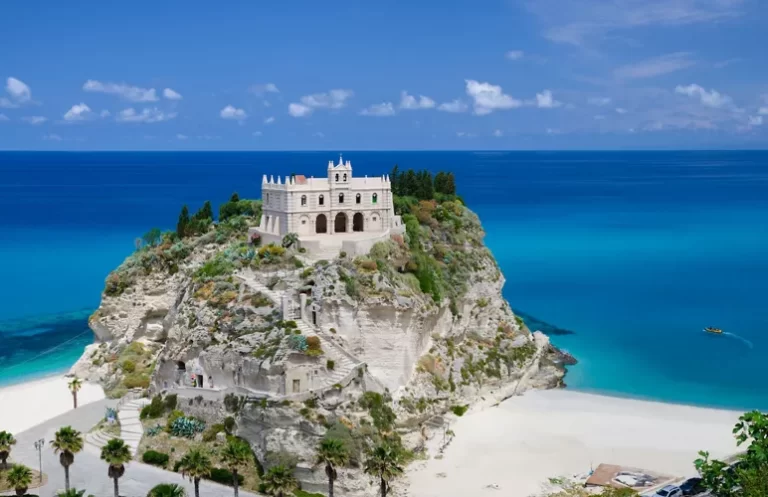
5 Places to Stay on a Budget in Helsinki:
1. Citybox Helsinki
Attractively situated in the Kallio district of Helsinki, Citybox Helsinki is situated 1.4 km from Helsinki Cathedral, 1.6 km from Helsinki Central Station and 1.8 km from Helsinki Olympic Stadium.
Set in Helsinki, 11 km from Helsinki Olympic Stadium, Noli Malmi offers accommodation with free bikes, private parking, a fitness centre and a shared lounge.
Situated just 350 metres from Helsinki Central Station and opposite University of Helsinki Metro Station, this hotel offers a large breakfast buffet and a bookable sauna. WiFi is free. Kaisaniemi Park is next to the hotel.
This modern hotel is located in the lively Hakaniemi district, less than a 5-minute metro ride from Helsinki Central Station. It offers free 1 GB WiFi connection and sauna access.
Set in Helsinki, 1.7 km from Helsinki Cathedral, Sky Hostel Helsinki features views of the city. With a shared lounge, the 2-star hostel has air-conditioned rooms with free WiFi, each with a shared bathroom. Private parking is available on site.
Secure your tickets for buses, trains, and ferries well in advance, as prices often increase closer to departure.
Utilise discounts:
Look out for student discounts, senior discounts, and group rates, which can significantly reduce your travel costs.
Travel during off-season:
Avoid peak season and shoulder season for cheaper travel fares and less crowded destinations.
Pack light:
Minimise luggage weight to avoid excess baggage fees, especially on flights and some ferries.
Embrace local transportation:
Once you arrive at your destination, utilise public transportation such as buses, trams, and metros for affordable and convenient exploration.
Embark on your Budget-Friendly European Adventure:
By embracing budget-friendly travel options like buses, trains, and ferries, you can unlock the potential for incredible adventures across Europe without breaking the bank. So, pack your bags, choose your route, and get ready for an unforgettable journey filled with stunning sights, unique experiences, and unforgettable memories for less than a cost of a meal.
Ogni viaggio è una scommessa con il destino, e vinci spin rappresenta perfettamente questa emozione: ogni decisione può portare a una scoperta, proprio come ogni nuova tappa di un viaggio pieno di energia.
Wer neue Ziele entdeckt, weiß die Einfachheit zu schätzen. felixspin casino login bietet dieselbe Zugänglichkeit und Verlässlichkeit, sodass jeder Start wie der Beginn eines neuen Abenteuers wirkt.
Ogni viaggio ben riuscito richiede ottimismo e strategia. Con greatwin ogni scelta diventa una piccola vittoria, proprio come quando si crea un itinerario perfetto e si raccolgono emozioni lungo la strada.
Voyager, c’est vivre l’instant et accueillir l’inattendu. Avec vegas plus casino, chaque moment devient une aventure pleine d’émotions, semblable à la magie d’un voyage improvisé et réussi.
Reisen bedeutet, mutig neue Erfahrungen zu machen, und bet on red bringt diese Spannung perfekt zum Ausdruck — eine Erinnerung daran, dass jede Entscheidung, wie eine Reise, voller Überraschungen und Belohnungen sein kann.
Travel is a journey of bold steps and smart choices, just like kinghills, where each move opens a new path toward excitement, confidence, and meaningful experiences along the way.
Τα ταξίδια είναι γεμάτα ανακαλύψεις και συγκινήσεις, όπως και το betano καζίνο, που προσφέρει στιγμές διασκέδασης και προσμονής — μια εμπειρία παρόμοια με την ανακάλυψη ενός νέου προορισμού.
Weekend itineraries now include a “micro‑budget challenges” track with step‑by‑step transit hacks, hostel shortlists, and free‑attraction clusters, while partner https://ninecasinoreview.uk/top/5-pounds-betting-sites/ sponsors travel‑gear prizes and community mini‑grants for readers who submit the most practical, clearly mapped city‑break routes that balance time, cost, and accessibility.