Blog - Switzerland - Is Switzerland Expensive? What a Trip Really Costs in 2026
Is Switzerland Expensive? What a Trip Really Costs in 2026
27th November | Sarah Kenny
Last updated July 20, 2026
Yes. But Probably Not in the Way You Think
The difference between overspending and saving hundreds often comes down to a few key decisions most travellers don't realise.
Switzerland has a reputation for being one of the most expensive countries in Europe, but the reality is a little more mixed once you're actually there.
For a typical trip in 2026, you're looking at around £120 to £250 per person, per day, depending on how you travel.
But here's the part most people don't expect.
Transport can be cheaper than the UK, and it's surprisingly easy to reduce costs without missing out on the experience.
We've travelled Switzerland multiple times using trains, budget accommodation and a mix of paid and free activities. These are the real costs for hotels, food, transport and scenic trains, plus exactly where you can save money.
If you're still deciding where to go, my Switzerland Travel Guide brings together all of my itineraries, scenic train guides and destination advice in one place.
Sarah
Build a Break
I've completed specialist Swiss public transport training and regularly update my knowledge with the Swiss Tourist Board, alongside exploring Switzerland myself.
Some of the links in this guide are affiliate links. This means we may earn a small commission if you make a purchase through them, at no extra cost to you. We only recommend products, routes and services we genuinely believe are useful for planning a Switzerland trip.
How Much Does a Trip to Switzerland Cost?
Budget Traveller:
£70–£110 per day
Typically includes:
Hostels or budget accommodation
Supermarket meals and picnics
Regional train travel
Mostly free attractions such as lakes, waterfalls and hiking trails
Mid-Range Traveller: £140–£220 per day
Typically includes:
Mid-range hotels
A mix of restaurant meals and supermarket lunches
Scenic train journeys
Cable cars and paid attractions
Luxury Traveller: £300+ per day
Typically includes:
4 and 5-star hotels
Restaurant dining throughout
Panoramic trains
Premium excursions and guided experiences
Example Trip Costs
3 Day Switzerland City Break
Approximately £350–£600 per person
Includes accommodation, transport, meals and one or two paid attractions.
4 Day Scenic Switzerland Trip
Approximately £450–£800 per person
Includes scenic train journeys, mountain excursions and lakeside accommodation.
My own 4 Day Switzerland Itinerary follows a similar route through Montreux, Interlaken, Lauterbrunnen and Grindelwald.
7 Day Switzerland Rail Trip
Approximately £900–£1,800 per person
The final cost depends largely on accommodation choices, train travel and the number of excursions you include.
If you're trying to keep costs down, I've also compared the Bernina Express vs the regional train,which is another scenic Swiss route where travelling on the ordinary train can save money without missing the scenery.
Your subscription could not be saved. Please try again.
Your subscription has been successful.
Why Switzerland Is Expensive (And Why It Isn't)
There are a few reasons Switzerland regularly appears on lists of Europe's most expensive countries.
High Wages
Staff wages are significantly higher than many neighbouring countries, which increases restaurant, hotel and service costs.
Strong Swiss Franc
The strength of the Swiss Franc can make prices appear expensive when converting from pounds or euros.
Tourism Demand
Many of Switzerland's most popular mountain destinations attract premium accommodation prices simply because demand is so high. Places such as Interlaken, Grindelwald, Lauterbrunnen and Zermatt are some of the country's most visited destinations, particularly during summer and winter, which naturally pushes hotel prices higher than less touristy areas.
But Some Things Are Better Value Than Expected
Transport often surprises people.
Many visitors expect Swiss trains to be incredibly expensive, but that wasn't our experience at all.
When booked in advance, many journeys worked out comparable to UK rail prices, despite offering a much higher standard of service.
Even some of the shorter journeys were much cheaper than we'd expected.
Compared to destinations such as Italy, Spain or Portugal, yes.
Compared to what many people expect before arriving, often not.
Accommodation and restaurant meals are usually the biggest expenses, while transport, supermarkets and many outdoor activities can be surprisingly reasonable.
A lot depends on your travel style.
A traveller staying in hostels, using supermarkets and focusing on Switzerland's scenery can spend significantly less than someone staying in luxury hotels and taking multiple mountain excursions.
Transport Costs in Switzerland
One of the biggest myths about Switzerland is that public transport is unaffordable.
We actually found it surprisingly reasonable, particularly when booking ahead.
For example, a train from Zurich to Interlaken booked around a month in advance can cost approximately £42.
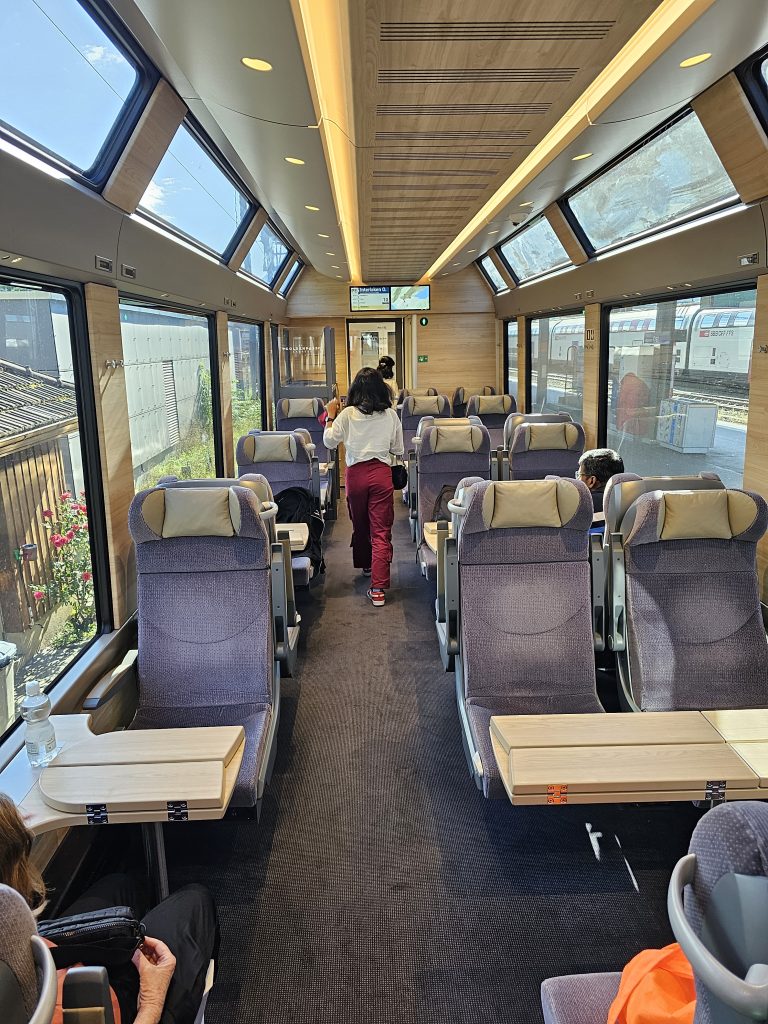
This panoramic carriage has just nine seats, heated leather reclining chairs and huge windows overlooking the Swiss countryside.
For that journey I paid just under £100.
The famous Bernina Expressfrom Chur to Tirano cost us around £77 per person, which felt very reasonable for one of the world's most scenic train journeys.
We cover both journeys in much more detail in our:
One thing that genuinely stood out compared to the UK was reliability.
Swiss trains arrive on time, connections are straightforward and the overall standard is excellent.
Many hotels also provide free local transport passes.
During stays in both Geneva and Interlaken, we received passes covering buses, trams and even boats, helping reduce local transport costs considerably.
If you're planning multiple train journeys, our guide on Is the Swiss Travel Pass Worth It? explains when a pass can save money and when it may not be worthwhile.
The total cost of travelling on the Bernina Express depends on your route, class of travel and the time of year.
In addition to a valid train ticket (or rail pass), passengers travelling in the panoramic Bernina Express carriages must also pay a compulsory seat reservation fee.
As a rough guide:
2nd Class tickets typically start from around CHF 25-65
1st Class tickets typically start from around CHF 43-113
Seat reservations usually cost between CHF 28 and CHF 36 per person
Children under 6 travel free and children aged 6-16 usually receive discounted fares.
For the most up-to-date pricing and reservation fees, always check the official Bernina Express website before booking.
1st Class carriage on the GoldenPass Express
Hotel Costs in Switzerland
Accommodation is usually where visitors feel the biggest impact on their budget.
Typical prices are:
Hostels
£35–£70 per night
If you're considering hostels, I've also put together a guide to hostels in Switzerland, including the two I stayed in during my own trip and who I think they're best suited to.
Both cost around £50 per night in July and were far more modern, comfortable and well-located than I expected.
Families travelling during the summer may also want to consider campsites such as Manor Farm Campsite near Interlaken, which can work out significantly cheaper than booking multiple hotel rooms.
Food Costs in Switzerland
Food is often where people feel Switzerland's reputation most strongly.
Restaurant prices can add up quickly.
A basic takeaway meal such as McDonald's costs around £15, while a sit-down restaurant meal can easily reach £30–£50 per person.
One of the easiest ways we save money is by using supermarkets such as Coop, Migros, Aldi Suisse and Lidl.
Many days we bought picnic food and ate beside lakes, on scenic train journeys or at viewpoints instead.
Not only was it cheaper, but the views were often better than many restaurants.
Using supermarkets was one of the biggest reasons I managed to keep the cost of my solo Switzerland trip much lower than I expected.
Typical Food Prices
– Fast food meal: around 15 CHF (£13) – Casual restaurant meal: around 22 CHF (£19) – Restaurant main course: 35–45 CHF (£30–£39) – Coffee: typically 5–6 CHF (£4–£5) – Supermarket sandwich: around 5–7 CHF (£4–£6) – Picnic lunch from Coop or Migros: around £10–£20
Cost of Activities in Switzerland
Some attractions can be expensive.
Mountain railways, cable cars and panoramic trains often represent the biggest activity costs.
However, one thing we quickly discovered is that many of Switzerland's best experiences are completely free.
Some of our favourite free experiences included:
– Walking through Lauterbrunnen Valley – Exploring Lake Brienz – Lakeside walks in Montreux – Watching paragliders above Interlaken – Visiting waterfalls and mountain viewpoints throughout Switzerland
The scenery itself often becomes the attraction.
For paid activities, we usually compare options through GetYourGuide and then decide closer to the date based on the weather forecast.
Using code BUILDABREAK5 can also save 5% on many bookings.
Can You Visit Switzerland on a Budget?
Yes, but it depends on your expectations.
Switzerland will almost certainly cost more than destinations such as Italy, Spain or Portugal, particularly when it comes to accommodation and eating out.
However, using public transport, choosing supermarkets for some meals and balancing paid attractions with free experiences can make a significant difference to your overall budget.
If you're looking for practical ways to reduce costs, including where to stay, how to save money on trains and the best times to visit, take a look at our guide on How to Visit Switzerland on a Budget.
That guide includes the exact strategies I use to reduce costs without missing the best scenery and train journeys.
UK vs Switzerland Cost Comparison
Compared to the UK:
Eating out is typically 40–60% more expensive
Hotels are usually 20–40% more expensive
Trains can be similar or cheaper when booked ahead
Supermarkets are around 10–20% more expensive
Coffee is slightly more expensive
The Verdict: Is Switzerland Expensive?
Yes, Switzerland is expensive compared to many European destinations.
But it isn't necessarily expensive in the places people expect.
Accommodation and restaurant meals are usually where costs add up most quickly.
Transport can be surprisingly reasonable, especially when booked in advance, and many of Switzerland's best experiences involve scenery rather than spending money.
For us, Switzerland felt less like a destination where you constantly pay for attractions and more like a destination where the mountains, lakes and train journeys become the experience.
With a little planning, it's far more achievable than many first-time visitors expect.